U.S. airport screening got an unusual jolt on Sunday, February 22, 2026, when the Department of Homeland Security (DHS) said it would suspend TSA PreCheck and Global Entry starting at 06:00 ET—then walked part of it back within hours.
Here’s where things stand for travelers moving through major hubs like Atlanta (ATL), Chicago O’Hare (ORD), New York Kennedy (JFK), Newark (EWR), Los Angeles (LAX), Dallas/Fort Worth (DFW), Miami (MIA), San Francisco (SFO), and Denver (DEN):
-
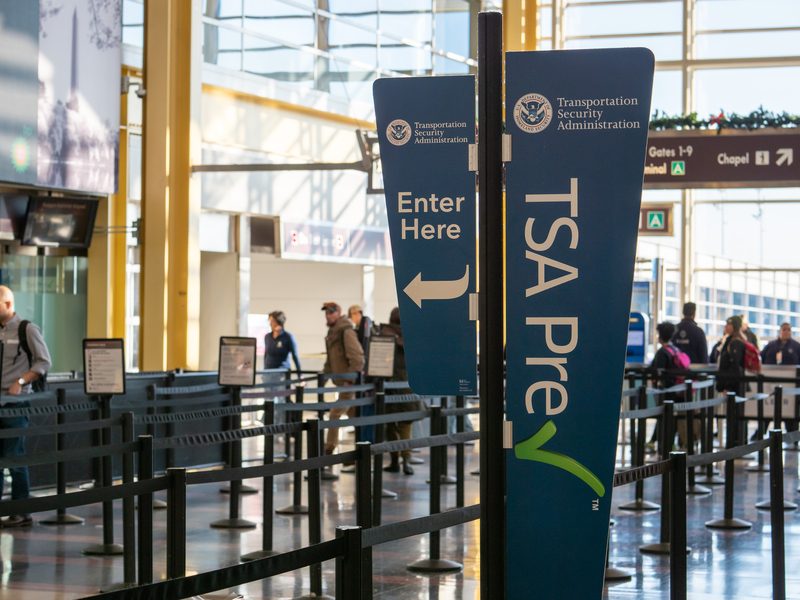
TSA PreCheck: still operating, with TSA indicating it may adjust lane availability case-by-case if staffing constraints develop.
Read our stories in your inbox
Two aviation newsletters. Zero fluff.
-
Global Entry: suspended while the DHS funding lapse continues, meaning no Global Entry kiosks/lanes at U.S. ports of entry—including at airports that handle heavy international arrival volumes.
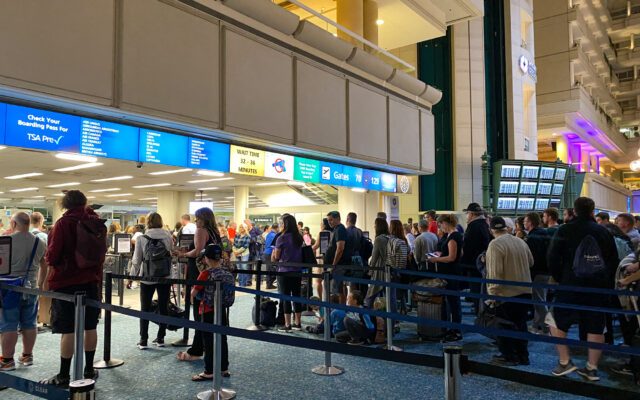
For airline ops teams, the bigger story isn’t just the policy—it’s the confusion cycle. Some airports briefly toggled PreCheck passengers into standard screening flows early Sunday before TSA clarified that PreCheck would remain active. That kind of mixed messaging can create sudden surges at checkpoint queues, then leave airports scrambling to re-balance lane staffing and signage in real time.
Why DHS targeted PreCheck and Global Entry in the first place
This disruption is tied to a partial DHS shutdown that began February 14, 2026, driven by a political standoff over DHS funding tied to immigration enforcement policy. DHS described the move as an “emergency” staffing measure—essentially reallocating limited personnel to keep baseline screening and border processing moving.
That’s the operational logic, even if it’s controversial: when staffing is stressed, you prioritize the “mainline” over specialized lanes. The problem is that PreCheck and Global Entry aren’t boutique perks at this point. They are throughput tools used by tens of millions of travelers—tools that, when removed, instantly increase friction at the highest-volume choke points in the system.
What Global Entry’s suspension changes at the airport level
Global Entry is not a TSA program—it’s run by U.S. Customs and Border Protection (CBP). When it’s offline, the pain shows up at arrivals halls, not checkpoints.

This matters most at airports that receive large inbound widebody banks—think early-morning transatlantic arrivals into JFK, EWR, BOS, IAD, MIA, and ATL, plus Pacific arrivals into LAX, SFO, and SEA. When Global Entry kiosks go dark, the effect is predictable:
-
Longer primary inspection queues in the general lanes
-
Higher misconnect risk for international-to-domestic transfers, especially where minimum connection times were built assuming expedited processing for a meaningful share of passengers
-
More baggage hall congestion, because passengers dwell longer in controlled areas and bags keep arriving regardless
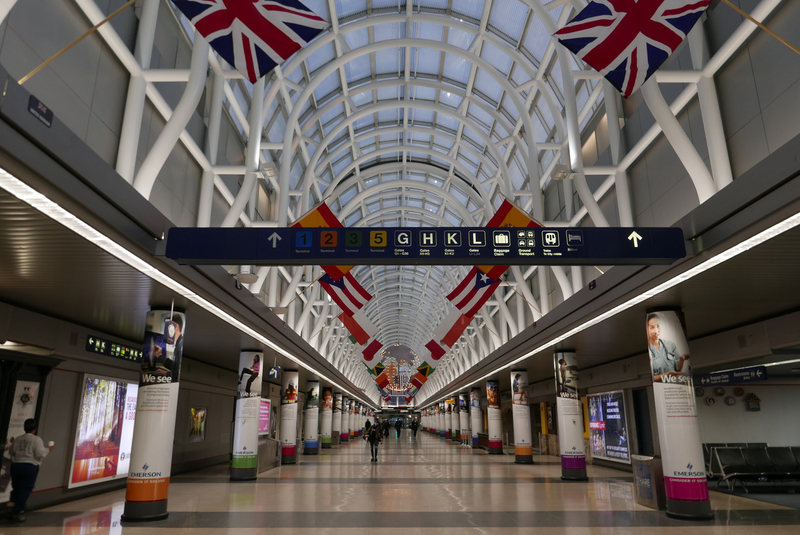
There’s a second-order impact that airline professionals will immediately recognize: arrival hall congestion doesn’t stay in the arrival hall. It spills into curb operations, ride-share staging, and even ramp timing when inbound passengers can’t clear efficiently and connecting flows break down.
Why PreCheck staying open still doesn’t mean “business as usual”
Even with PreCheck preserved, DHS’s warning about staffing constraints remains the operative risk. During shutdown conditions, essential personnel may be required to work while pay is delayed—an environment that historically increases attrition pressure and unscheduled absences. If absenteeism rises, TSA can keep the PreCheck brand alive while still reducing its footprint by consolidating lanes.
That creates an odd hybrid operating day at airports like ORD, DFW, DEN, and LAX: PreCheck exists, but the number of staffed PreCheck positions may fluctuate by hour. When that happens, you don’t always see a uniform “line gets longer” picture—you see micro-spikes aligned with bank structures, especially at hubs where narrowbody departures (737/A320 families) push dense waves through checkpoints.
The airline and airport playbook when screening capacity becomes variable
Airlines can’t fix TSA or CBP staffing—but they can mitigate downstream disruption. Expect to see:
-
More aggressive passenger messaging on recommended arrival times at high-peak stations (spring break is already looming).
-
Looser reaccommodation policies where misconnect risk rises for international arrivals, particularly at hubs with tight domestic banks.
-
Operational focus on first-wave departures, because checkpoint delays early in the day can cascade into missed slots and late turns.
Airports, meanwhile, have a well-understood pressure point: when federal staffing is strained, local stakeholders often look for creative ways to keep the system stable. During the 43-day 2025 shutdown, for example, Denver (DEN) publicly pursued permission to use airport funds to temporarily support certain federally staffed functions—an illustration of how quickly “security staffing” becomes “airport economics.”
What travelers should do right now
A few practical moves can prevent a travel day from unraveling:
-
If you’re returning to the U.S. via an international gateway like JFK, MIA, LAX, SFO, or ORD, plan for longer CBP processing without Global Entry.
-
Build extra buffer if you have an onward connection—especially international-to-domestic transfers.
-
Keep essentials (medications, one change of clothes, critical items) in carry-on in case misconnects create overnight holds.
-
Watch airport-specific wait times rather than headlines—conditions may vary sharply by hour and by terminal.
Bottom Line
DHS’s attempt to suspend both TSA PreCheck and Global Entry at 06:00 ET on February 22 created a real operational flashpoint—then quickly morphed into a partial rollback. PreCheck is operating for now, though TSA has warned it may adjust lane availability if staffing constraints intensify. Global Entry remains suspended as long as the DHS shutdown continues, and that is where the most tangible passenger friction will concentrate: inbound international processing and tight connections at major gateway airports.
For airlines and airports, the lesson is familiar: in a hub-and-bank system, even small changes at the checkpoint or arrivals hall can ripple into missed connections, gate congestion, and irregular-ops costs—fast.