Romanian carrier AnimaWings has initiated judicial reorganization, linking the move to repeated technical problems that reduced fleet availability and placed pressure on its operations, commercial performance and finances.

The airline disclosed the restructuring in an official passenger update published on September 30. It said the process was intended to protect continuity and stabilize the business, rather than suspend flying.
AnimaWings plans to adjust its schedule around the aircraft capacity available in the coming days. Passengers whose flights are changed or canceled will be contacted using the details attached to their reservations, with refunds, rebooking or alternative travel arrangements offered depending on the circumstances.
Read our stories in your inbox
Two aviation newsletters. Zero fluff.
The carrier warned that its customer support operation was handling substantially higher demand than usual and said requests would be prioritized according to travel date.
Reorganization Is Not a Shutdown
Judicial reorganization sits within Romania’s insolvency framework but is distinct from liquidation. AnimaWings is seeking a court-supervised route through which it can continue operating while restructuring its obligations and presenting a plan for recovery.
Under Romania’s insolvency legislation, a reorganization plan must set out the debtor’s recovery prospects, the measures proposed to restore the business and a schedule for settling creditor claims. The law allows a debtor that has declared its intention to reorganize to continue ordinary business during the observation period under the supervision of a judicial administrator.
The distinction matters for passengers and suppliers. The filing does not by itself mean that AnimaWings has ceased trading, but the airline must now align its flying program with the capacity and liquidity it can sustain. The opening of proceedings, appointment of an administrator and eventual approval of any reorganization plan remain separate stages in the process.
Fleet Concentration Magnifies Availability Problems
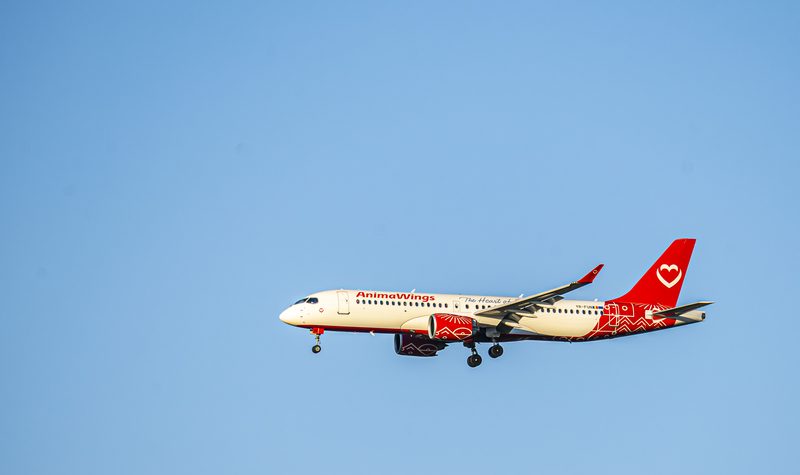
AnimaWings built its recent scheduled expansion around the Airbus A220-300. Its published fleet comprises six A220-300s and two Airbus A320-200s, meaning the newer type accounts for three-quarters of its aircraft.
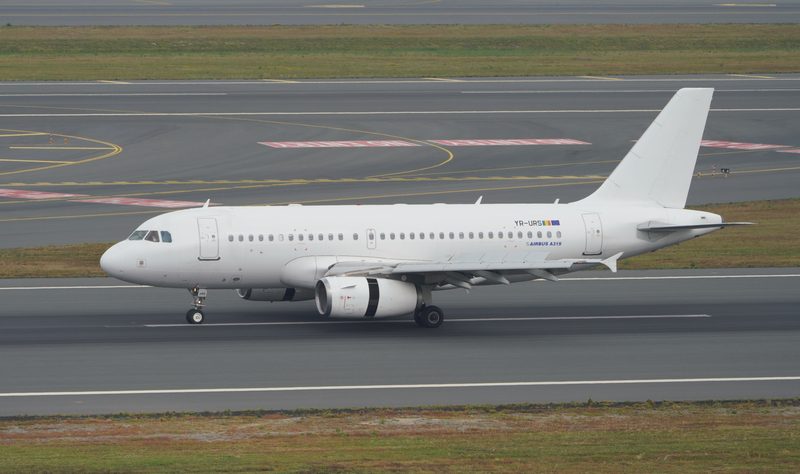
That concentration leaves limited internal spare capacity when several A220s become unavailable. The two A320-200s provide up to 180 seats each and can cover selected services, but substituting them across an A220-based network requires changes to aircraft rotations, crew planning and seat inventory. It can also be difficult to protect both scheduled and tour-operator flying with only two aircraft from the alternative fleet.
AnimaWings uses two A220-300 cabin layouts. One has 137 seats, including 12 dedicated business-class seats and 125 economy seats. The other carries 148 passengers in an all-economy configuration and has been used for regional and leisure services.
The type was central to the airline’s network plan because it combines lower trip costs than a larger narrowbody with enough range for services extending well beyond Romania’s immediate neighbors. Airbus lists the A220-300 with typical capacity of 120 to 160 passengers and a maximum range of 3,450 nautical miles, making it suitable for thinner domestic, European and longer regional sectors.
AnimaWings has not identified the individual technical faults involved. Its statement attributes the restructuring primarily to repeated problems affecting aircraft availability, compounded by higher operating costs and broader economic pressure.
Rapid Expansion Preceded the Restructuring
The insolvency move follows an unusually fast fleet and network build-up. AnimaWings received its first A220-300 in December 2024 and began using the type to expand scheduled flying alongside its established charter business.

By March 2026, the airline had accepted its fourth A220-300 and was publicly targeting a fleet of 18 aircraft by the end of 2027. That aircraft was intended for services from Bucharest (OTP) and other Romanian bases, with management describing the delivery program as the foundation for higher frequencies and additional European routes.
The eighth aircraft joined the carrier in 2026, taking the fleet to six A220-300s and two A320-200s. In its announcement of the delivery, AnimaWings said all eight aircraft had arrived directly from the manufacturer during the preceding 18 months. The airline was simultaneously adding scheduled routes and allocating A220s to regional operations within Romania.
That growth increased the importance of high fleet utilization. A small operator launching multiple routes has fewer opportunities to recover from prolonged technical downtime than a larger carrier with spare aircraft, broader crew coverage and several interchangeable subfleets. Disruption can quickly spread from the maintenance program into the schedule, passenger reaccommodation costs and cash flow.
Investor Agreement Faces a New Test
AnimaWings had also been working to broaden its capital base. In April, the airline announced an agreement under which BT Asset Management, Winners Holding Investments and EVERGENT Investments would acquire a future combined 50% holding, subject to regulatory review and other conditions.
The airline described the transaction as the financial platform for further growth. Its April announcement said the agreement still had to pass the necessary competition and foreign-investment approval stages.
EVERGENT separately said completion was dependent on conditions precedent. The restructuring now makes the status and terms of that investment particularly important, because fresh capital could determine how quickly AnimaWings restores capacity, deals with creditor claims and rebuilds schedule reliability.
Bottom Line
AnimaWings’ immediate challenge is operational rather than merely procedural. Court protection can create space to negotiate with creditors, but it cannot replace unavailable aircraft or provide the additional lift needed to protect a network designed around six A220-300s. The carrier will need either a sustained improvement in fleet availability, replacement capacity or a materially smaller schedule that can be flown reliably by the aircraft it can support.
The restructuring also tests the logic of AnimaWings’ rapid transition from a charter-focused operator into a scheduled airline with domestic, regional and longer European flying. The A220-300 was well matched to that strategy, offering a lower-capacity platform with business-class and all-economy options. Concentrating most of the fleet in one type, however, turned an availability problem into a company-wide capacity shock.
The next indicators will be the court’s handling of the case, the position of lessors and other major creditors, and whether the proposed institutional investment proceeds in its existing form. For passengers and travel partners, the more immediate measure will be schedule stability: how much of the published program AnimaWings can preserve, and whether the airline can move from repeated short-term adjustments to a fleet plan that can support dependable operations.