DAN AIR (DN) is resuming its Syria operation—but not into Damascus (DAM). With Damascus airspace still closed amid the wider Middle East security crisis, the Romanian carrier will temporarily shift its Bucharest–Syria flights to Aleppo International Airport (ALP), keeping the route alive while avoiding the most constrained airspace around the capital.
For passengers, the change is straightforward in principle and disruptive in practice: if you booked Bucharest (OTP)–Damascus (DAM) during the affected window, you’ll now be flying Bucharest (OTP)–Aleppo (ALP) instead. The airline says customers have been automatically transferred to the revised flights.
What’s changing between March 15 and March 26
DAN AIR’s adjustment applies to a defined, short window:
Read our stories in your inbox
Two aviation newsletters. Zero fluff.
-
Effective dates: March 15–26, 2026
-
Original route: Bucharest Henri Coandă (OTP) ↔ Damascus (DAM)
-
Temporary operating airport in Syria: Aleppo (ALP)
-
Frequency unchanged: 2x weekly (Thursdays and Sundays)
In other words, DAN AIR is not pausing service; it’s moving the Syrian endpoint to an airport deemed operationally acceptable under current conditions. The carrier says it will return to Damascus (DAM) once the airspace reopens.
Why Aleppo (ALP) is the workable alternative right now
Aleppo (ALP) has become a practical entry/exit point while Damascus (DAM) remains restricted. Over the past week, Syrian authorities have worked to reopen limited air corridors and restart flights into Aleppo, positioning it as a controlled gateway with routes designed to avoid higher-risk areas.

From an airline safety and compliance standpoint, that matters because DAN AIR isn’t simply choosing a different destination—it’s choosing a different risk environment. The decision was made after:
-
an internal review by DAN AIR’s Safety Committee, and
-
confirmation and approval from the Syrian Civil Aviation Authority that operations can be conducted safely under current conditions and aligned with European aviation safety expectations.
The operational reality: this isn’t “just a diversion,” it’s a temporary reroute
A diversion is a one-off: an aircraft lands somewhere else and the flight ends. What DAN AIR is doing is closer to a short-term network rebuild, because the Damascus endpoint is unavailable for multiple weeks.
That has a few practical consequences airline professionals will recognize:
-
Ground handling and passenger processing: ALP handling flows, staffing, and onward passenger management must be stable enough to support scheduled service twice weekly.
-
Crew and aircraft planning: maintaining the Thursday/Sunday pattern requires predictable turn capability, particularly if the route is flown with the same aircraft cycling other DN missions in the week.
-
Passenger reaccommodation: automatic transfer reduces administrative friction, but the downstream effects (ground transport, hotels, onward travel) shift to the traveler.
Aircraft: what DAN AIR is likely to operate on OTP–Syria missions
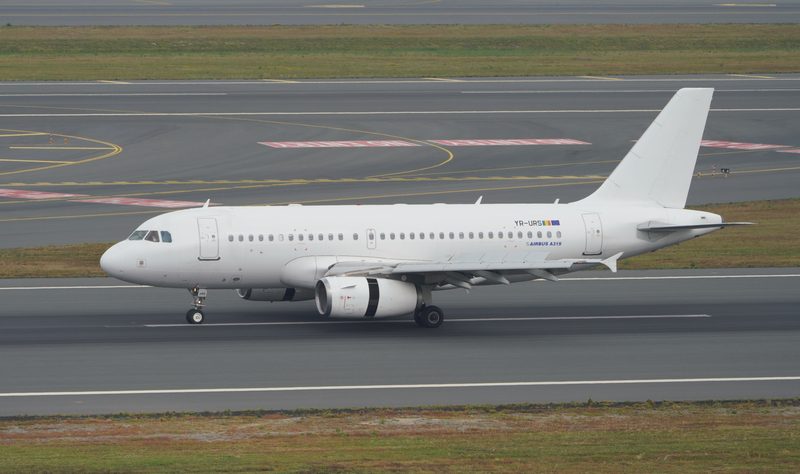
DAN AIR operates a small Airbus narrowbody fleet centered on:
-
Airbus A319-100
-
Airbus A320-200
These aircraft are well suited to the OTP–Syria stage length: narrowbody economics, adequate range, and enough capacity to serve diaspora-heavy markets where demand is real but highly seasonal. For passengers, it also means a familiar European narrowbody onboard product—no long-haul widebody amenities, but a straightforward point-to-point operation.
Why this route matters: a rare EU–Syria air bridge
DAN AIR has become a notable outlier in European aviation by maintaining direct connectivity to Syria. Since launching EU–Syria scheduled flights in 2025, the airline’s Bucharest (OTP) service has become a meaningful lifeline for Syrian communities in Europe—especially when other routings require lengthy surface travel or multiple airline connections.
The temporary move to Aleppo (ALP) preserves that connectivity at a time when aviation access to the region is unusually fragile.
What passengers should do if they were booked to Damascus (DAM)
If you’re traveling during the March 15–26 window, assume these practical steps are necessary:
-
Confirm your updated itinerary shows Aleppo (ALP), not Damascus (DAM), before heading to Bucharest (OTP).
-
Plan for onward travel inside Syria, since ALP is not a like-for-like replacement for DAM.
-
Recheck entry and document requirements for Syria and for any onward movement you may need.
-
Avoid last-minute airport arrival without confirmation—during crisis periods, schedules can shift rapidly even after a reroute is announced.
Bottom Line
DAN AIR is keeping its Syria flying alive by temporarily shifting its Bucharest (OTP) services from Damascus (DAM) to Aleppo (ALP) between March 15 and March 26, 2026, while maintaining its twice-weekly Thursday/Sunday schedule. The move reflects a conservative safety posture and regulatory coordination in response to ongoing airspace restrictions around Damascus. For travelers, the key takeaway is simple: your “Damascus flight” is still operating—but for the next two weeks, it’s landing in Aleppo (ALP) instead.
Keep reading FlyMag
Get the Daily Brief in the morning or the Route Watch weekly recap on Fridays. Or both.