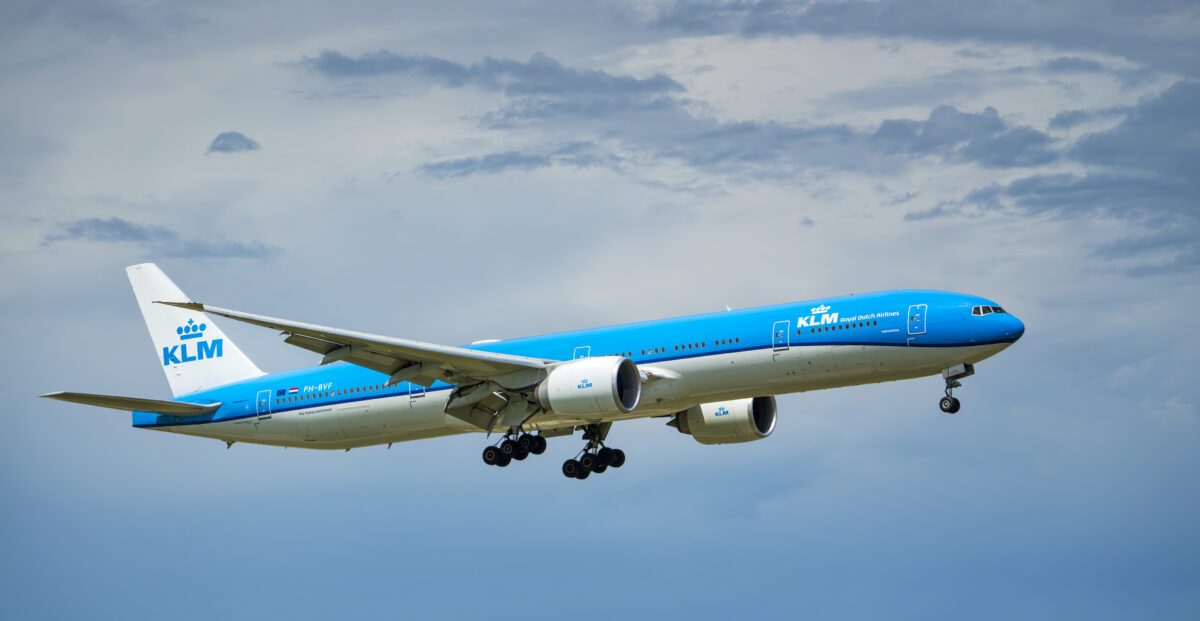
KLM has scheduled its Airbus A350-900 on five route patterns from Amsterdam Schiphol (AMS), setting out the first phase of commercial operations for a type that will eventually replace the airline’s Airbus A330s and Boeing 777-200ERs.

The current schedule places the inaugural passenger flight to Toronto Pearson (YYZ) on October 30, one week later than the previous October 23 plan. KLM had initially targeted September for the type’s entry into service, but the program has moved progressively later as the first aircraft has worked toward delivery.
The airline confirmed Toronto as the launch destination in its winter network announcement. KLM plans 12 weekly flights between Amsterdam and Toronto during the season, five of them operated by the A350 at the outset.
Read our stories in your inbox
Two aviation newsletters. Zero fluff.
Five Routes Cover Six Destinations
After beginning with Toronto, KLM will introduce the A350 on another Canadian route and three East African rotations. The five scheduled patterns are:

- Amsterdam–Toronto: From October 30, initially five times weekly with flights KL691 and KL692. The A350 operation is scheduled to become daily from March 3, 2027.
- Amsterdam–Montreal: From November 30, three times weekly to Montreal Trudeau (YUL).
- Amsterdam–Kilimanjaro–Dar es Salaam–Amsterdam: From December 1, twice weekly, serving Kilimanjaro (JRO) and Dar es Salaam (DAR) on the same rotation.
- Amsterdam–Zanzibar–Dar es Salaam–Amsterdam: From December 6, initially once weekly to Zanzibar (ZNZ) and DAR, rising to twice weekly for part of January and February.
- Amsterdam–Nairobi: From January 5, 2027, three times weekly to Nairobi (NBO).
The two triangular Tanzania operations explain why KLM lists six destinations while the schedule contains five route patterns. Dar es Salaam appears in both rotations, with one outbound service operating via Kilimanjaro and the other via Zanzibar.
KLM has publicly identified Toronto, Montreal, Kilimanjaro, Dar es Salaam, Zanzibar and Nairobi as its initial A350 destinations, including in a September update issued after the first aircraft completed two test flights. As with any advance aircraft assignment, individual dates and frequencies remain subject to operational changes.
Toronto Leads the Introduction
Toronto gives KLM a relatively straightforward launch environment before the A350 program expands into multi-stop African flying. The airline can mix the new type with other widebodies across its 12 weekly frequencies, limiting the effect of a substitution while the initial fleet builds operational reliability.
The five-times-weekly assignment also leaves two days without a Toronto A350 rotation, providing some flexibility for maintenance, crew training and recovery. Once more aircraft are available, KLM can extend the type across the winter network and increase Toronto to daily service near the end of the season.

Montreal follows one month later. Together, the two Canadian routes give the A350 a combination of substantial passenger demand and belly cargo potential without immediately committing the first aircraft to daily service on a single long-haul market.
The East African deployment is more operationally varied. KLM’s Kilimanjaro and Zanzibar services continue to Dar es Salaam before returning to Amsterdam, making aircraft efficiency important across sectors of very different lengths. Nairobi, by contrast, is scheduled as a conventional Amsterdam round trip.
KLM Configures the A350 for 331 Passengers
KLM’s published A350 specifications show a maximum capacity of 331 passengers. The planned cabin has 34 World Business Class seats in a 1-2-1 layout, 26 Premium Comfort seats in a 2-4-2 arrangement and 271 Economy seats, including the Economy Comfort section, in a 3-3-3 layout.
The airline lists a maximum range of 14,136 kilometers, comfortably covering all five planned route patterns. The A350-900’s range is not the principal constraint on these assignments; its value comes from combining widebody capacity and cargo space with lower fuel consumption than the older aircraft it is intended to replace.
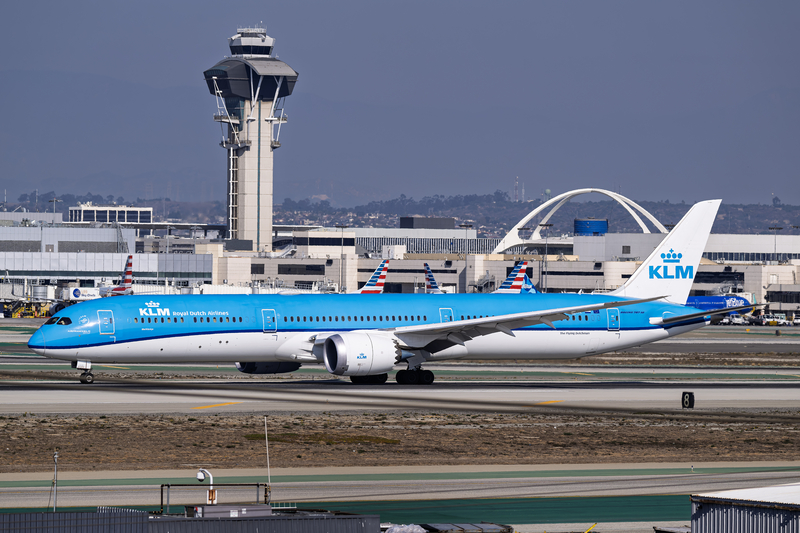
KLM said in June that certification of the World Business Class seat had not been completed and that those 34 seats would initially be unavailable on its first two aircraft. Premium Comfort was expected to be offered from the start. The airline disclosed the issue when it announced that the first aircraft would be named The Night Watch, beginning an A350 naming series based on prominent Dutch artworks.
The A350 Begins KLM’s Next Long-Haul Fleet Cycle
The A350 is central to KLM’s planned €7 billion fleet renewal program. Air France-KLM agreed to order 50 A350-900s and A350-1000s, with options for another 40 aircraft, for allocation between its two principal airlines.
For KLM, the passenger A350s will progressively replace the Airbus A330-200, A330-300 and Boeing 777-200ER. When it announced the order, the airline said the A350 would use 25% less fuel and produce a 40% smaller noise footprint than comparable older-generation aircraft. Its airframe makes extensive use of composites and titanium, reducing structural weight and supporting long-range efficiency.
The replacement process has already started at the older end of KLM’s widebody fleet. The carrier said its A330-200 phaseout would continue during the 2026-27 winter, while Boeing aircraft would take over much of the flying to markets including Aruba, Bonaire and Miami as the fleet transition progresses.
Bottom Line
KLM’s first A350 schedule is designed as a controlled introduction rather than a rapid, network-wide rollout. Toronto and Montreal provide high-volume routes on which the airline can alternate the new aircraft with established widebody types, while the initial five-times-weekly Toronto pattern leaves useful recovery time during the first months of service.
The move into East Africa is more revealing. KLM is assigning the A350 not only to long nonstop sectors but also to triangular rotations through Tanzania, where one aircraft must support multiple markets within a single duty pattern. That deployment plays directly to the A350-900’s combination of range, payload capability and fuel efficiency while allowing KLM to replace older A330 and 777-200ER capacity without materially changing the structure of its network.
The main points to watch are the delivery pace, certification and availability of the World Business Class cabin, and whether the planned frequencies hold through the winter. A smooth Toronto introduction would give KLM room to accelerate the replacement of its oldest long-haul aircraft; further delays would leave the airline balancing the new program against an A330 retirement schedule already underway.
Keep reading FlyMag
Get the Daily Brief in the morning or the Route Watch weekly recap on Fridays. Or both.