Boeing has received U.S. government authorization to resume direct commercial support for Belavia, restoring a formal channel for spare parts, aircraft components and software after several years of sanctions and export-control restrictions.

The Belarusian flag carrier announced the Commerce Department approval, saying it can now obtain Boeing products directly for aircraft already in service. Belarus’ Ministry of Transport published the same account.
Belavia also said the decision creates a potential route toward acquiring additional Boeing aircraft. That does not amount to approval of a specific purchase or a firm order. Any transaction would still have to comply with U.S. export controls and the conditions attached to Boeing’s authorization.
Read our stories in your inbox
Two aviation newsletters. Zero fluff.
The new clearance follows a series of measures adopted by Washington in 2025 that allowed Belavia to operate and maintain designated U.S.-built aircraft. The latest step is commercially important because it permits Boeing itself to deal directly with the airline rather than leaving Belavia dependent on intermediaries and individually authorized supplies.
Parts and software are the immediate priority
Direct manufacturer support matters most for Belavia’s existing 737 fleet. Access to Boeing’s approved supply chain can cover replacement components, technical publications, maintenance data and software required to keep aircraft configurations current.

That is a broader operational benefit than the occasional purchase of a high-profile component. Modern airline support depends on traceable parts, approved documentation and continuing access to revisions issued by the type-certificate holder. A direct Boeing relationship can reduce lead times and remove some of the compliance uncertainty faced by third-party suppliers considering work connected with Belarus.
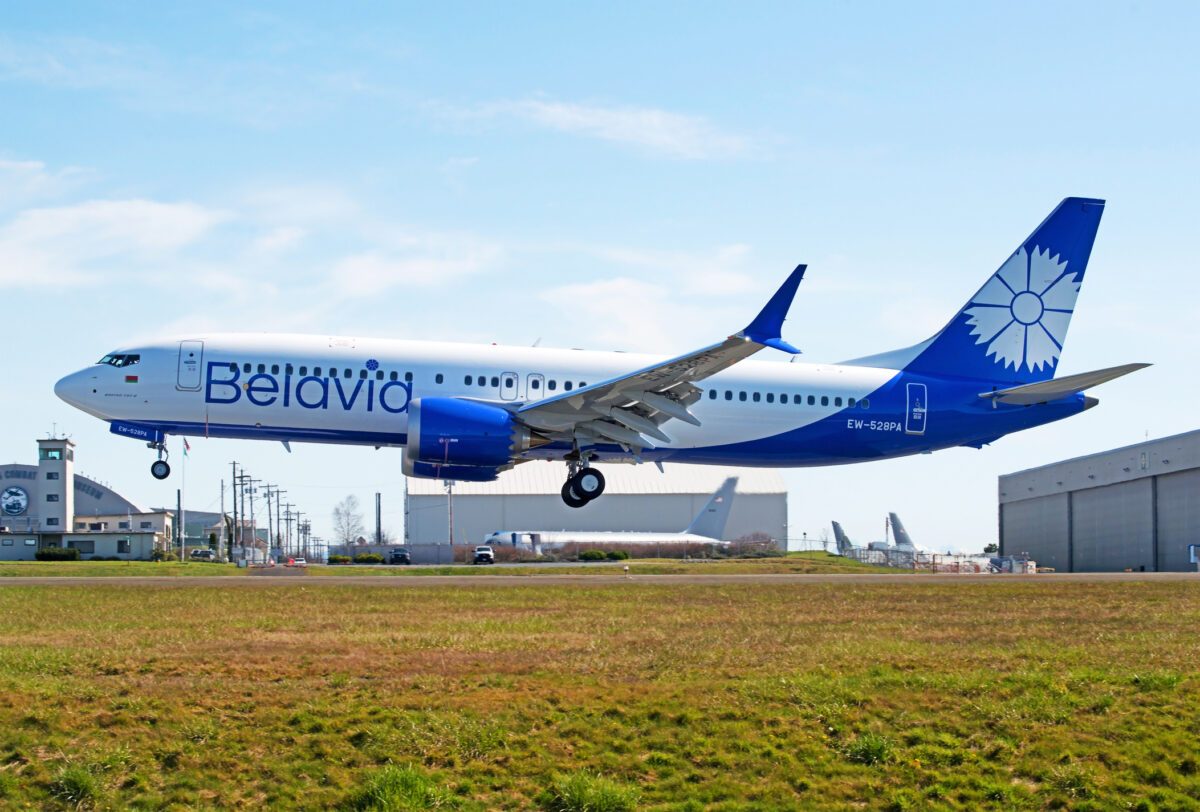
Belavia’s fleet includes Boeing 737-800s and a Boeing 737 MAX 8, alongside older 737 variants and non-Boeing aircraft. The 737-800 remains a useful high-density platform for the carrier’s medium-haul scheduled and leisure network, while the MAX 8 offers lower fuel consumption and greater range for longer sectors from Minsk (MSQ).
The airline said during 2026 that it had added three Boeing 737-800s. Those aircraft increased capacity as Belavia expanded services across Russia, Central Asia, the Middle East and leisure markets beyond its traditional regional network.
Direct access to Boeing support should therefore have a larger effect than the number of aircraft alone suggests. The airline has been putting more utilization through its narrowbody fleet while also building a long-haul operation around the Airbus A330-200.
The approval builds on U.S. relief granted in 2025
The policy change began in September 2025, when the U.S. Treasury’s Office of Foreign Assets Control issued Belarus General License 11. It authorized transactions involving Belavia and entities in which the airline owns at least 50%, subject to exclusions for other blocked parties and previously frozen property.
That Treasury action addressed the financial-sanctions side of dealing with Belavia. It did not remove obligations administered by other agencies, including the Export Administration Regulations overseen by the Commerce Department’s Bureau of Industry and Security.
BIS separately began easing restrictions on the airline’s aircraft. Its authorization dated November 3, 2025 covered flights, maintenance, repair, overhaul and refurbishment involving nine specified Boeing aircraft owned, leased or controlled by Belavia.
The list comprised one Boeing 737 MAX 8, two Boeing 737-300s, five Boeing 737-800 variants and a Boeing 737-8EV configured as a BBJ2. The authorization superseded earlier versions issued during September and October 2025 as the U.S. government adjusted the scope of the relief.
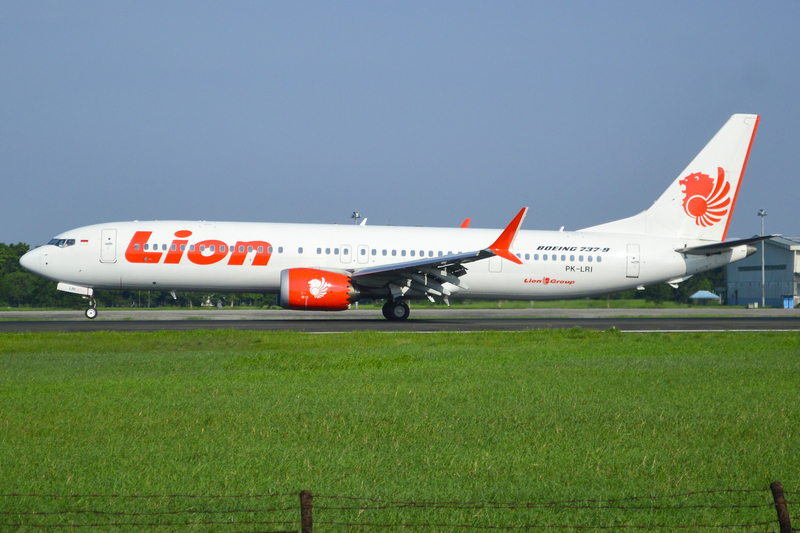
BIS also removed nine Belavia aircraft from its General Prohibition 10 list. Their presence on that list had exposed companies providing refueling, parts, maintenance or other services to possible U.S. enforcement action.
The 2025 framework was not a blanket release. It allowed maintenance with items that had been separately cleared for export or re-export, while commercial aircraft and aircraft-related license applications remained subject to case-by-case review. The new Boeing authorization appears to be the product of that review process.
Russia diversion remains the central compliance issue
The closer relationship between Belarus and Russia makes end-use controls central to any Boeing-Belavia business. Belarus remains a major market and operating area for Russian aviation, while Belavia serves numerous Russian cities from Minsk.
The November 2025 BIS letter allowed the covered aircraft to fly to Russia, but it expressly prohibited their use to carry U.S.-controlled items in support of Russia’s Special Military Operation in Ukraine. It also maintained separate licensing requirements for equipment, supplies and materials exported to Russia or Belarus.
BIS said in its Belavia licensing policy that applications would be assessed to confirm that products supported the airline’s normal commercial passenger operation and to guard against diversion to unsupported end users or end uses.
That distinction will determine how the restored Boeing relationship works in practice. Parts supplied for an identified Belavia aircraft can be documented against its registration, serial number and maintenance requirement. Transfers onward to another operator, or installation on aircraft outside the authorized fleet, would remain subject to U.S. controls.
The Commerce Department has not published the new Boeing license alongside its earlier public Belavia authorizations. Belavia’s statement therefore establishes the commercial activities the airline says have been cleared, while the detailed compliance conditions remain between Boeing and the U.S. government.
European restrictions still constrain Belavia
The U.S. decision does not change Belavia’s position in Europe. The European Union continues to prohibit Belarusian carriers from using EU airspace and airports, and maintains restrictions on the export of aviation goods and technology to Belarus.
The EU sanctions framework also includes anti-circumvention provisions and controls intended to prevent restricted technology from reaching Russia through Belarus.
Belavia consequently gains access to Boeing support without recovering the western part of its former network. Its fleet planning remains centered on markets reachable without EU overflight, including Russia, the Caucasus, Central Asia, China, India and selected Middle Eastern and leisure destinations.
Any Boeing aircraft acquisition would require more than the permission to hold talks. Financing, insurance, engines, installed equipment and continuing technical support can each involve separate export-control and sanctions considerations. Belavia has not announced an order, delivery schedule or aircraft selection.
Bottom Line
The immediate winner is Belavia’s engineering operation. Direct access to Boeing parts, software and documentation should improve supply-chain predictability for the 737 fleet and make it easier to maintain configuration control across aircraft acquired from several previous operators. That can translate into higher dispatch reliability and less need to hold excessive inventories against uncertain replacement times.
For Boeing, the authorization restores a tightly controlled customer relationship rather than opening an unrestricted new market. The manufacturer will need to maintain aircraft-level visibility over supplied material, with end-use assurances capable of satisfying U.S. regulators that parts remain within Belavia’s authorized commercial operation. The handling of the three 737-800s added in 2026 will be an early indication of how broadly the license applies beyond the aircraft named in the 2025 BIS letter.
The larger question is whether the approval progresses from aftermarket support to fleet renewal. Belavia can now approach Boeing directly, but a new-aircraft agreement would test financing, export licensing and political support on a much greater scale. Until an order is announced and licensed, the practical value of the change lies in sustaining the aircraft already flying from Minsk.