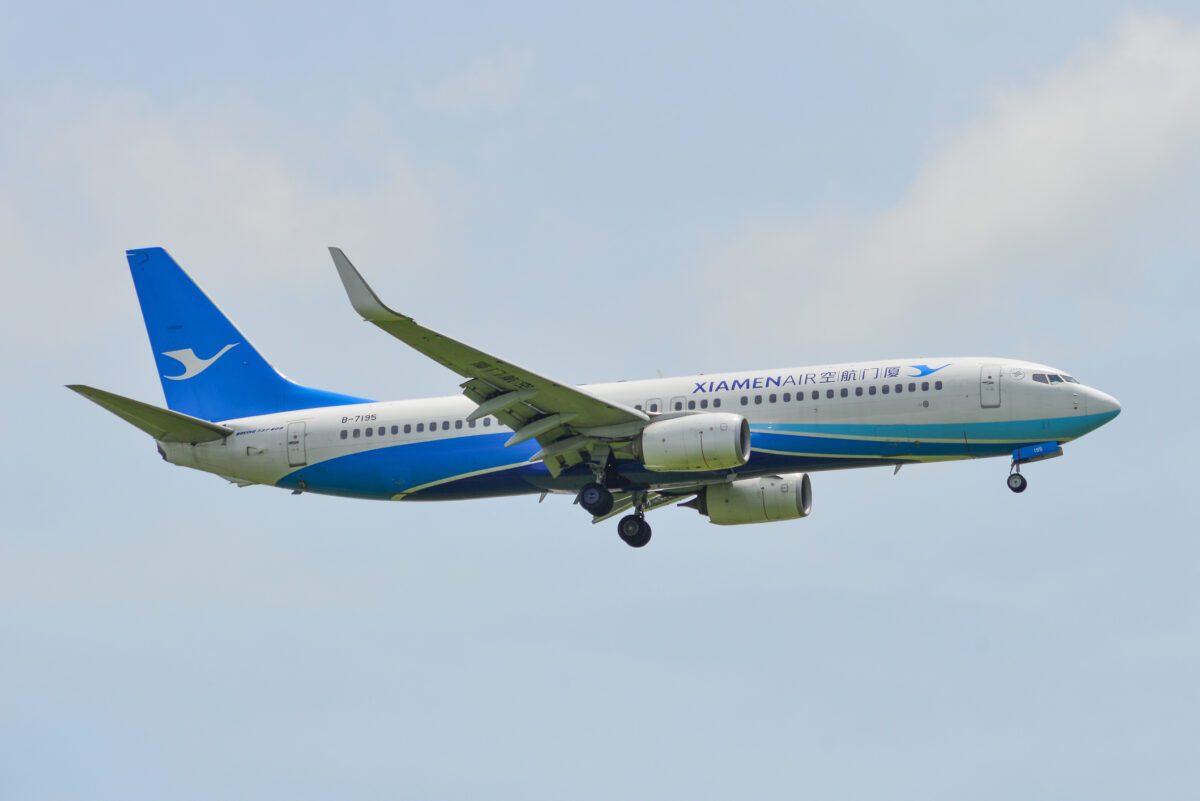
Xiamen Airlines has signed an agreement with Boeing to purchase 50 Boeing 737 MAX 8 aircraft, extending the carrier’s narrowbody delivery pipeline well into the next decade.


The agreement was signed on November 24, 2026, according to a Hong Kong Stock Exchange filing by China Southern Airlines, which owns 55% of Xiamen Airlines. Deliveries are scheduled in stages from 2031 through 2034.
China Southern’s board has approved the transaction, but it still requires shareholder consent and approval from the relevant Chinese government authorities before becoming effective. The company plans to convene a general meeting and issue shareholders a circular with further information.
Read our stories in your inbox
Two aviation newsletters. Zero fluff.
Catalog Value Put at $7.4 Billion
Boeing placed the catalog value of the 50 aircraft at approximately $7.4 billion, including airframes and engines. That equates to $148 million per aircraft before discounts.
China Southern said the negotiated consideration is below the catalog figure because Boeing granted price concessions. The actual purchase price remains confidential under the agreement, with the airline group describing the discount as comparable to those secured in previous Boeing transactions.
Payments will be made in installments aligned with the delivery schedule. China Southern expects to fund the purchase through a combination of internal resources and loans or other financing arrangements from banks and financial institutions.
The filing classifies the purchase as a major transaction under Hong Kong listing rules. When considered both independently and together with China Southern’s previous Boeing aircraft purchase, the applicable consideration ratio is above 25% but below 100%, triggering shareholder approval and disclosure requirements.
A Large Addition to an Established 737 Fleet
The order builds on an already substantial 737 operation. A Xiamen Airlines financing prospectus showed that the mainline carrier operated 174 aircraft at the end of March 2026, including 28 Boeing 737 MAX 8s, 111 Boeing 737-800s and four Boeing 737-700s.
The 50-aircraft commitment is equivalent to about 29% of that March 2026 mainline fleet. Its delivery period also places it in the likely replacement window for part of Xiamen Airlines’ large 737-800 fleet, while leaving capacity for growth following the carrier’s move to Xiamen’s new airport.
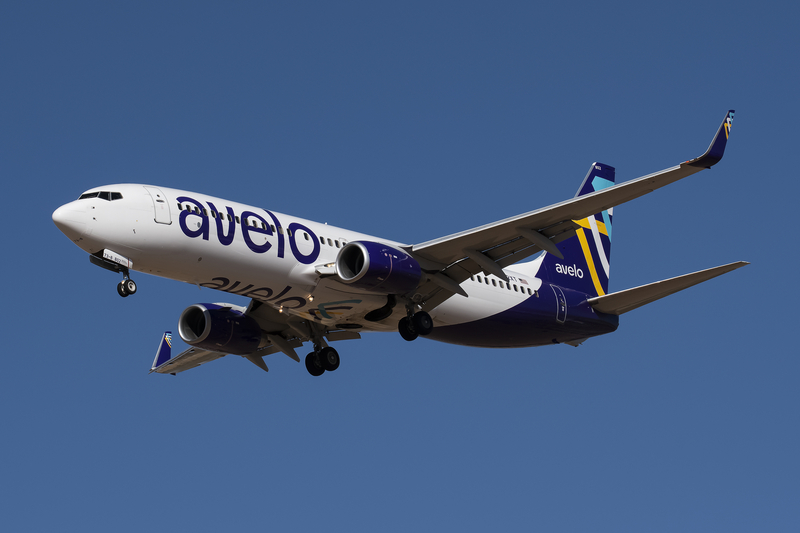
Fleet induction risk should be limited compared with an all-new type. Xiamen Airlines already operates the MAX and has established maintenance capability for the 737 MAX and earlier 737 generations at its Xiamen and Fuzhou bases. Its technical organization also has the capability to change engines and conduct borescope inspections on the MAX’s CFM International LEAP-1B engines.
Boeing lists the 737 MAX 8 with typical two-class seating for 160 to 180 passengers and a range of up to 3,500 nautical miles, or 6,480 kilometers. That combination fits Xiamen Airlines’ high-frequency domestic trunk network and its regional flying across East and Southeast Asia, while providing considerably more reach than is required on most sectors.
Boeing Order Follows Further Airbus Commitment
The Boeing agreement does not reverse Xiamen Airlines’ recent move toward a mixed narrowbody fleet. The carrier, historically one of Boeing’s most important operators in China, placed its first Airbus order for 40 A320neo-family aircraft in 2022.
By March 2026, Xiamen Airlines had 17 Airbus A321neos and two Airbus A320neos in its mainline fleet. It then agreed in April to acquire a further 35 A320neo-family aircraft as part of a 137-aircraft China Southern group purchase. Those Airbus deliveries are scheduled between 2028 and 2032.

The two commitments create an overlapping sequence: additional Airbus narrowbodies are due first, followed by the 50 Boeing 737 MAX 8s from 2031. China Southern said sourcing from both manufacturers would diversify the group’s aircraft portfolio and improve operational flexibility.
For Xiamen Airlines, that means the Airbus fleet is becoming a permanent second narrowbody platform rather than a short-term departure from Boeing. At the same time, the latest purchase preserves the scale advantages of the 737 operation, including an existing pilot base, maintenance infrastructure and a large installed fleet.
New Aircraft Timed for Xiamen Hub Expansion
China Southern directly linked the purchase to Xiamen Airlines’ planned relocation from Xiamen Gaoqi (XMN) to the new Xiang’an airport, as well as the development of a broader hub network in Fujian province.
XMN handled 29.2 million passengers in 2025. Xiamen Xiang’an, which is scheduled to open in December 2026 and replace Gaoqi, has been designed initially for 45 million annual passengers and 750,000 metric tons of cargo. Chinese aviation authorities have been coordinating construction, certification, flight testing and the operational transfer to the new facility, according to a Civil Aviation Administration of China update.
The MAX deliveries will not begin until several years after the move, when the new airport should be past its initial operational ramp-up. That timing gives Xiamen Airlines a long-term block of narrowbody capacity for additional frequencies, network expansion and replacement of older 737s without depending entirely on one manufacturer’s production stream.
Bottom Line
The agreement preserves Boeing’s central role at Xiamen Airlines even as Airbus takes a larger place in the fleet. With 111 Boeing 737-800s still operating at the mainline carrier in March 2026, a 50-aircraft MAX order is large enough to support a meaningful renewal cycle, but not large enough on its own to replace the full earlier-generation fleet. Further purchases, leases or delivery extensions are therefore likely to remain part of Xiamen Airlines’ planning through the 2030s.
The delivery sequence is equally important. Airbus aircraft arriving from 2028 will give Xiamen Airlines near-term growth and replacement capacity, while the Boeing aircraft secure slots from 2031 through 2034. The carrier gains two production pipelines at a time when delivery availability has become a strategic consideration, although it also accepts the training, maintenance and spares complexity of operating two narrowbody families at scale.
The next steps are regulatory rather than operational: shareholder approval, Chinese government clearance and confirmation of the agreement in Boeing’s published order data. Beyond those milestones, the point to watch is how Xiamen Airlines divides the aircraft between replacement and growth as Xiang’an matures. That allocation will determine whether the new airport primarily supports higher frequencies in the carrier’s existing markets or a wider regional network from Fujian.