Eurowings will open four routes to Damascus in January 2027, giving the Lufthansa Group carrier its first scheduled service to Syria and extending its growing network of visiting-friends-and-relatives flights.

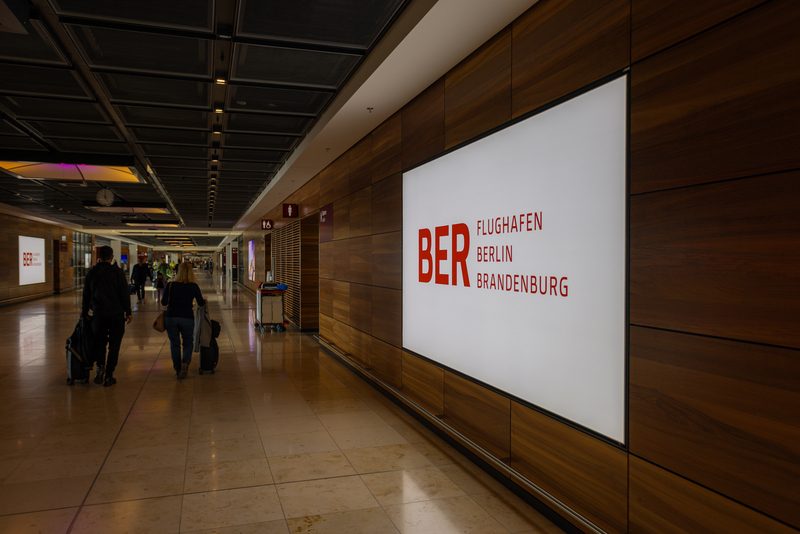
The airline will connect Damascus (DAM) with Berlin Brandenburg (BER), Düsseldorf (DUS), Hamburg (HAM) and Stuttgart (STR). According to the schedule published by Eurowings, Düsseldorf will receive two weekly flights while the other three German cities will each have one.
The average flight time will be about four and a half hours. Sales have opened through Eurowings’ booking channels.
Read our stories in your inbox
Two aviation newsletters. Zero fluff.
Damascus Flights Start January 11
Hamburg will inaugurate the program on Monday, January 11, 2027. Düsseldorf follows on Tuesday, January 12, with flights operating on Tuesdays and Thursdays. Berlin and Stuttgart both start on Wednesday, January 13, and will operate each Wednesday.
That produces five weekly frequencies spread across four German catchment areas:
- Hamburg–Damascus: Mondays from January 11
- Düsseldorf–Damascus: Tuesdays and Thursdays from January 12
- Berlin–Damascus: Wednesdays from January 13
- Stuttgart–Damascus: Wednesdays from January 13
The pattern is built around origin-and-destination demand rather than connections over a single hub. One weekly frequency from Berlin, Hamburg and Stuttgart allows Eurowings to test separate regional markets while Düsseldorf, its largest base, supports the higher initial frequency.
Low frequency does not necessarily make these routes marginal. VFR traffic often produces longer stays, substantial checked-baggage demand and pronounced travel peaks around school holidays and religious festivals. A nonstop flight can also command a meaningful advantage over one-stop alternatives when passengers are traveling in family groups or carrying more baggage.
Eurowings Deepens Its VFR Strategy
Eurowings describes Damascus as an expansion of a VFR portfolio that now comprises more than 60 routes to over 20 destinations. The carrier has increasingly used its German bases to reach markets in the Middle East, North Africa, the Balkans and the Caucasus without routing passengers through Frankfurt or Munich.
Damascus follows another notable addition to the region. In its 2026-27 winter schedule, Eurowings set out plans to begin twice-weekly Baghdad flights from both Berlin and Düsseldorf on December 10, 2026. The airline also serves regional points including Erbil, Beirut, Amman and Jeddah from parts of its network.
The four-airport Damascus launch applies the same model on a broader scale. Instead of asking passengers to position to one German gateway, Eurowings is placing limited capacity near several of the country’s major Syrian communities. The approach lowers the dependence of the overall program on any single city pair while retaining the option to add frequencies where bookings prove strongest.
Eurowings will not be reopening the Germany-Syria market by itself. SUNDAIR began Berlin-Damascus service in August 2026 after Germany and Syria concluded a bilateral air transport agreement in July, according to Berlin Brandenburg Airport. Eurowings’ entry is nevertheless significant because it brings a wholly owned Lufthansa Group airline into the market and adds service from three German cities beyond Berlin.
A Natural Mission for the Airbus A320 Family
Eurowings’ operating fleet is centered on the Airbus A320 family, which is well matched to the roughly four-and-a-half-hour Damascus sectors. The airline’s standard Airbus A320 has 180 seats and a published maximum range of 2,898 nautical miles, while its 180-seat Airbus A320neo extends that figure to 3,407 nautical miles.
The larger Airbus A321 and A321neo provide 226 and 232 seats respectively, giving the airline options to increase capacity during peak periods without immediately adding another weekly rotation. Eurowings says on its fleet information page that the A320neo uses about 20% less fuel than the previous-generation aircraft and has greater range, attributes that suit longer narrowbody missions from northern Germany.
The carrier is also due to begin receiving 189-seat Boeing 737-8 MAX aircraft in 2027 as part of a 40-aircraft order. The Damascus launch, however, comes at the very start of that transition, with the established Airbus fleet remaining the backbone of Eurowings’ operation.
Conflict-Zone Rules Remain Central
The published schedule sits against an active conflict-zone framework. The European Union Aviation Safety Agency’s Syria bulletin, revised on November 16, 2026, remains valid through April 30, 2027 unless reviewed earlier.
EASA recommends that operators avoid all altitudes west of a defined line through Syrian airspace and not operate below flight level 260 in the remainder of the Damascus flight information region. It cites continued military activity, missile and drone transits, interception risks, fragmented airspace control and threats from weapons including man-portable air-defense systems at lower altitudes.
A scheduled arrival at DAM necessarily requires operation below FL260. The applicable German restrictions, EASA guidance and Eurowings’ own security assessment will therefore remain decisive as the January launch approaches. The advisory calls for current risk assessments, extensive contingency planning and close monitoring of regional aeronautical information.
Passenger demand also exists alongside an official warning against travel. Germany’s Federal Foreign Office continued to warn against travel to Syria as of November 23, 2026, citing a volatile regional security environment and the possibility of sudden airspace closures and flight cancellations.
Bottom Line
For Eurowings, Damascus is less a conventional destination launch than a test of whether geographically dispersed VFR demand can support a multi-base scheduled product. Five weekly frequencies are modest in aggregate, but placing them across Berlin, Düsseldorf, Hamburg and Stuttgart gives the airline access to four distinct catchment areas and reduces the inconvenience of domestic positioning for passengers.
The routes also show how Eurowings is moving beyond its traditional mix of European city and leisure flying. Baghdad, Erbil, Beirut and now Damascus form a network in which nonstop access and proximity to passengers matter more than high daily frequency. If the initial flights perform, Düsseldorf is the obvious base for further growth, while larger A321-family aircraft offer another way to add seats during peak periods.
The principal variable is operational rather than commercial. EASA’s current bulletin extends beyond the planned launch dates, and the regional security environment can change faster than an airline timetable. Bookings will provide an early measure of demand, but the status of German operating restrictions and conflict-zone assessments will determine whether Eurowings can translate that demand into a stable scheduled service.