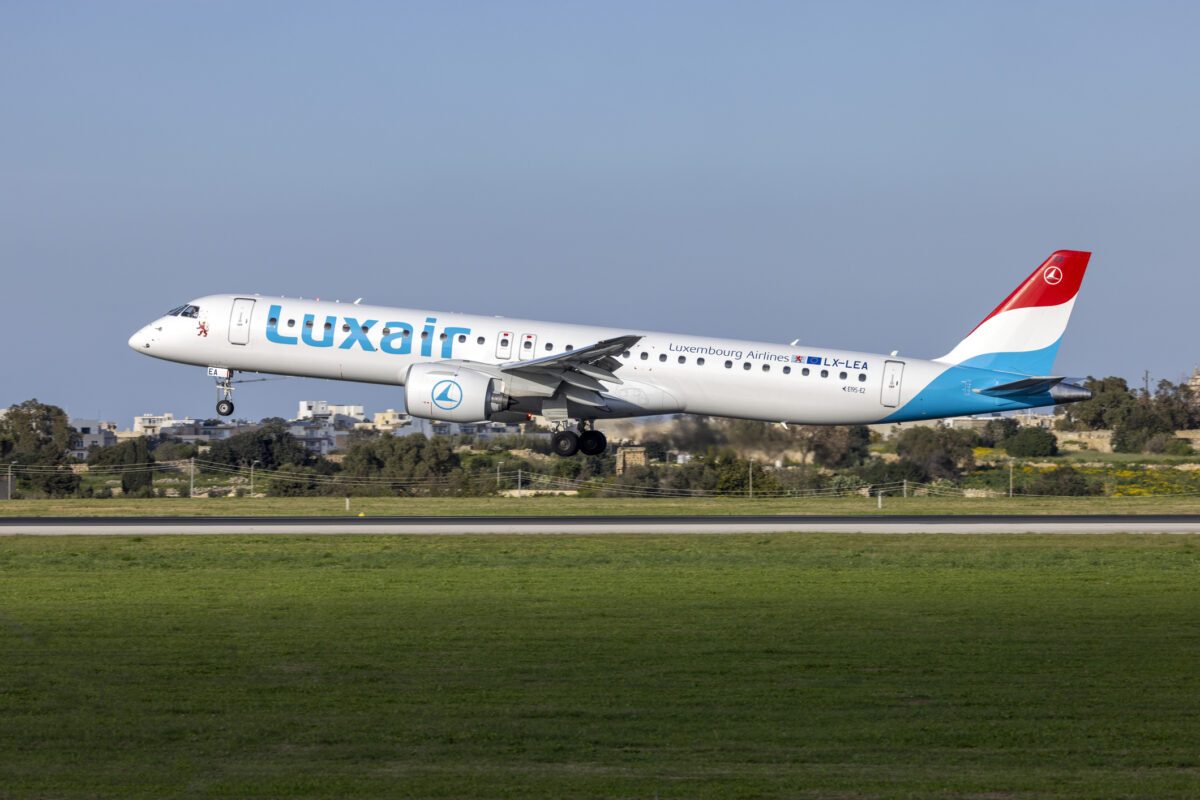
Luxair will open a seasonal route between Luxembourg Airport (LUX) and Riga Airport (RIX) on May 3, 2027, adding the Latvian capital to its expanding European network.

The airline will operate two round trips a week, on Mondays and Fridays, through the end of October. Luxair will be a new airline at RIX, while the service will establish the first nonstop air connection between Luxembourg and Latvia.
Tickets went on sale on November 24, 2026. Luxair’s Riga sales page initially advertised round-trip fares from €159, including taxes and fees, subject to availability.
Read our stories in your inbox
Two aviation newsletters. Zero fluff.
A Low-Frequency Route Built Around Several Markets
Riga Airport said the launch followed several years of discussions with Luxair and was supported by stable, growing demand between the two capitals, particularly during the summer. Travelers previously had to connect elsewhere in Europe.
The Monday-Friday pattern is structured to serve several distinct traffic flows. It allows a Friday-to-Monday leisure trip, a Monday-to-Friday business itinerary and longer stays for passengers visiting friends and relatives. It also avoids requiring Luxair to commit daily or near-daily capacity to a market that has not previously had nonstop service.
Luxair is positioning Riga as both a city-break destination and its latest entry into Northern and Eastern Europe. The Latvian capital also gives the airline a direct presence in the Baltic states, extending a network that already reaches more than 100 destinations.
The route follows the July 2026 introduction of twice-weekly Luxembourg services to Helsinki and Edinburgh. In its announcement marking those launches, Luxair said fleet renewal was creating additional opportunities for targeted network growth. The airline carried more than 2.6 million passengers in 2025 and operated just under 30,000 flights.
Luxair Assigns the E195-E2
Luxair plans to serve Riga with the Embraer E195-E2, the aircraft type at the center of its short- and medium-haul fleet renewal. Its aircraft have 136 seats in a single-class, 2-2 layout, eliminating middle seats throughout the cabin.
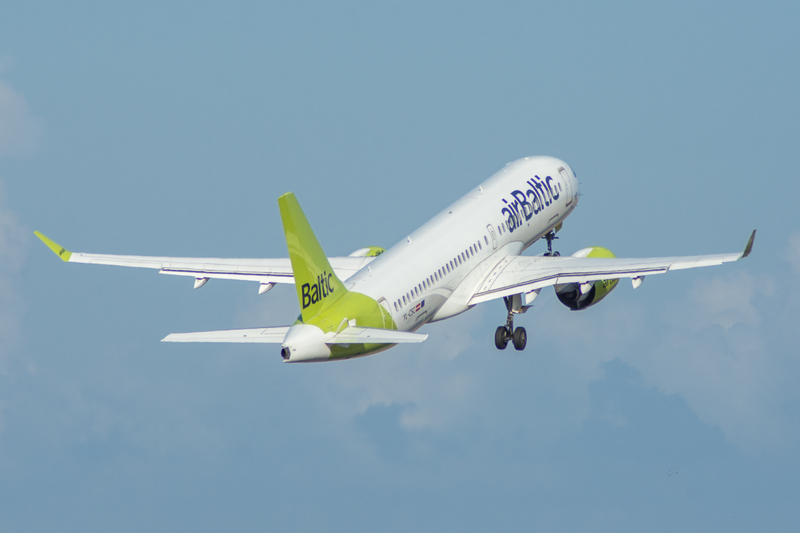
AirBaltic Expands Winter Network with New Destinations Across Europe and North Africa
Luxair’s published cabin specification lists a 30-inch seat pitch. The aircraft also has larger overhead bins, USB-C power and wireless inflight entertainment accessed through passengers’ own devices.
That capacity is a practical fit for a new twice-weekly city pair. Two 136-seat flights in each direction provide 272 weekly seats per directional market. If the full announced season operates with that configuration, Luxair would offer about 7,072 seats each way between May 3 and October 29, or roughly 14,144 seats across both directions.
The E195-E2 also gives Luxair considerably more range than the Riga sector requires. Embraer publishes a full-passenger range of up to 3,000 nautical miles for the type, while the cabin’s narrowbody-style capacity allows the airline to test thinner markets without deploying one of its larger Boeing 737s.
Luxair placed its original order for four E195-E2s in 2023 and subsequently added two more. The first entered commercial service in January 2026. By July, four were operating across the network, according to the airline’s follow-on E2 fleet announcement.

The carrier has also ordered three 100-seat E190-E2s for delivery from late 2028. Together, the two E2 variants will give Luxair a common family covering different demand bands below the capacity of its 737 fleet.
Riga Continues to Add New Airline Names
For RIX, Luxair adds another foreign network carrier while opening an unserved country market. The airport’s route announcement described the service as a product of long-running work between the two companies rather than a short-term schedule addition.
Riga handled 7.1 million passengers in 2025, including 5.7 million travelers beginning or ending their journeys at the airport. Direct passenger numbers rose even as transfer traffic declined, making additional point-to-point links particularly relevant to the airport’s traffic mix.
Traffic remained broadly stable in 2026. RIX recorded 5.97 million passengers in the first ten months of the year, about 1% fewer than in the same period of 2025, according to its October traffic report. Direct passengers accounted for 4.7 million of that total.
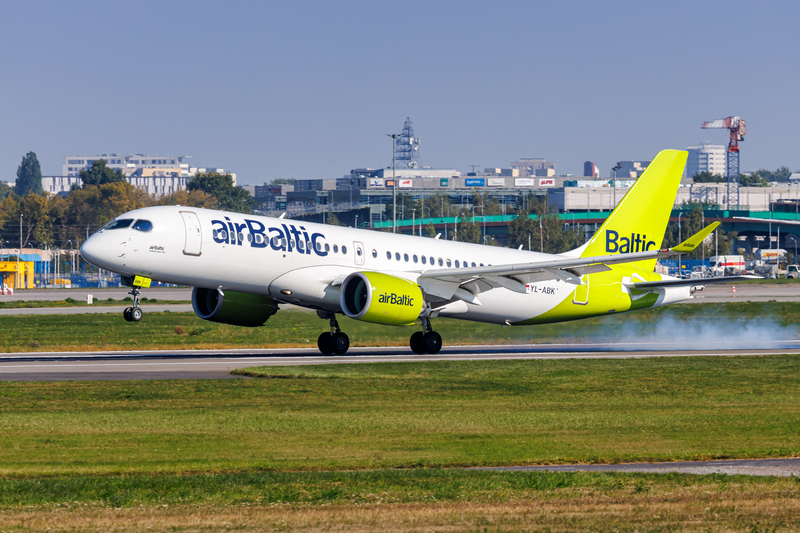
Luxair’s arrival will not materially alter the scale of the Riga market, which is dominated by airBaltic and Ryanair. Its significance lies instead in filling a specific network gap and bringing a new full-service airline to the airport with an aircraft sized for limited-frequency, point-to-point flying.
Bottom Line
The Riga route shows how Luxair is using the E195-E2 for more than straightforward replacement flying. A 136-seat jet gives the airline enough capacity to develop new capital-to-capital links while limiting the exposure that would come with a larger 737. Riga joins Helsinki and Edinburgh in a group of markets where two weekly flights can address business, leisure and visiting-friends-and-relatives demand without requiring a high-frequency schedule.
Riga gains a first nonstop link to Luxembourg and a new airline brand, while Luxair secures an early position in a Baltic market that fits its broader European network. The Monday-Friday timetable should also reveal whether demand is concentrated around short breaks or whether the route can build a more balanced mix of corporate and inbound traffic.
The main indicator to watch will be whether Luxair extends Riga beyond the initial summer season or increases frequency after the route establishes a booking history. The E2 fleet gives the carrier flexibility to do either, and the planned arrival of the smaller E190-E2 from 2028 will eventually provide another option for sustaining thinner routes outside peak months.