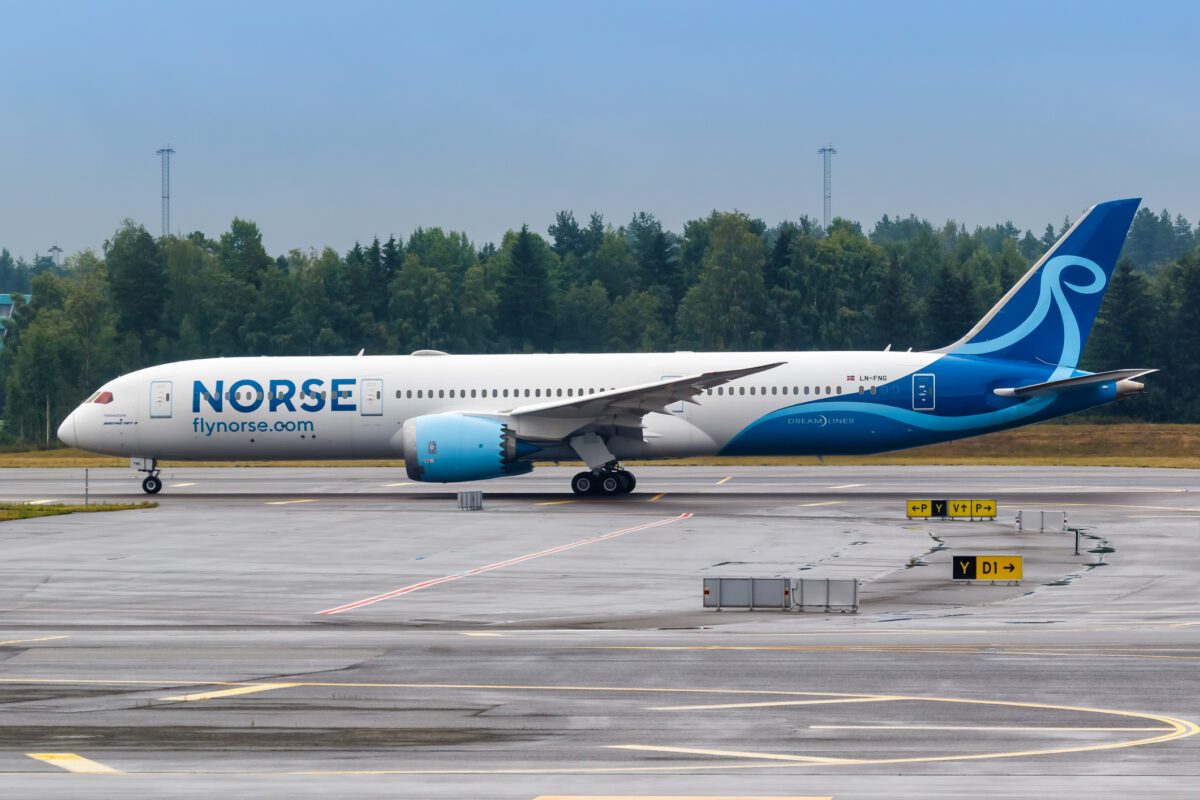
Norse Atlantic Airways suspended its flights on November 26 as the long-haul carrier sought an emergency financing agreement to avoid bankruptcy.
In a stock exchange announcement, parent company Norse Atlantic ASA said it had canceled all flights scheduled for the day while its board assessed whether a viable funding solution could be reached.
“If a short-term financing solution is not secured urgently, it is the Board’s intention to file for bankruptcy,” the company said. Norse apologized to passengers but did not provide a date for restarting operations.
Read our stories in your inbox
Two aviation newsletters. Zero fluff.
The suspension followed a warning issued one day earlier that described the airline’s financial position as critical. The company is holding discussions with investors over a possible takeover that would include new financing, while separately seeking short-term liquidity from selected parties.
Norse said there was no assurance that the talks would produce a viable outcome. The company had not announced a bankruptcy filing or liquidation as of its November 26 update.
Funding Talks Follow Bondholder Meeting
Norse’s board met holders of the airline’s 15% senior secured $52 million bonds on November 25. The debt matures in 2027 and was raised only months earlier as the carrier attempted to manage higher fuel costs, reduced flying and the financial demands of its leased fleet.
The airline’s initial liquidity warning said management and its advisers had examined a range of options, including further ACMI contracts and a potential takeover. Those discussions have now become a race to provide enough cash for operations to resume.
The crisis follows several attempts to recapitalize the airline during 2026. Norse announced a $110 million rights issue in April and arranged a $70 million bridge facility pending completion of that transaction. Its first-quarter accounts showed free cash of $4.9 million at March 31, against current liabilities of $361.1 million and current assets of $130.3 million.
The same accounts reported negative book equity of $283.8 million and aircraft lease liabilities of $762.4 million. Norse said all 12 of its Boeing 787-9s were leased under fully fixed payment arrangements, leaving the airline with substantial continuing obligations even as it reduced production.
A further $52 million secured financing agreement was announced with the second-quarter results. Norse also accelerated Project Falcon, a cost program targeting up to $50 million in annual savings against its 2025 cost base.
Strong Loads Did Not Resolve the Cash Problem
Norse continued to report high load factors and improving unit revenue before the suspension, but those commercial figures were being produced across a smaller scheduled network.
Its October traffic report recorded a 94.9% load factor across scheduled, charter and ACMI flying. The airline operated 199 flights on its own network, down from 355 in October 2025, while ACMI and charter activity increased from 130 to 151 flights.
Second-quarter revenue totaled $132 million, with a 94% load factor and a 23% year-over-year rise in scheduled-network unit revenue. Nevertheless, Norse reported negative EBITDAR of $8.4 million as fuel costs, lower aircraft utilization and operational disruption outweighed the stronger passenger revenue performance.

The results exposed the limits of load factor as a measure of financial health. Norse was selling a high proportion of the seats it offered, but it was also cutting capacity and carrying the fixed costs of a long-haul fleet that needed consistently high utilization.
ACMI Strategy Lost a Major Customer
Norse had increasingly relied on ACMI and charter work to balance its own scheduled network. That strategy reduced direct exposure to ticket sales and allowed the carrier to place aircraft with customers needing near-term widebody capacity.
A major part of that operation involved IndiGo, which used six Norse 787-9s as it developed long-haul service from India. The airlines agreed to end their cooperation effective November 1, returning five remaining aircraft to Norse after an earlier redelivery.
In its July operational update, Norse attributed the decision to elevated fuel prices, airspace disruption and longer routings associated with conflict in the Middle East. It planned to place the returning aircraft with new ACMI customers or use them selectively on its own network.
One replacement customer was Pakistan International Airlines. The carriers signed an agreement covering two Boeing 787-9s, with Norse supplying the aircraft, crews, maintenance and insurance for PIA services between Pakistan and the United Kingdom beginning in November.
Norse presented that contract as evidence that it could rapidly redeploy capacity after the IndiGo agreement. The systemwide suspension, however, removes aircraft from both Norse’s scheduled operation and services flown for customers under its operating certificates.
A Fleet Built for Long-Haul Flying
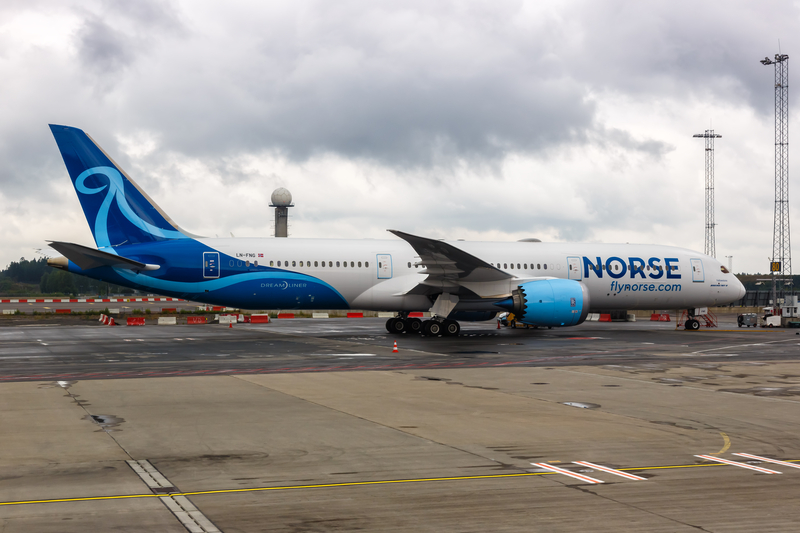
Norse’s operation is centered entirely on the Boeing 787-9 Dreamliner, giving the airline a standardized long-haul fleet but little flexibility to move into shorter, less fuel-intensive markets.
Boeing lists the 787-9 with typical two-class seating for 250 to 325 passengers and range of up to 8,300 nautical miles. That capability suits intercontinental scheduled routes and ACMI work, but the economics depend heavily on keeping the aircraft productive and spreading ownership, crew and maintenance costs across sufficient block hours.
The grounding also comes as Norway’s Civil Aviation Authority pursues Norse over recognized passenger compensation claims that remained unpaid. The regulator imposed a compulsory fine of NOK 8,000 per business day, effective November 20, until the airline demonstrates that it has met the payment order.
The authority said Norse had received two extensions after being notified of the proposed enforcement action in March. It added that the company’s difficult financial position did not remove its responsibility to settle valid passenger claims.
Bottom Line
The immediate winners from any rescue would be Norse’s passengers, employees and ACMI customers, but a financing package must do more than restart flying for several days. A credible investor would have to address the airline’s fixed aircraft commitments, provide working capital for the winter season and determine how many 787-9s can be placed on contracts producing dependable cash flow.
The suspension also tests the “airline on demand” model that Norse adopted as it moved away from relying principally on low-cost scheduled flying. ACMI can stabilize revenue, but the loss of IndiGo returned almost half the fleet at once, and the PIA contract covered only part of that capacity. For a 12-aircraft widebody operator, even a small number of idle aircraft can quickly overwhelm improvements in fares and load factor.
The next material development will be either a funded takeover or short-term agreement that permits flights to resume, or a formal bankruptcy filing. Until one is announced, Norse’s 787 fleet and the flying programs built around it remain in limbo.