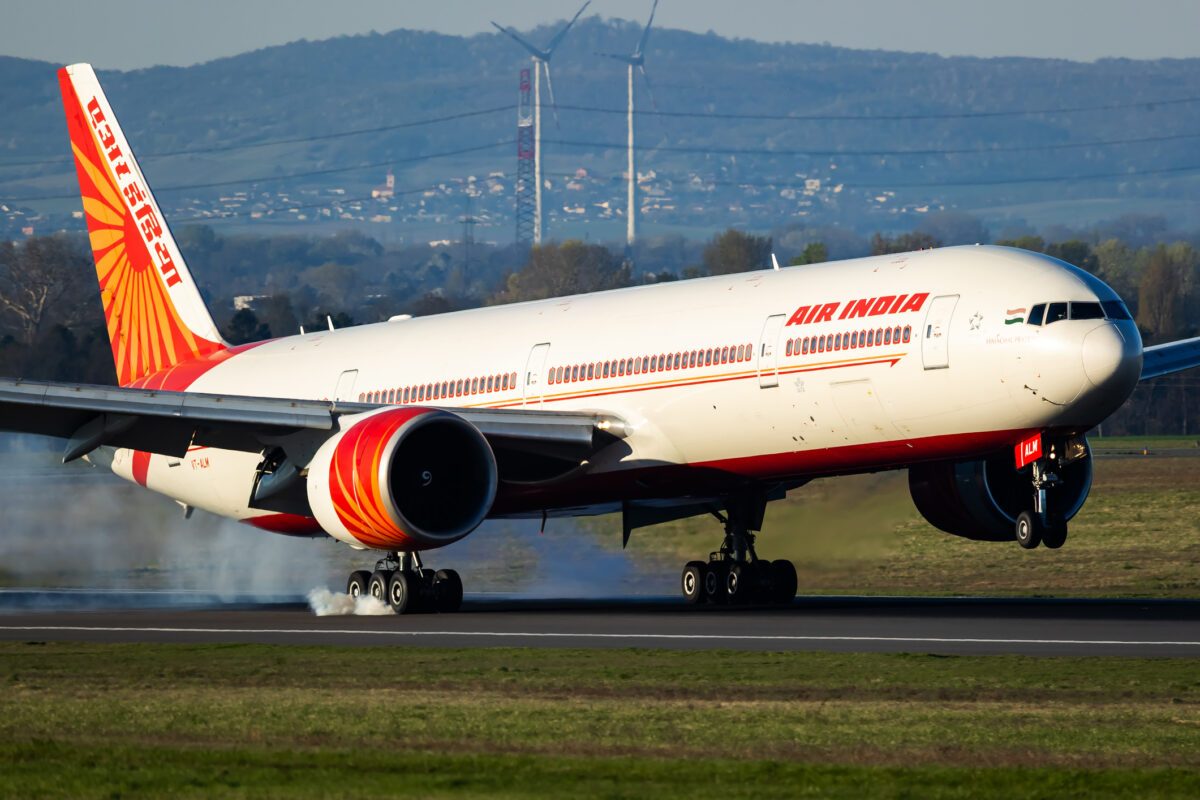
Air India has restored nonstop operations from Delhi (DEL) and Mumbai (BOM) to New York Kennedy (JFK) and Newark (EWR), removing the technical refueling stops at Rome Fiumicino (FCO) that had extended journeys to the United States.

Recent flight records show the transition taking place during the first week of November. AI101 from Delhi to JFK operated through to New York, while AI191 from Mumbai to Newark completed a nonstop sector on November 5 after previously being recorded as separate Mumbai-Rome and Rome-Newark legs. The airline’s current schedule notice says there are no active network adjustments and flights are operating to the published timetable.
The change removes roughly three to four hours from itineraries that had grown to around 20 hours or more with the Rome stop. Current operating times for the nonstop sectors are generally in the 16- to 18-hour range, depending on origin, destination, winds and the route available on the day.
Read our stories in your inbox
Two aviation newsletters. Zero fluff.
Rome Stops Followed a Wider Airspace Closure
Air India introduced the European fuel stops after conflict and airspace restrictions across the Middle East removed several of the airline’s usual westbound options. In a March 7 operational update, the carrier said its North American services were using technical stops at Rome or Vienna because the alternative routings were substantially longer.
Those operations preserved the India-U.S. schedule but carried a significant penalty. A technical stop adds another landing and takeoff, ground handling, airport charges and additional schedule exposure. It can also complicate crew planning on sectors already close to flight-duty limits.
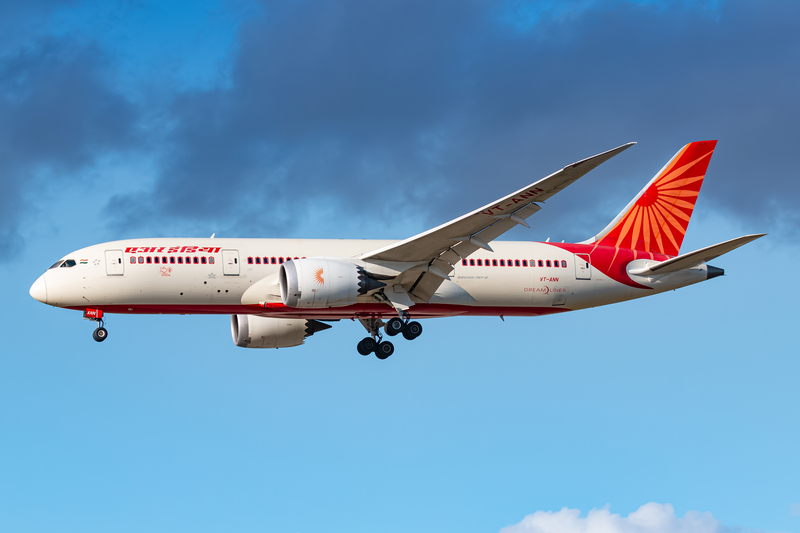
The underlying route constraints have not disappeared. Air India has previously said that the continued closure of Pakistani airspace to Indian carriers lengthens its long-haul routings and increases operational complexity. The Iraqi option instead gives dispatchers a more direct path west without requiring access to either Pakistan or Iran.
Iraq Returns Western Airspace to Civilian Use
Iraq announced on September 18 that military areas in the western part of the country had been returned to civilian aviation control. According to the Iraqi Transport Ministry announcement, the zones had been reserved for military operations since 2016 and 2017.
The reopening has quickly changed regional traffic flows. Iraq’s aviation authorities reported a 31% increase in overflights after the restrictions were lifted, according to an official summary published by the Qatar Civil Aviation Authority. For airlines flying between South Asia and Europe or North America, western Iraq can provide a valuable bridge between Gulf airspace and Turkey.
Access remains subject to each operator’s risk assessment and regulatory framework. The European Union Aviation Safety Agency’s current conflict-zone bulletin continues to recommend that operators under its oversight avoid the Baghdad Flight Information Region because of military activity and the risk of misidentification. Air India’s decision therefore reflects its own security assessment and approvals rather than a uniform industry return to Iraqi airspace.
A350s From Delhi and 777s From Mumbai
Air India’s Delhi flights to JFK and EWR use the Airbus A350-900. The carrier’s aircraft seat 316 passengers: 28 in Business, 24 in Premium Economy and 264 in Economy. Air India introduced the type on Delhi-JFK in November 2024 and Delhi-Newark in January 2025, placing its newest long-haul product on two of its most important U.S. routes.
The aircraft is well matched to the mission. Airbus lists a maximum range of up to 8,600 nautical miles for current A350-900 variants, although practical payload depends on winds, routing, reserves and airport conditions. The restored Iraqi path gives Air India more margin than the southern detour that forced the Rome stop.
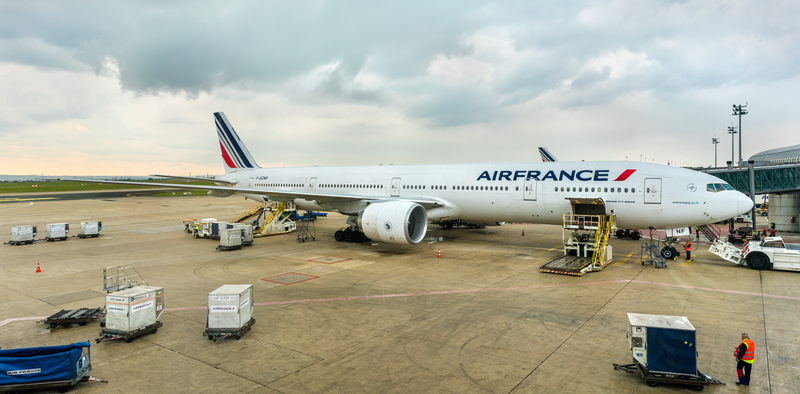
Mumbai services use upgraded Boeing 777-300ERs. Air India configures those aircraft with eight First Class suites, 40 Business seats and 280 Economy seats. Boeing describes the 777-300ER as a long-range aircraft designed for nonstop missions of up to 7,370 nautical miles, putting Mumbai-New York operations close enough to the aircraft’s practical limits for route length and fuel planning to matter.
Removing Rome does not eliminate the payload calculation. The aircraft must leave India carrying fuel for the full sector plus required reserves, increasing takeoff weight and potentially limiting baggage or cargo under unfavorable conditions. The shorter Iraqi routing nevertheless gives planners more room to balance fuel, payload and recovery options than the extended southern path.

Bottom Line
For Air India, the immediate gain is not simply a shorter published journey. Nonstop service is the carrier’s clearest advantage over connecting competitors in the India-U.S. market, particularly for corporate passengers and travelers beginning their journeys in Delhi or Mumbai. Restoring that distinction should improve the appeal of the New York-area schedule while removing the cost and operational exposure of an additional landing in Europe.
The development also illustrates how quickly airspace availability can reshape ultra-long-haul economics. A corridor reopened hundreds of miles from either endpoint can determine whether a route operates nonstop, requires a fuel stop or carries a payload restriction. Air India will still be working around other unavailable airspace, so Iraq provides relief rather than a return to the most efficient pre-crisis routings.
The next measure will be consistency. If the airline can retain Iraqi access through the winter while operating the flights with commercially useful payloads, the change should strengthen both schedule reliability and aircraft utilization. Any deterioration in regional security could reverse that progress quickly, making routing stability as important as passenger demand on these four sectors.