United Airlines is adding three highly targeted routes from its East Coast hubs, strengthening its position in several leisure-heavy markets where nonstop access carries a premium.

The Star Alliance carrier will launch a new transcontinental link between Washington Dulles International Airport (IAD) and Orange County’s John Wayne Airport (SNA), restore nonstop service between Washington Dulles (IAD) and San José del Cabo/Los Cabos International Airport (SJD), and bring Newark Liberty International Airport (EWR) back into the St. Croix (STX) market after a gap dating back to the Continental Airlines era.
The additions are not simply about adding dots to the route map. Each one fills a specific network gap. Orange County (SNA) gives United’s Dulles hub a nonstop into one of Southern California’s most capacity-constrained and business-relevant airports. Los Cabos (SJD) restores a premium Mexico leisure market from the nation’s capital. St. Croix (STX) gives United a new foothold in a Caribbean market with limited nonstop mainland connectivity, particularly from the New York area.
Read our stories in your inbox
Two aviation newsletters. Zero fluff.
United Adds A New Dulles–Orange County Nonstop
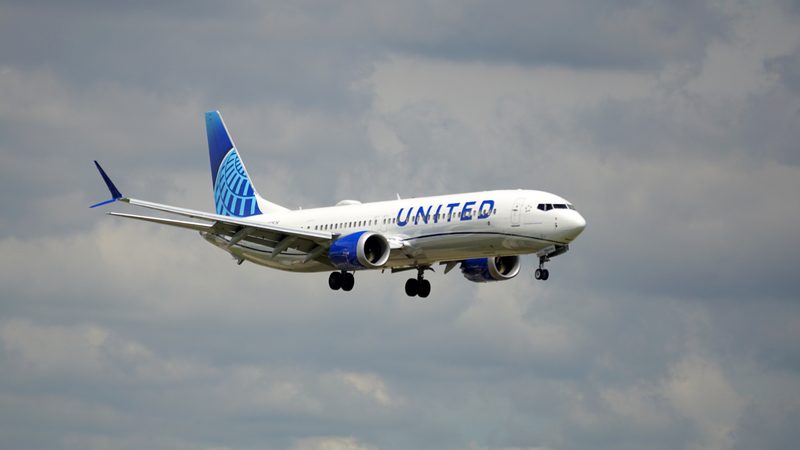
United’s first of the three new routes will be Washington Dulles (IAD) to Orange County/Santa Ana (SNA), launching August 11, 2026. The route is scheduled to operate daily on Boeing 737 equipment.
The published schedule is built around an evening westbound departure from Washington Dulles (IAD) and a morning eastbound return from Orange County (SNA):

Washington Dulles (IAD) to Orange County (SNA) departs at 5:45 p.m. and arrives at 8:34 p.m.
Orange County (SNA) to Washington Dulles (IAD) departs at 8:10 a.m. and arrives at 4:07 p.m.
For United, this is a logical but meaningful addition. Washington Dulles (IAD) is United’s primary Mid-Atlantic international gateway, while Orange County (SNA) is one of the most attractive airports in Southern California for higher-yield travelers. The route should appeal to corporate traffic moving between the Washington region and Orange County’s business centers, as well as leisure travelers heading for Newport Beach, Laguna Beach, Disneyland, and the broader coastal Orange County market.
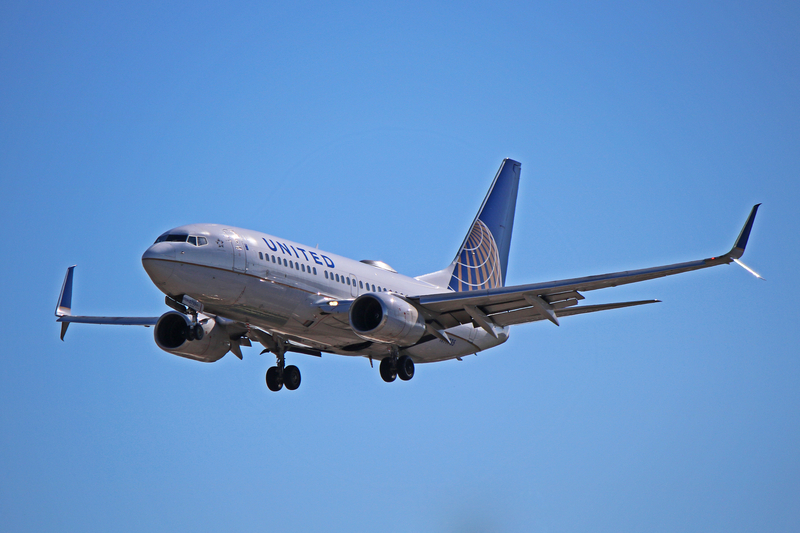
The use of Boeing 737 equipment also makes sense. At roughly 2,260 statute miles, Washington Dulles (IAD) to Orange County (SNA) is a long domestic narrowbody sector but well within the capabilities of United’s 737 fleet. United has not locked the route publicly to one specific 737 variant, so the operation may vary between members of the 737 Next Generation and 737 MAX families depending on seasonal demand, aircraft rotations, and fleet planning.
For aviation professionals, the airport choice is the story. John Wayne Airport (SNA) is not simply another Southern California airport. It is a premium, airfield-constrained gateway with a 5,700-foot main commercial runway, strict local operating considerations, and a catchment area that often prefers avoiding Los Angeles International Airport (LAX) whenever nonstop service is available. SNA handled more than 11.3 million passengers in 2025, underscoring its importance despite its limited physical footprint.
United already serves Orange County (SNA) from several of its hubs, including Chicago O’Hare (ORD), Denver (DEN), Houston Intercontinental (IAH), Newark (EWR), and San Francisco (SFO). Adding Washington Dulles (IAD) gives the airport a new nonstop link to the nation’s capital region and strengthens United’s ability to compete for premium California-bound traffic from the East Coast.
Los Cabos Returns To United’s Dulles Network
United will also restore nonstop flights between Washington Dulles (IAD) and San José del Cabo/Los Cabos (SJD) beginning October 25, 2026. The route is scheduled to operate four times weekly for much of the winter season, with daily flying during the peak December travel period.
The planned schedule is:
Washington Dulles (IAD) to Los Cabos (SJD) departs at 8:30 a.m. and arrives at 12:08 p.m.
Los Cabos (SJD) to Washington Dulles (IAD) departs at 1:20 p.m. and arrives at 7:58 p.m.
This is a strong leisure-market play. Los Cabos (SJD) has continued to develop into one of Mexico’s most premium-heavy resort destinations, with demand driven by luxury hotels, golf, villa traffic, meetings and incentives, and high-end leisure travel. For United, restoring the route from Washington Dulles (IAD) also completes an important network picture: Los Cabos (SJD) will again be accessible nonstop from all seven of United’s U.S. hubs.
The timing is also notable. The October 25 launch aligns with the start of the northern winter scheduling season, when U.S.–Mexico leisure demand begins building toward the holiday and spring-break peaks. The morning departure from Washington Dulles (IAD) gets travelers into Los Cabos (SJD) just after midday, which is attractive for resort arrivals. The early-afternoon return from SJD reaches IAD in the evening, preserving onward connectivity at Dulles while keeping the aircraft utilization straightforward.
At roughly 2,180 statute miles, Washington Dulles (IAD) to Los Cabos (SJD) is another substantial Boeing 737 sector. It sits comfortably inside the operating profile of United’s 737 fleet and is the type of route where a narrowbody aircraft gives the airline enough range and cabin consistency without requiring widebody capacity.
The route also gives United a useful competitive advantage in the Washington region. While many travelers to Los Cabos can connect over hubs such as Houston (IAH), Denver (DEN), or Chicago O’Hare (ORD), nonstop service from Dulles (IAD) removes a connection from a high-value leisure itinerary. That matters in a market where travelers are often paying premium fares for long weekends, resort stays, and winter escapes.
Newark–St. Croix Returns After A Continental-Era Gap
United’s third addition is a Caribbean route with historical significance. The airline plans to resume nonstop service between Newark Liberty (EWR) and St. Croix’s Henry E. Rohlsen Airport (STX) beginning October 31, 2026.
The route is scheduled to operate once weekly. United has not yet published full public schedule details or confirmed the specific aircraft type for the St. Croix (STX) service, so it is best viewed for now as a planned weekly leisure-market operation rather than a fully detailed timetable.
The Newark (EWR) to St. Croix (STX) route has not been part of United’s network in modern form. It traces back to Continental Airlines, which last operated the market in the mid-1990s. Bringing it back gives United a nonstop link from its New York-area hub to a U.S. Virgin Islands market that has far less mainland nonstop service than St. Thomas (STT).
That distinction is important. St. Croix (STX) is not replacing United’s existing U.S. Virgin Islands flying. Instead, it broadens United’s presence in the territory beyond St. Thomas (STT) and gives the carrier a second U.S. Virgin Islands destination. From a network perspective, Newark (EWR) is the right hub for the route. It offers strong local demand from the New York metropolitan area, deep MileagePlus loyalty, and broad domestic and transatlantic connectivity.
For St. Croix (STX), the flight should be especially valuable because nonstop access to the continental United States remains more limited than in many other Caribbean leisure markets. American Airlines has traditionally been important through Miami (MIA), Delta has served the market through Atlanta (ATL), and San Juan (SJU) remains a key regional gateway. A nonstop Newark (EWR) flight adds a different kind of access: direct service from the largest metro area in the United States and one of United’s most important global hubs.
Even at once weekly, the service can be commercially useful. Saturday-style Caribbean flying often works well in markets driven by weekly resort stays, vacation rentals, cruise-adjacent tourism, and visiting-friends-and-relatives traffic. It also allows United to test demand without overcommitting capacity in a market where seasonality and hotel inventory can heavily influence performance.
Why These Routes Matter
United’s three additions show a disciplined approach to growth from the East Coast. None of the routes is a generic frequency add. Each has a clear network purpose.
Washington Dulles (IAD) to Orange County (SNA) gives United a nonstop into a constrained, high-value Southern California airport that is difficult for competitors to replicate quickly. Washington Dulles (IAD) to Los Cabos (SJD) restores a premium leisure link and rounds out United’s hub coverage to one of Mexico’s strongest resort markets. Newark (EWR) to St. Croix (STX) gives United a new Caribbean spoke from a hub with enormous local and connecting power.
The aircraft strategy is equally straightforward. Boeing 737-family aircraft are the right tool for the two confirmed Dulles routes, giving United enough range for long narrowbody sectors without flooding the market with excess capacity. The 737 platform also provides fleet flexibility, allowing United to adjust gauge by season as demand matures.
For travelers, the additions mean fewer connections. For United, they mean better use of hub strength in markets where nonstop service can command a meaningful premium.
Bottom Line
United’s new East Coast routes are small in number but strategically sharp. Daily Washington Dulles (IAD) to Orange County (SNA) service gives the carrier a valuable new transcontinental link into one of Southern California’s most attractive airports. The return of Washington Dulles (IAD) to Los Cabos (SJD) strengthens United’s premium Mexico leisure offering. Newark (EWR) to St. Croix (STX) brings back a long-absent Caribbean route and expands United’s U.S. Virgin Islands reach.
For a carrier already leaning heavily into hub connectivity and premium leisure demand, these are exactly the kinds of routes that make sense: targeted, defensible, and supported by strong local and connecting traffic flows.