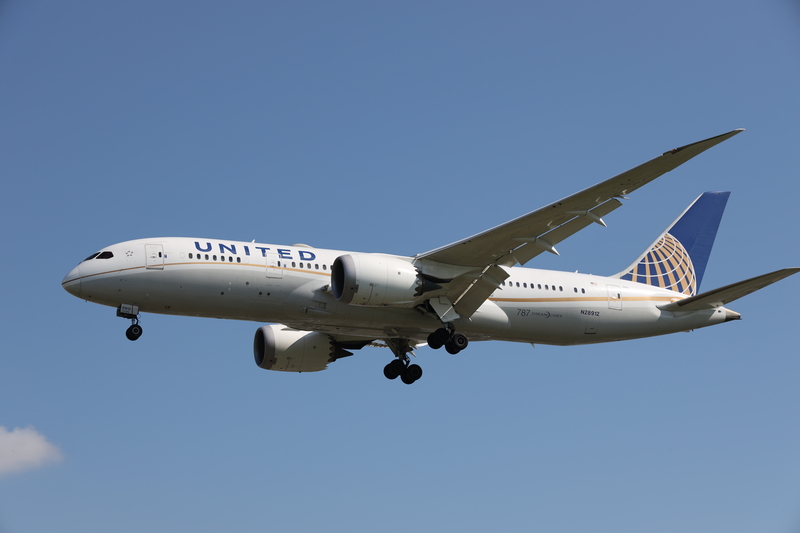
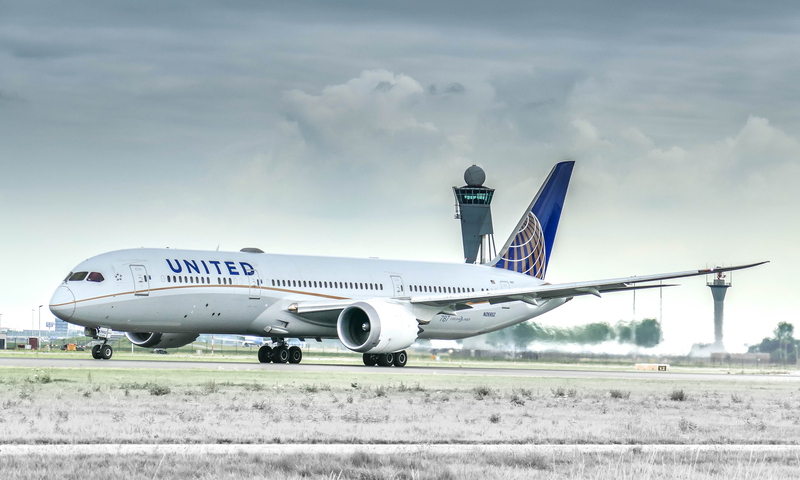
United Airlines is preparing to take delivery of the first aircraft in a new, premium-heavy subfleet of Boeing 787-9 Dreamliners—an unusually low-density configuration designed to push more revenue through the front of the cabin while giving network planners extra flexibility on ultra-long-haul missions.

According to pilot communications circulated internally, the first jet (tail number N61101) is expected to arrive in February 2026, with entry into service targeted for March. The early flying is expected to focus on long, premium-leaning markets from San Francisco International Airport (SFO), including service to Singapore Changi Airport (SIN) and Heathrow Airport (LHR)—routes where business demand, high-yield leisure, and corporate contracts can justify a materially different seat mix.
A 787-9 That Trades Volume for Yield
The 787-9 is already a sweet spot for long-haul economics: composite structure, strong cargo capability, and long range (Boeing publishes the 787-9 at roughly 7,500+ nautical miles, depending on payload and conditions). For airlines, the type’s real superpower is flexibility—right-sized capacity for thin long-haul routes, with the legs to do stage lengths that previously forced larger widebodies.
Read our stories in your inbox
Two aviation newsletters. Zero fluff.
United’s new subfleet takes that versatility and tilts it hard toward premium.
This configuration is widely described in the industry as a 222-seat layout—one of the least dense 787-9 setups you’ll see at a major U.S. airline—built around a substantially larger business-class cabin and a meaningfully expanded Premium Plus section.
A commonly cited breakdown for the new layout is:
-
222 total seats
-
64 Polaris (including 8 Polaris Studio seats)
-
35 Premium Plus
-
123 Economy (with a portion sold as Economy Plus extra-legroom)
The precise Economy Plus count can vary slightly as airlines finalize cabin zoning and seat maps, but the strategic intent is clear: this aircraft is meant to monetize premium demand first, and then use a smaller, more manageable economy cabin to keep load factors healthy year-round.
Why the “78L” Subfleet Matters to Network Planning
Internally, United has been using a distinct subfleet code (often referenced as “78L”) to differentiate these jets from its existing 787-9s. That separation isn’t just accounting trivia—it’s operationally meaningful.
A premium-heavy 787-9 can be deployed in two very different ways:
First, it can stabilize performance on very long routes like SFO–SIN, where headwinds, alternates, and payload tradeoffs are part of daily life. Fewer seats can mean:
-
more consistent takeoff performance margins
-
better odds of keeping cargo on when winds are ugly
-
less reliance on tactical seat blocking or ad-hoc inventory management
Second, it can replace older premium-biased widebodies on shorter long-haul missions (think transatlantic trunk routes) where the range is less critical than the revenue profile. That’s a powerful lever in markets like SFO–LHR, where schedule utility and premium cabin quality often matter more than sheer seat count.
Inside the Cabin: Polaris Studio Leads the Story
United’s current Polaris product has been competitive, but this new interior is meant to be a step-change—especially at the pointy end.
The headline feature is Polaris Studio: eight larger suites positioned in the front row of each Polaris cabin section. These seats are intended to sell as a distinct product tier—closer to “business-plus” than traditional business class—with more personal space and upgraded service touches.
Beyond Studio, the standard Polaris suites on these jets also move the product forward with features premium travelers now expect on modern long-haul business class:
-
sliding privacy doors
-
larger, higher-resolution seatback screens
-
improved power/charging options and updated finishes
For premium-heavy aircraft, the physical hard product is only half the equation. The other half is consistency: if United can keep this subfleet reliably assigned to the flagship routes it’s designed for, corporate buyers and frequent flyers will treat it as a known quantity—something that directly supports repeat purchase behavior on routes where competition is intense.
The Operational Angle: Why 222 Seats Can Be a Sweet Spot
From an airline ops perspective, this is not just a “nicer cabin” story. A lower-density widebody can simplify real-world execution in a few underappreciated ways:
-
More predictable peak-season performance: long-haul routes out of SFO can be constrained by winds and runway performance; fewer seats helps keep the aircraft within comfortable margins without giving up the mission.
-
Better fit for premium seasonality: premium demand can be more stable than leisure economy demand on some international markets—especially when corporate travel rebounds or when premium leisure spikes.
-
Less dilution risk: adding a big economy cabin is easy; filling it profitably in shoulder season is harder. A smaller economy cabin reduces the “fare dump” pressure that can erode yields.
In other words, it’s an aircraft that’s designed to be less about chasing maximum passengers and more about protecting margin.
A Centennial Livery?
Because 2026 marks 100 years since Varney Air Lines’ 1926 origins—often cited as the start of United’s corporate lineage—there’s also been industry chatter that early aircraft in this new subfleet could carry a special centennial scheme. At the moment, that’s best treated as “wait and see” until United makes an explicit public announcement tied to a specific tail number.
Bottom Line
United’s first premium-heavy 787-9 is expected to arrive in February 2026 and enter service in March, with early deployment expected on premium-strong long-haul flying from SFO—particularly SIN and LHR. The 222-seat configuration (anchored by 64 Polaris seats and the new Polaris Studio tier) is a deliberate bet that premium demand—and premium product—can do more for profitability than simply adding more economy seats. If the airline can keep assignments consistent and execution tight, this subfleet has the potential to become one of the most commercially important “small” changes in United’s long-haul strategy for 2026.
Keep reading FlyMag
Get the Daily Brief in the morning or the Route Watch weekly recap on Fridays. Or both.