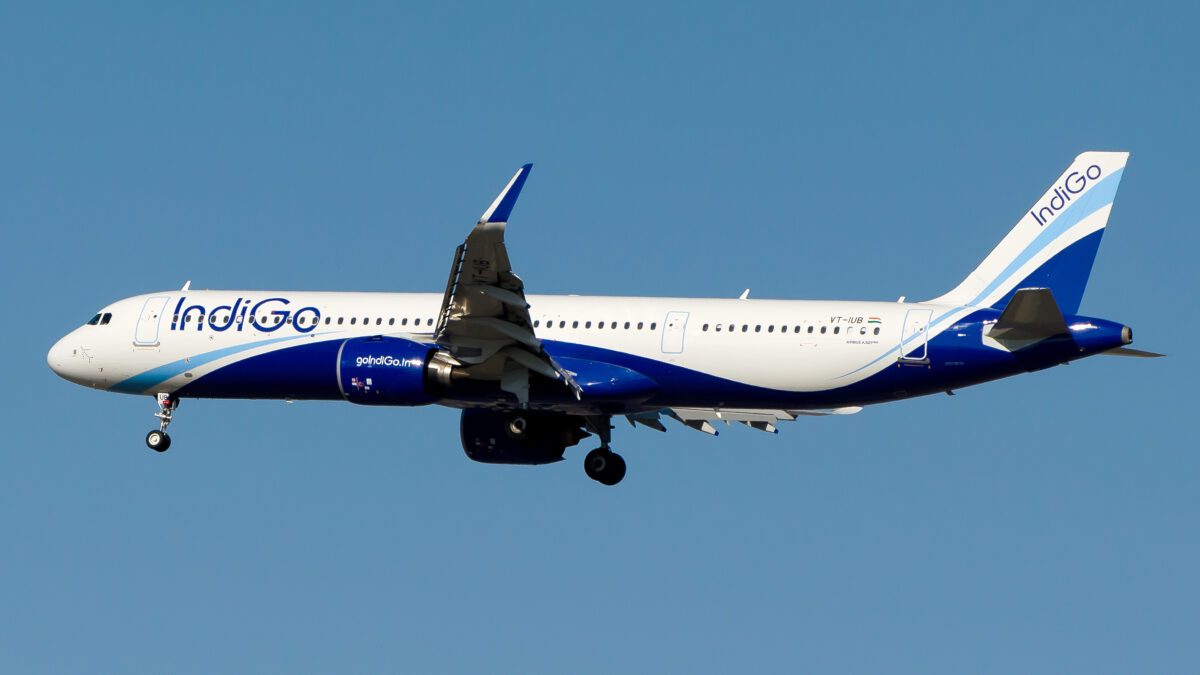
IndiGo has stopped flying to 10 international destinations during 2026, unwinding parts of an expansion that had taken India’s largest airline deeper into Europe, Central Asia, China, Southeast Asia and the Indian Ocean.

The affected destinations are Copenhagen (CPH), Manchester (MAN), London Heathrow (LHR), Tbilisi (TBS), Baku (GYD), Almaty (ALA), Tashkent (TAS), Ho Chi Minh City (SGN), Saint-Denis, Réunion (RUN), and Guangzhou (CAN). The withdrawals removed services from Delhi (DEL), Mumbai (BOM), Kolkata (CCU) and Chennai (MAA).
The changes are not all equivalent. IndiGo describes several routes as suspended or temporarily discontinued, leaving open the possibility of restoration. Published operating histories and schedules nevertheless show that the airline has ceased serving all 10 cities, at least for now.
Read our stories in your inbox
Two aviation newsletters. Zero fluff.
Wide-Body Exit Removes Three European Destinations
The largest structural change is the end of IndiGo’s Boeing 787-9 operation. The carrier used six aircraft supplied by Norse Atlantic Airways under a damp-lease arrangement, with Norse providing the aircraft and flight-deck crews while IndiGo supplied the cabin crew.
The fleet gave IndiGo an interim long-haul platform before the arrival of its own Airbus A350-900s. It also exposed the airline to the scheduling and cost pressures of operating a small, externally supplied wide-body subfleet across routes affected by changing airspace availability.
IndiGo began cutting the operation in February. It suspended Mumbai-Copenhagen from February 17, reduced Delhi-Manchester and Delhi-Heathrow frequencies, and added recovery time to the 787 schedule. The airline said airspace constraints and airport congestion had increased flight and block times enough to undermine reliability across the six-aircraft operation.
Manchester followed on August 31. In its announcement of the suspension, IndiGo cited longer routings, rising aviation turbine fuel costs, foreign-exchange volatility and an operating cost base that was materially higher than anticipated. One 787-9 was returned to Norse as the route closed.
The final step came on October 25, when IndiGo ended its remaining 787-9 services. The airline said it would conclude the Norse agreement on October 31, suspend Heathrow until its A350-900 fleet arrives and transfer Mumbai-Amsterdam (AMS) to the Airbus A321XLR.
The A321XLR preserves Amsterdam with substantially less capacity and a lower trip cost than the 787-9. IndiGo had four A321XLRs at September 30, according to its second-quarter fleet presentation. The same filing showed five leased 787-9s still in the fleet at quarter-end, down from six in June.
IndiGo’s access at Heathrow has also shifted. Airport Coordination Limited recorded a transfer of 28 weekly Summer 2027 slots from IndiGo to British Airways on November 12. ACL lists the transaction as a slot transfer rather than a permanent trade, but it removes the slot portfolio that supported IndiGo’s Delhi and Mumbai operation for that season.
Central Asian Expansion Reverses
Four destinations in Central Asia and the Caucasus disappeared from IndiGo’s operating network early in the year: Tbilisi, Baku, Almaty and Tashkent.
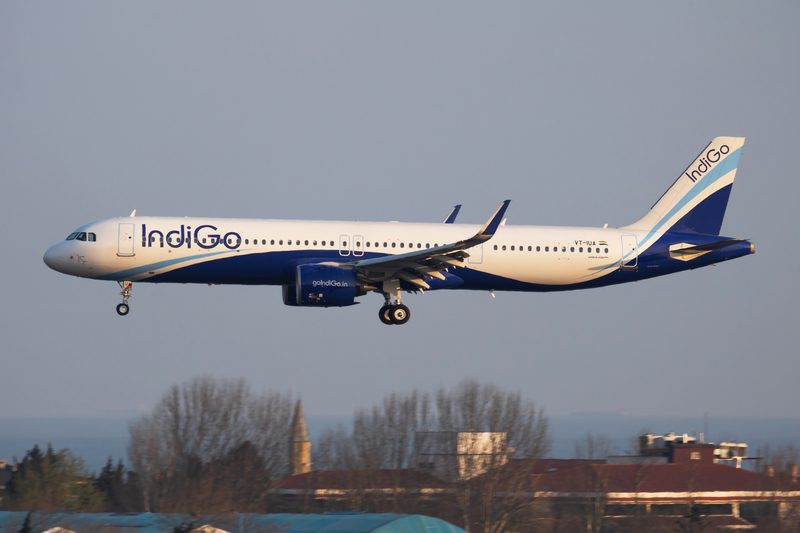
These markets had been an important part of IndiGo’s international growth. The airline opened Delhi links to all four cities in 2023 and later increased the routes to daily operation. It expanded again in 2025, adding Mumbai flights to Tbilisi, Almaty and Tashkent. The Mumbai additions were relatively short-lived: IndiGo had announced four weekly flights to Almaty and Tashkent, alongside three weekly Tbilisi service, only months before the 2026 pullback.
Operating histories show IndiGo’s Tbilisi flights ending in January, with Baku, Almaty and Tashkent also disappearing from the schedule around the end of January and beginning of February. The carrier has not issued a consolidated route-by-route explanation for those four withdrawals.
The operating environment provides important context. With direct airspace unavailable on some westbound routings, aircraft have had to fly longer tracks around restricted areas. An Airbus analysis of IndiGo’s Delhi-Baku operation showed flight time increasing by 26% between comparable A320neo services in October 2024 and October 2025. That increase directly affects fuel burn, crew utilization, aircraft productivity and the number of schedule disruptions a narrow-body rotation can absorb.
The four routes were well within A320neo and A321neo range, but range alone was not the issue. A narrow-body service that requires substantially more block time can lose the cost and utilization advantages on which IndiGo’s model depends, particularly in thinner international markets.
Kolkata Loses Ho Chi Minh City and Guangzhou
IndiGo suspended Kolkata-Ho Chi Minh City from July 1 as part of a broader seasonal international capacity reduction. Its June network announcement initially called for Ho Chi Minh City and five other destinations to return from October, but operating records show the Kolkata service has not resumed. The last outbound flight operated on June 30.
Guangzhou lasted longer. IndiGo had restored Kolkata-Guangzhou in October 2025 and later changed flight numbers as the route returned after a midyear interruption. Operations continued into November 2026, with the last observed Guangzhou-Kolkata flight arriving on November 17.
The withdrawal leaves Kolkata without two IndiGo-operated links that had given eastern India direct access to major commercial centers in Vietnam and southern China. Both routes used Airbus A320-family aircraft, fitting the carrier’s established short- and medium-haul model but facing the same pressure from cost, seasonal demand and aircraft allocation as the wider international network.
Réunion Route Ends After Six Months
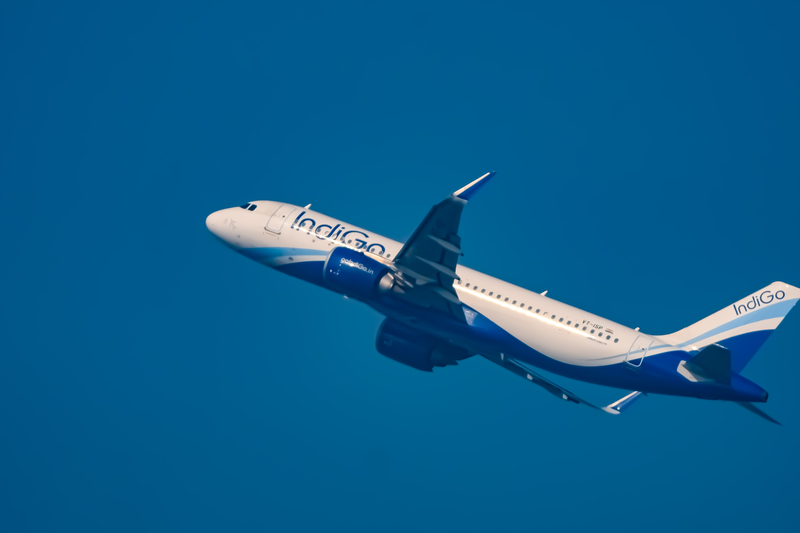
Chennai-Saint-Denis was the newest route among the 10 withdrawals. IndiGo started the three-times-weekly service on April 29 with an Airbus A320, making Réunion its 46th international destination.
The 2,878-mile sector was an unusually long and specialized market for the airline’s A320 operation. Réunion airport’s published timetable showed frequencies reduced to twice weekly for part of the season before returning to three weekly flights from late September. The final return flight to Chennai operated on October 21, ending the route after less than six months.
Bottom Line
The withdrawals show the limits of expanding rapidly across several different international operating models at once. The Norse 787-9 project gave IndiGo valuable experience in long-haul scheduling, premium service and wide-body operations, but a six-aircraft subfleet offered little resilience once airspace closures lengthened sectors and raised costs. The A321XLR is a better fit for Amsterdam’s current economics, but it cannot replace the capacity or network flexibility of a full wide-body fleet.
Central Asia presents a different lesson. Those routes could be flown with IndiGo’s core narrow-body fleet, yet longer routings reduced aircraft productivity and made relatively thin markets harder to defend. The same discipline appears in the short lives of Chennai-Saint-Denis and the interrupted Kolkata routes: international destinations remain expendable when they do not support the utilization and cost performance expected from the fleet.
IndiGo is not retreating from international growth. It has ordered 60 Airbus A350-900s and continues deploying the A321XLR on longer narrow-body missions. The 2026 reductions instead create a gap between its first wide-body experiment and the arrival of an owned long-haul fleet. The destinations that return, and the aircraft used to restore them, will show which parts of the initial expansion produced durable demand rather than network breadth alone.