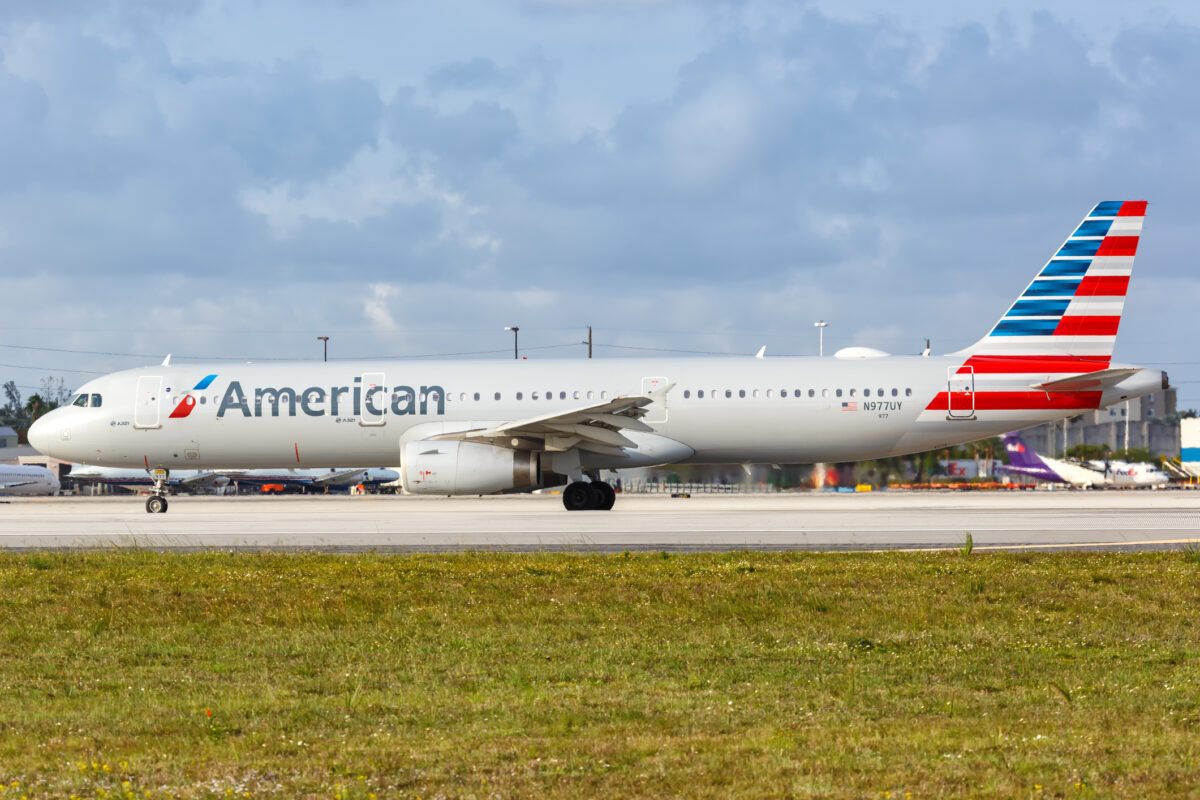
American Airlines continues to identify South America as a long-term assignment for its Airbus A321XLR fleet, putting the region alongside Europe in the carrier’s plans for eight- to 10-hour narrowbody missions.

The clearest statement appears in an American Airlines aircraft-financing presentation filed on April 27, 2026. The carrier said it intended to deploy the A321XLR on eight- to 10-hour services to Europe and South America, in addition to five- to six-hour premium transcontinental flying from New York and Boston.
This is a fleet deployment plan rather than a route announcement. American has not attached the South American assignment to a city pair or start date. It nevertheless confirms that the airline sees the XLR doing more than connecting the U.S. East Coast with secondary European markets.
Read our stories in your inbox
Two aviation newsletters. Zero fluff.
A South American Role Was Built Into the Order
South America has been part of American’s A321XLR strategy since it ordered the aircraft in 2019. At the time, the airline said the jet’s range would help it grow its East Coast hubs with new destinations in both Europe and South America.
The original agreement covered 50 aircraft, comprising the conversion of 30 existing A321neo delivery positions and an incremental order for 20 jets. Airbus described the order as giving American access to a single-aisle aircraft with up to 4,700 nautical miles of range and more than 90% commonality with the standard A321neo.
The April 2026 investor material is significant because it carries that earlier network concept into the aircraft’s operational phase. American is no longer describing a theoretical capability attached to a future order. It has introduced the type, trained crews and started building a schedule around it.
A later July 2026 aircraft-financing presentation characterized the A321XLR as capable of nine- to 10-hour flights and noted its use on premium transcontinental services and New York Kennedy (JFK)-Edinburgh (EDI). That document focused on further European expansion, where American has already disclosed the next group of routes, but it did not supersede the South American role set out in April.
A 155-Seat Long-Haul Narrowbody
American’s A321XLR has 155 seats: 20 Flagship Suite business-class seats, 12 Premium Economy seats and 123 Main Cabin seats. The Flagship Suites are lie-flat seats with privacy doors, while the Premium Economy cabin adds recliners with calf and footrests.
That configuration gives the aircraft 32 premium seats, or just over one-fifth of its total capacity. It is a markedly different tool from a high-density A321neo and is designed to generate more revenue from a relatively small passenger base on long sectors.
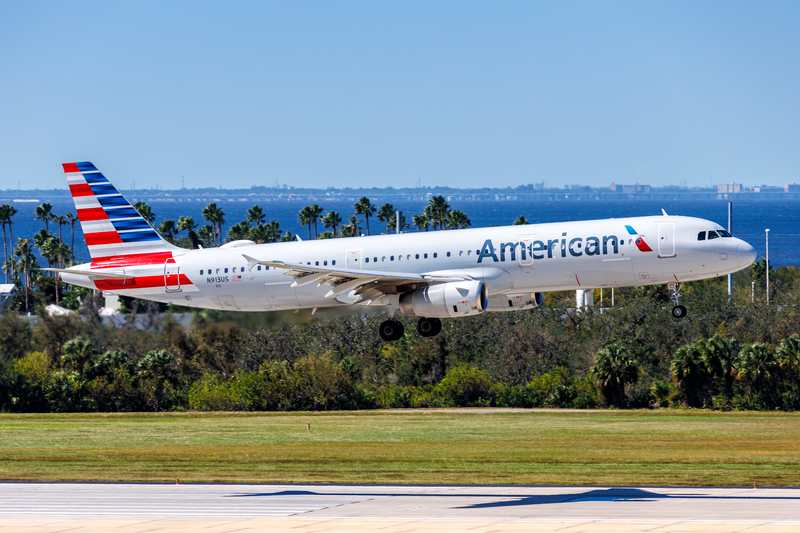
American received its first A321XLR in October 2025 and launched the type between JFK and Los Angeles (LAX) that December. It subsequently added JFK-San Francisco (SFO), Boston Logan (BOS)-LAX and JFK-EDI.
Airbus lists the A321XLR with a maximum takeoff weight of 101.5 metric tons and a range of 4,700 nautical miles. Its permanent rear center fuel tank provides the additional capacity needed for long-haul operations without turning the aircraft into a specialized subfleet unrelated to the wider A320 family.
For American, that commonality allows the XLR to move between transcontinental and international work as fleet availability, seasonality and demand require. The airline can use the same aircraft for a premium domestic sector and a long-haul mission rather than committing a widebody to a market throughout the year.
Europe Is Absorbing the Early Fleet
American’s initial international deployment has centered on the North Atlantic. Edinburgh became the first overseas destination, and the carrier has assigned A321XLRs to several of its new routes for summer 2027.

The airline’s published 2027 schedule includes XLR service from JFK to Amsterdam (AMS) and Nice (NCE), along with Philadelphia (PHL) flights to Porto (OPO) and Vienna (VIE). Those routes illustrate the role the aircraft was purchased to perform: daily long-haul service in markets where a 155-seat jet can be a better year-round or shoulder-season fit than a Boeing 787 or 777.
South America presents a different network structure. American already operates a large Latin American operation from Miami (MIA), with widebodies covering the longest and highest-volume services. Its 2026 expansion to Buenos Aires (EZE), for example, used the Boeing 787-8 from both MIA and Dallas Fort Worth (DFW), according to the airline’s summer schedule announcement.
The A321XLR does not need to displace those widebodies to have a useful role. Its value lies in markets that cannot consistently support their capacity, in additional frequencies timed around connection banks, and in seasonal flying where American wants to limit the number of seats placed on sale. The aircraft could also free widebodies for routes where cargo, premium demand or range makes a larger jet more valuable.
Fleet Depth Will Determine the Timing
American’s near-term schedule demonstrates the competition for each XLR delivery. The aircraft must support premium transcontinental flying, the established Edinburgh service and at least four additional European routes in 2027 before South American flying is added.
The carrier is continuing to receive aircraft. In its second-quarter 2026 results, American said deliveries of the A321XLR and premium Boeing 787-9 were contributing to growth in its premium seating base. The airline’s financing documents also identify additional XLR airframes scheduled for delivery during the second half of 2026.
That growth gives network planners more room to move beyond the type’s first assignments. South America remains in the plan, but the sequence points to a measured rollout: establish domestic reliability, build the North Atlantic schedule and then use later deliveries to open another long-haul region.
Bottom Line
American’s South American plans show that the A321XLR is being treated as a network aircraft, not simply as a replacement for the Airbus A321T on premium domestic routes. Europe provides the most immediate collection of thin long-haul opportunities, but the same capacity and cabin economics can work in Latin markets where a daily widebody would add too many seats.
The principal gain for American is flexibility. A 155-seat aircraft with lie-flat business class and Premium Economy can maintain a credible long-haul product while lowering the capacity threshold for opening a route or extending a seasonal service. That gives the carrier another way to develop its East Coast and southern hubs without drawing a 787 or 777 away from a larger market.
The next signal will be an aircraft assignment rather than another broad statement of intent. Fleet depth, crew qualification and the performance of the first European routes will shape when American is ready to place the XLR into South America. Once it does, the more important question will be whether the aircraft is used to replace widebody capacity, add frequency or create a nonstop market that the airline could not support economically before.