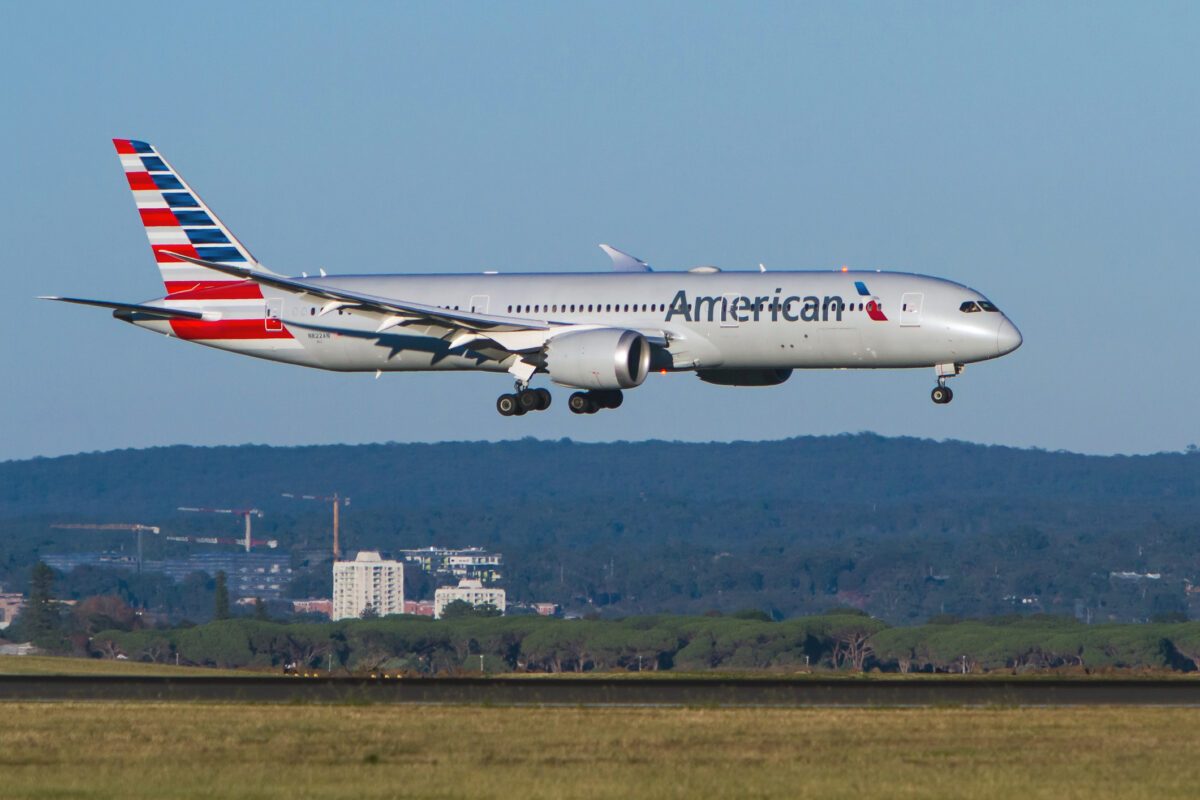
American Airlines has moved the start of its new nonstop service between Chicago O’Hare (ORD) and Tokyo Narita (NRT) forward by eight days, with the first flight now scheduled for March 19, 2027.

The carrier had previously set March 27 as the opening date when it unveiled the route in July. American confirmed the revised date in its summer 2027 international network announcement, saying the earlier launch responds to growing interest in travel during Japan’s cherry blossom season.
The daily, year-round route will be operated with a Boeing 787-9. Tickets are due to go on sale August 31 through American’s website, app and distribution channels.
Read our stories in your inbox
Two aviation newsletters. Zero fluff.
A Short Transition With Japan Airlines
American’s revised opening date creates a short period in which both members of the carriers’ Pacific joint business are scheduled to operate between ORD and NRT.
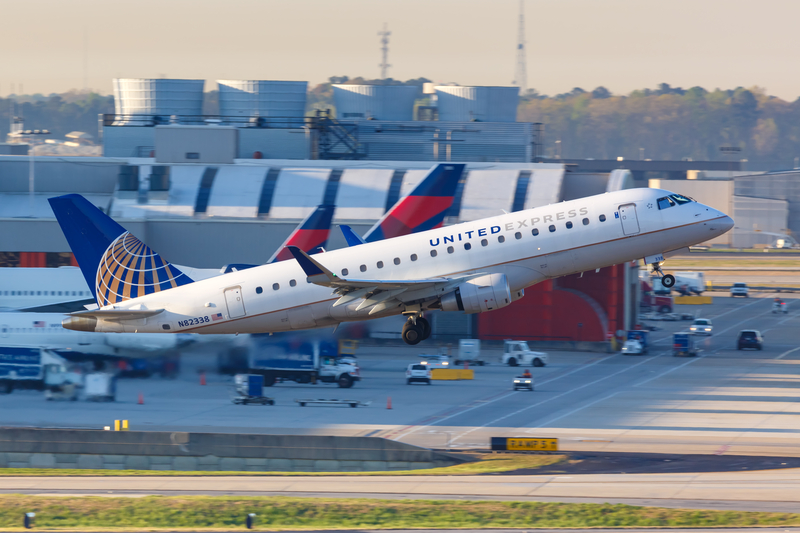
Japan Airlines’ published winter 2026 schedule lists JL55 and JL56 as daily flights through March 27, 2027. Starting American’s service on March 19 therefore produces nine calendar days of overlap at the end of JAL’s published winter season rather than a same-day operating handoff.
That overlap should give the partners some room to transfer bookings and connecting traffic while American establishes its operation. It also inserts additional capacity during a concentrated seasonal peak, without requiring the two airlines to maintain parallel service for an extended period.
JAL currently operates both Narita-Chicago and Haneda-Chicago flights. The Narita service uses JL56 from Japan and JL55 from Chicago, while JL10 and JL9 link ORD with Haneda. The American flight will preserve a joint-business presence at Narita alongside JAL’s Haneda operation.
The carriers coordinate their transpacific networks under an antitrust-immunized partnership. The U.S. Department of Transportation continues to list the American-Japan Airlines alliance as active, allowing the partners to coordinate schedules and commercial activity more closely than a standard codeshare relationship permits.

Narita Connections Remain Central to the Route
American’s choice of Narita is tied closely to the connecting network available through Japan Airlines. When it first announced the route, the airline identified Bangkok, Singapore, Taipei and Ho Chi Minh City among the onward markets the flight would support.
That makes the service more than a Chicago-Tokyo local market play. ORD gives American access to a broad set of domestic connections, while NRT remains an important transfer point for JAL services across East and Southeast Asia. The schedule is intended to combine those two traffic flows under the partners’ joint business.
The route will become American’s 11th long-haul service from Chicago. The airline said at the July announcement that it operates more than 500 daily departures from ORD and serves more than 150 destinations from the hub. Tokyo adds an American-operated Asian spoke to a long-haul network that has been weighted more heavily toward Europe.
Moving the launch into mid-March also broadens the first operating season. Rather than beginning at the transition between the northern winter and summer schedules, American will capture more spring travel and establish the flight before the main IATA summer season begins on March 28.
Vietnam Airlines 787 Suffers Tail Strike and Four Tire Failures During Munich Takeoff
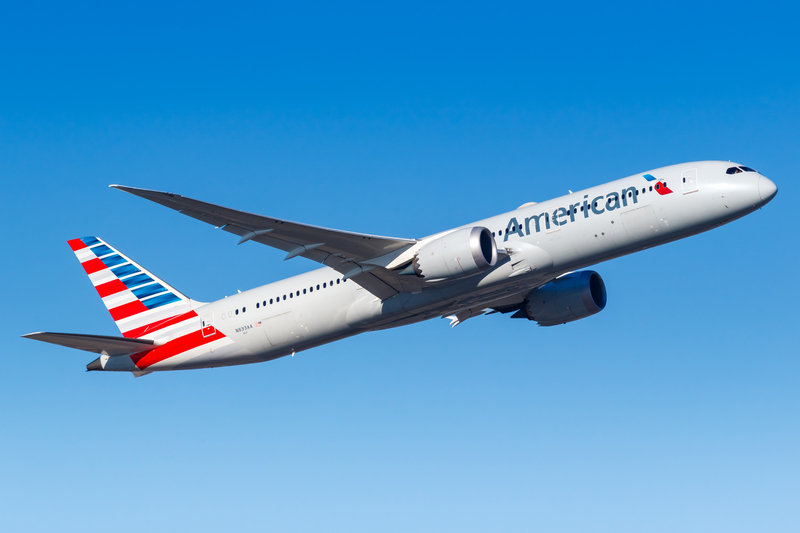
American Assigns Its 285-Seat Boeing 787-9
American plans to use the existing 285-seat version of its Boeing 787-9 rather than its newer, premium-heavy Flagship Suite configuration. The airline has specified 30 Flagship Business seats and 21 Premium Economy seats for the Chicago-Tokyo flight, matching the layout of its original 787-9 fleet.
American’s published aircraft configuration shows the remaining capacity divided between 34 Main Cabin Extra seats and 200 standard Main Cabin seats. Business Class uses fully flat seats, while Premium Economy is arranged with 38 inches of pitch.
The selection gives American more economy capacity than its 234-seat premium 787-9, which has 51 enclosed Flagship Suite seats and 32 Premium Economy seats. On a route supported by a large connecting network at both ends, the 285-seat aircraft provides a broader inventory base while retaining dedicated business and premium economy cabins.
The 787-9 is also well matched to a year-round Chicago-Japan assignment. Boeing gives the model a design range of up to 8,300 nautical miles, leaving ample capability for the transpacific sector and the stronger westbound headwinds encountered during winter. Its belly capacity is also relevant on a market linking two major industrial and logistics centers.
American has not attached its new Flagship Suite product to the route. The airline has instead reserved those lower-density 787-9s for selected premium markets, including London services, while ORD-NRT will open with the higher-capacity cabin already used across much of its long-haul network.
Part of a Wider 2027 International Expansion
The Narita date change appeared as part of a broader group of international additions for summer 2027. American is also adding Charlotte-Barcelona, New York-Amsterdam, New York-Nice, Philadelphia-Porto, Philadelphia-Reykjavik and Philadelphia-Vienna.
Chicago-Tokyo stands apart from most of that program because American intends to operate it throughout the year. The majority of the carrier’s European growth remains seasonal, while Narita adds permanent long-haul flying at ORD and takes over an established flow already developed within the American-JAL partnership.
The revised date does not alter the planned daily frequency or aircraft. Its significance lies in bringing American into the market before JAL’s published winter operation ends, turning what had looked like a direct end-of-season transfer into a brief period of coordinated overlap.
Bottom Line
American gains the most from moving its own aircraft onto the route. Operating the ORD-NRT sector gives the airline direct control over inventory, onboard revenue and the Chicago feed attached to the flight, while the joint business can continue using Japan Airlines’ network beyond Narita. For Chicago customers, the change preserves daily Narita access while adding an American-operated option during the transition.
The choice of the 285-seat 787-9 indicates that this is being built as a network route rather than a narrowly premium service. American is assigning enough premium capacity to cover corporate and high-yield leisure demand, but the aircraft’s 234 economy and extra-legroom seats leave substantial room for connecting traffic across ORD and NRT.
The next point to watch will be how the partners divide Tokyo capacity after the transition. JAL’s Haneda flight gives the joint business access to Tokyo’s preferred close-in airport, while American’s year-round Narita operation can concentrate on connecting flows. If that division holds, it will amount to a deliberate two-airport strategy rather than a simple carrier substitution.
Keep reading FlyMag
Get the Daily Brief in the morning or the Route Watch weekly recap on Fridays. Or both.