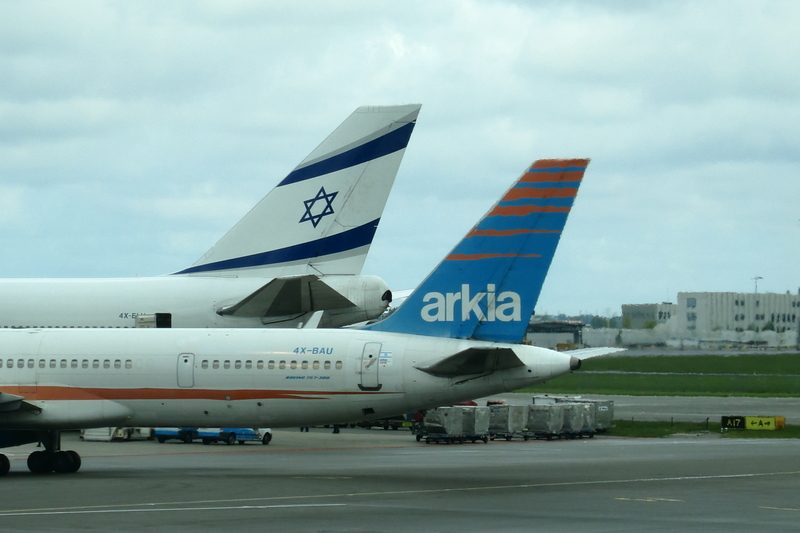
Israel’s transatlantic market is starting to reopen, with both Arkia and El Al resuming flights between Tel Aviv Ben Gurion Airport (TLV) and New York John F. Kennedy International Airport (JFK) after weeks of war-related disruption.


Arkia restarted its New York service on March 18, while El Al has also resumed flying the corridor as Israeli authorities begin allowing commercial carriers back into the North American market. For now, both airlines are initially prioritizing existing ticket holders, which underlines an important reality: this is still more of a recovery phase than a full commercial normalization.
That is what makes the story significant. The return of TLV–JFK flying is not just about restoring one route. It is about reopening Israel’s most important long-haul market while the wider network remains shaped by security restrictions, capacity limits, and operating workarounds.
Read our stories in your inbox
Two aviation newsletters. Zero fluff.
Arkia’s Return Is Operationally Creative, Not Business As Usual
Arkia’s restart is especially notable because it is not a straightforward resumption.
The carrier is bringing back its three-times-weekly New York JFK service with a twist: westbound flights from Tel Aviv (TLV) to JFK will make an operational stop in Larnaca (LCA), while the eastbound return to Israel will operate nonstop. That is a highly unusual pattern, but in the current environment it makes practical sense. Airlines serving Israel are still navigating a moving mix of airspace constraints, security procedures, and operational risk, and the Larnaca stop gives Arkia a way to resume service without waiting for a perfectly normalized operating environment.
Delta Opens First-Ever New York-Olbia Flights, Giving Sardinia Its First U.S. Nonstop
For aviation readers, that detail matters more than the headline. A route resumption with a technical stop is not the same as a clean return to ordinary transatlantic flying. It is a workaround, and that is precisely why it is so interesting.
Tel Aviv–New York Is Too Important To Leave Offline For Long
The route itself hardly needs explaining.
Tel Aviv (TLV)–New York JFK is one of Israel’s most important long-haul markets, combining business travel, diaspora traffic, visiting-friends-and-relatives demand, and political and cultural connectivity. When that link is interrupted, the effects are immediate and highly visible. That is one reason Israeli authorities have moved carefully but deliberately to get North America flying again.
The Ministry of Transport’s decision on March 16 to authorize Israeli commercial carriers to resume flights to North America gave the market its formal green light. In practical terms, though, the first phase is clearly being treated as a controlled restart. Both Arkia and El Al are initially focused on reaccommodating passengers already holding tickets rather than reopening the floodgates to unrestricted new sales.
That approach is sensible. It helps clear disruption backlogs and keeps the early operation manageable.
El Al’s Return Carries Extra Weight
El Al’s resumption matters for obvious reasons.
As Israel’s flag carrier and largest long-haul operator, El Al is central to the country’s transatlantic recovery. The airline had already been heavily involved in repatriation and rescue flying during the period of restricted operations, so the return of its New York service marks a move from emergency connectivity toward a more normal, if still cautious, passenger schedule.
That distinction matters because El Al is not just another operator on TLV–JFK. It is the backbone of the route when foreign airlines hesitate or stay away. In periods of regional instability, that role becomes even more pronounced.
Arkia’s JFK Service Still Looks Temporary In Fleet Terms
Arkia’s New York route has always stood out because of how it is operated.
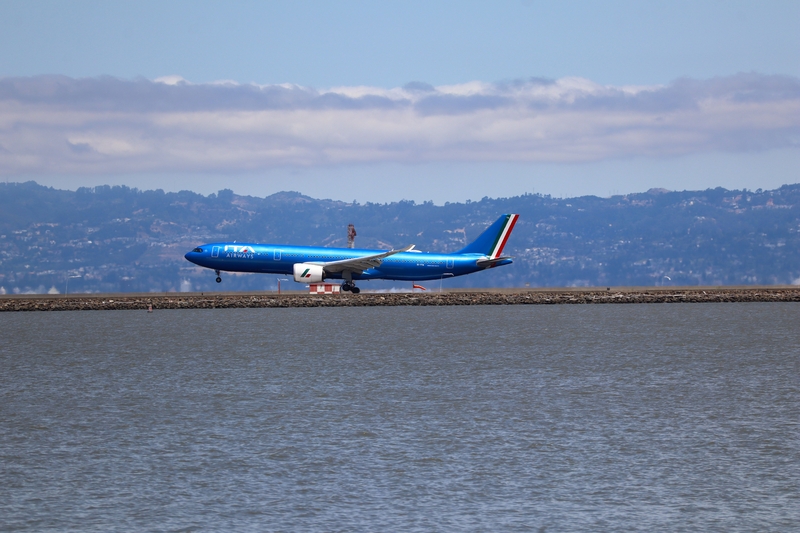
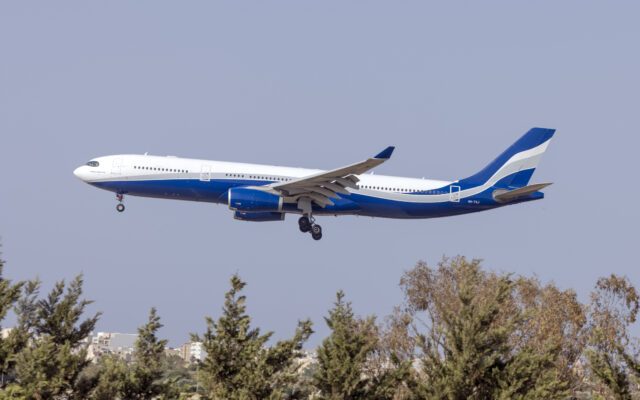
The airline launched the TLV–JFK service in February 2025 using a damp-leased Airbus A330-900neo from Portuguese operator Iberojet. It later relied on Airbus A330-200 aircraft from GullivAir under ACMI arrangements. That means Arkia’s long-haul New York operation has never been built around an in-house widebody fleet in the way El Al’s is. It has been a leased, externally supported long-haul project from the start.
That makes the timing especially important now.
Arkia’s current wet-lease authorization for New York expires on March 28, 2026. So while the airline is back on the route, the medium-term shape of its JFK operation remains less settled than El Al’s. In other words, the restart is real, but the structural permanence of Arkia’s service still depends on how regulatory approvals and leasing arrangements evolve over the coming days.
Larnaca’s Role Shows How Regional Aviation Geography Has Shifted
The use of Larnaca (LCA) also says something broader about the current state of air travel around Israel.
Cyprus has repeatedly become a staging point, fallback node, and operational bridge during periods when direct flying to and from Israel becomes constrained. Arkia’s use of LCA on the westbound sector fits that pattern. It shows how close regional airports can take on outsized importance when conflict changes the normal operating map.
For airline professionals, this is one of the more revealing details in the story. Route resumptions in conflict-affected markets are rarely neat. They often depend on geography, bilateral rights, fuel planning, risk management, and stopover logic that would look inefficient or unnecessary in calmer times. The Larnaca stop is not a weakness of the route; it is evidence of how carriers adapt to get service back into the market at all.
The Restart Is Important, But It Is Not Full Normalization
The key point to keep in mind is that resumption does not equal normalization.
Israeli carriers are flying North America again, which is a major step. But the pattern of operations, the prioritization of existing passengers, the continued use of workarounds, and the still-limited nature of the restart all show that the market remains in a managed recovery phase.
That is likely to continue until airspace conditions, security assessments, and operating confidence improve more broadly.
Bottom Line
Arkia and El Al’s return to New York is one of the clearest signs yet that Israel’s long-haul network is beginning to move from emergency management toward controlled restoration.
Arkia resumed Tel Aviv Ben Gurion (TLV)–New York JFK on March 18 with a westbound operational stop in Larnaca (LCA), while El Al has also restarted New York flying and both carriers are initially prioritizing passengers already holding tickets. The route is too important to remain suspended indefinitely, but the way it is coming back shows just how far conditions still are from ordinary.
For aviation readers, that is the real takeaway. The flights are back, but they are back in a form shaped by conflict, constraint, and adaptation — not by normal market logic.
Keep reading FlyMag
Get the Daily Brief in the morning or the Route Watch weekly recap on Fridays. Or both.