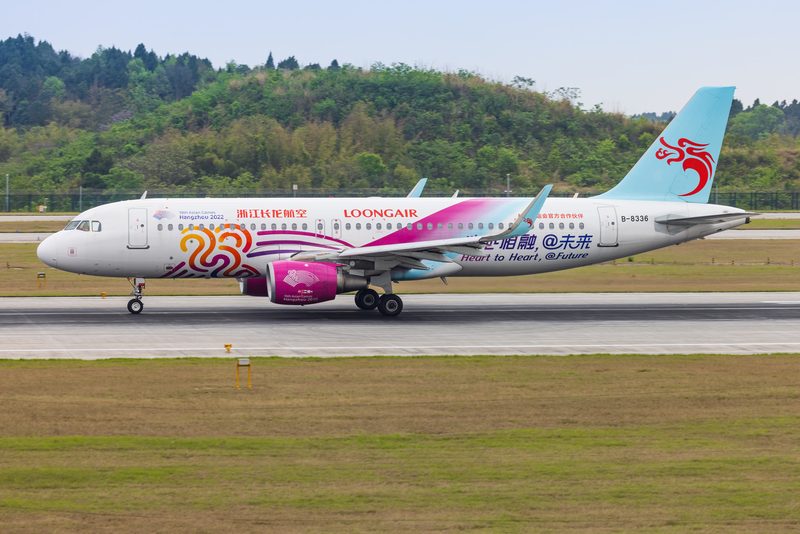
Emirates (EK) has signed a new interline partnership with China’s Loong Air (GJ), a pragmatic network move that widens EK’s reach beyond its own mainland gateways without adding any new long-haul “metal.” Effective immediately, Emirates says customers can connect onward to 22 destinations across China on Loong Air services via three transfer points: Hangzhou (HGH), Shenzhen (SZX), and Hong Kong (HKG).

For Emirates, the attraction is straightforward: China’s next tier of cities is where demand is growing, but launching additional long-haul points is expensive and operationally complex. Interlining is the low-risk way to test and cultivate those markets—especially when Dubai (DXB) is positioned as a global transfer hub and can feed China traffic in both directions.
What the agreement enables for travelers
This is an interline partnership, not a joint venture or codeshare-heavy merger play. In practical passenger terms, the two airlines are packaging it as a “single journey” experience:
Read our stories in your inbox
Two aviation newsletters. Zero fluff.
-
Single-ticket itineraries that combine Emirates international segments with Loong Air domestic sectors
-
Through baggage handling under one baggage policy, reducing the friction of domestic add-ons
-
Aligned fare conditions, meaning fewer pricing quirks when adding a China domestic leg
-
Availability through Emirates’ sales channels and major distribution platforms
Emirates also highlighted China-friendly e-commerce options—WeChat Pay and Alipay—as part of the booking experience on its website, a small detail that matters when you’re trying to convert customers who expect frictionless payment inside China’s digital ecosystem.
Why HGH and SZX are the right transfer points
The choice of Hangzhou (HGH) and Shenzhen (SZX) is particularly telling. Emirates has been strengthening its China posture through precisely these newer gateway strategies:
-
HGH is Loong Air’s home base and one of China’s most important tech-driven metropolitan markets, with strong domestic connectivity and high propensity for business travel.
-
SZX is a powerhouse in the Greater Bay Area, adjacent to Hong Kong’s ecosystem and deeply tied to corporate and manufacturing flows.
-
HKG remains a premium international interchange point with strong onward distribution, even when the domestic leg is operated by a mainland partner.
The result is more than a simple add-on. It creates a meaningful connectivity grid that lets Emirates sell “China” beyond just the five cities it serves directly.
Emirates’ current China footprint: 49 weekly flights to five mainland gateways
Emirates frames the Loong Air tie-up as part of a broader China buildout. Today, EK operates 49 weekly flights to five mainland Chinese cities:
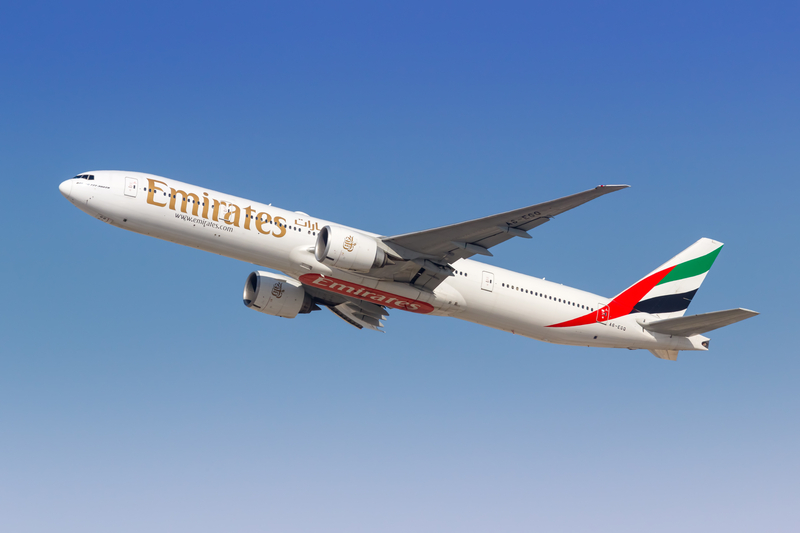
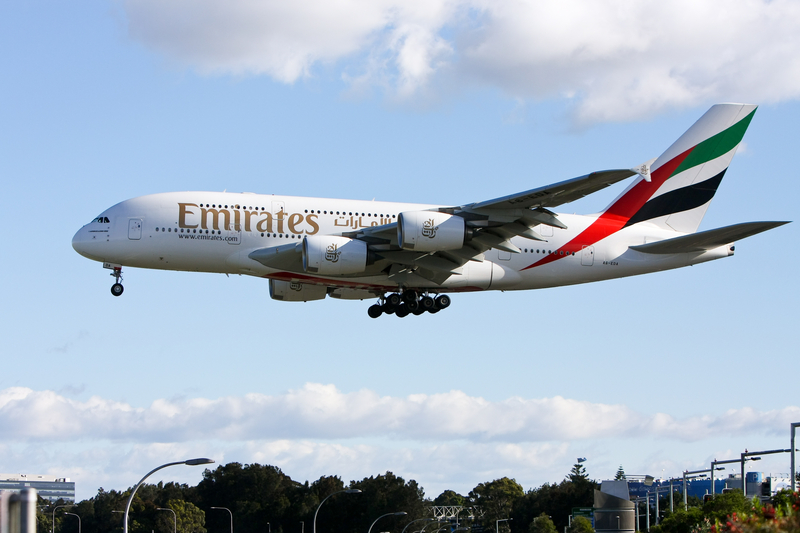
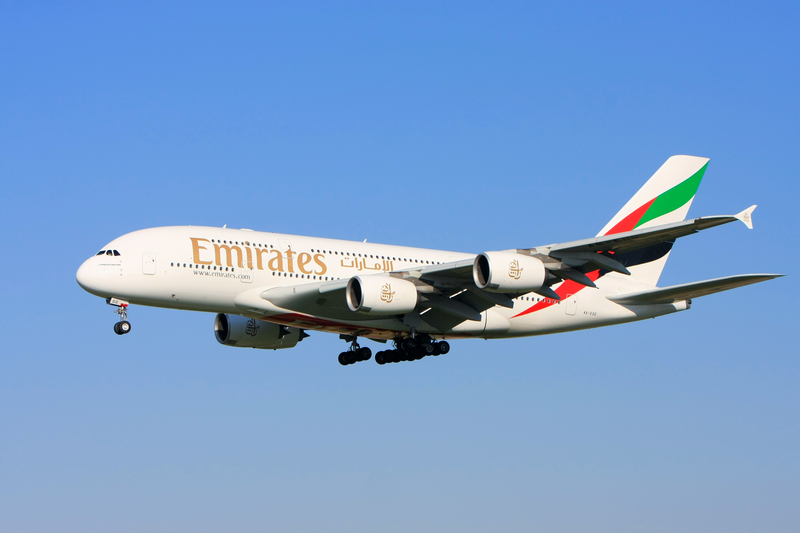
Emirates has been explicit that it uses a mixed long-haul fleet on these routes, including the Airbus A380, Airbus A350, and Boeing 777 families—aircraft types that give it flexibility to match capacity to market maturity while still carrying premium demand and cargo.
Who is Loong Air, and what aircraft will operate the domestic add-ons?
Loong Air (GJ) is headquartered at Hangzhou (HGH) and is built almost entirely around the Airbus A320-family—a sensible choice for domestic trunk and thin point-to-point routes where frequency, cost, and airport performance matter.
In practical operational terms, that means most Emirates-to-Loong connections will transfer from widebody long-haul arrivals into narrowbody domestic departures—exactly the kind of “long-haul to domestic” connection model Emirates already runs across many markets.
For airline professionals, the A320-family relevance is important: it allows Loong Air to cover a wide range of domestic stage lengths efficiently while offering enough schedule density to make interline connections commercially viable.
Why this matters: Emirates is buying access to secondary China without long-haul risk
China’s secondary cities can be lucrative, but they are hard to serve nonstop from the Gulf at scale. Bilateral constraints, demand seasonality, airport slot complexity, and long-haul aircraft allocation all make adding new long-haul China points a high-commitment move.
Interlining solves that problem elegantly:
-
Emirates can now sell a much broader set of Chinese destinations under a single itinerary through DXB–(PEK/PVG/CAN/SZX/HGH)–domestic China routings.
-
The airline avoids the cost and risk of launching a new long-haul station where yields might be unproven.
-
Dubai’s hub economics improve: a wider addressable China market supports better load factors and higher network value on existing China flights.
It’s also a competitive play. Gulf carriers increasingly compete on who can reach China’s second tier most convincingly. If you can’t add new long-haul routes fast, the next-best lever is partnership connectivity—and Emirates is pulling it.
Bottom Line
Emirates (EK) has signed an interline partnership with Loong Air (GJ) that immediately expands EK’s sellable China network, enabling single-ticket connections to 22 domestic destinations via Hangzhou (HGH), Shenzhen (SZX), and Hong Kong (HKG). With Emirates already operating 49 weekly flights to Beijing (PEK), Shanghai (PVG), Guangzhou (CAN), Shenzhen (SZX), and Hangzhou (HGH) using a mix of A380, A350, and Boeing 777 aircraft, the deal is a low-risk, high-leverage way to push deeper into China’s secondary markets—without committing additional long-haul capacity.
Keep reading FlyMag
Get the Daily Brief in the morning or the Route Watch weekly recap on Fridays. Or both.
Share this story
Composed for each network — click to share, or copy the composed text for your own timing.