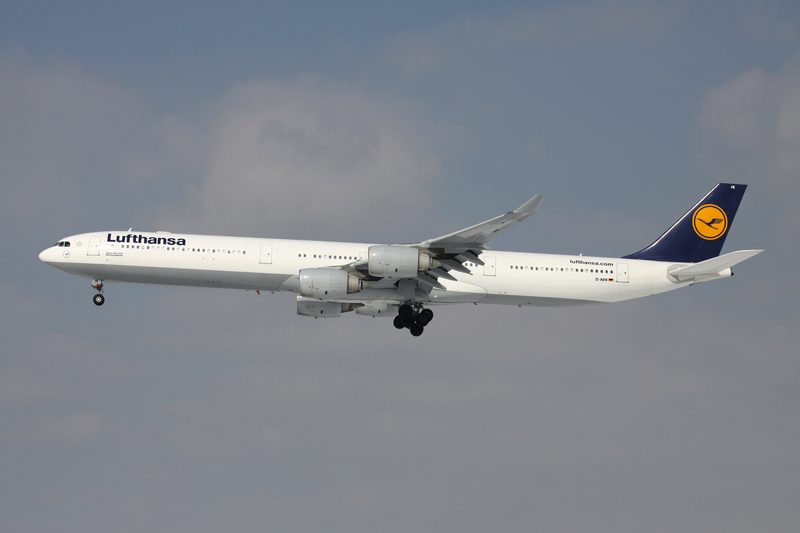
Lufthansa’s remaining Airbus A340-600s are finally heading for the exit, and the timing is telling: current schedule intelligence points to the type bowing out at the end of the IATA Summer 2026 season—right when many airlines flip their networks to winter flying. That “last-Sunday-in-October” switchover is a natural breakpoint for fleet transitions because it’s when schedules, rotations, crew planning, and maintenance programs can be reset with the least disruption.

For Lufthansa, this is less about sentiment and more about systems. The A340-600 is a four-engine, long-range widebody that has served as an operational bridge—useful when demand rebounds faster than deliveries arrive. But bridges are still temporary structures, and 2026 appears to be the year Lufthansa finally dismantles this one.
Read our stories in your inbox
Two aviation newsletters. Zero fluff.
Why Lufthansa is still flying a quadjet in the twinjet era
On paper, the A340-600 is exactly the kind of aircraft modern network planners want to retire: four engines, higher fuel burn, and more maintenance complexity than today’s long-haul twins. In practice, it has remained relevant for one simple reason—Lufthansa needs lift, and widebody deliveries have not always arrived on the timeline airlines plan around.
When new aircraft deliveries slip, airlines face a blunt choice: shrink the schedule (and risk surrendering slots, market share, and premium contracts), or keep older aircraft flying longer than intended. Lufthansa has leaned on the A340-600 as a capacity “shock absorber” while newer-generation aircraft work their way into the fleet. That dynamic has been amplified by the reality that long-haul growth is not evenly distributed—some markets need more premium seats, others need sheer volume, and the aircraft you wish you had isn’t always the aircraft you have.
The result is an A340-600 role that looks very “2020s Lufthansa”: targeted, pragmatic, and heavily centered on the Frankfurt (FRA) hub, where the airline can best control operational risk.
Where the A340-600 still fits in Lufthansa’s network
The A340-600 has been increasingly deployed as a transatlantic and “high-demand filler” aircraft. From an airline-ops standpoint, that makes sense. Frankfurt (FRA) gives Lufthansa the deepest long-haul maintenance support, the most robust widebody crewing, and the largest pool of disruption recovery options.
Schedule filings have shown the A340-600 appearing on select U.S. trunk routes such as Frankfurt (FRA) to Boston (BOS) and Washington Dulles (IAD) during parts of the Northern Summer 2026 season. Those are markets where Lufthansa can justify a large aircraft, where premium demand is meaningful, and where alternate aircraft substitutions are easier if irregular operations strike.
Importantly, the A340-600 is no longer the globe-trotter it once was. Lufthansa has already wound down A340-600 flying in parts of Asia-Pacific, concentrating remaining utilization closer to home base. That’s classic “end-of-life fleet” management: simplify the mission set, shorten the logistical tail, and keep the aircraft where your engineering and spare-parts ecosystem is strongest.
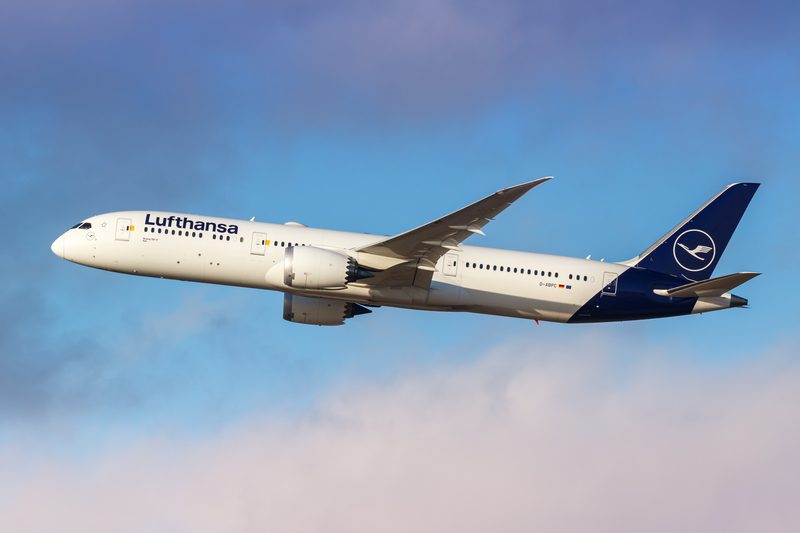
The airplane itself: why the A340-600 was special—and why it’s expensive now
The Airbus A340-600 is the stretched, long-legged member of the A340 family—built for long sectors with big payloads, and designed in an era when four engines still carried a different kind of confidence over oceans and remote regions. Powered by Rolls-Royce Trent 500-series engines, the -600 was engineered for true intercontinental range and high dispatch reliability, with the structural and systems redundancy that came with the quadjet philosophy.
For today’s airline economics, though, the advantage has flipped. Modern twinjets have long since normalized ultra-long-range ETOPS flying, and the operating cost gap between four engines and two is hard to ignore—especially when fuel prices, maintenance labor, and parts availability all move in the wrong direction for older fleets. As fleets mature, the challenge isn’t just fuel burn; it’s the compounding effect of shop visits, component scarcity, and scheduling risk when a single aircraft type becomes a small subfleet.
That’s the crux of Lufthansa’s A340-600 story in 2026: it still works, but it’s no longer the most rational tool for the job when newer widebodies are available.
What it’s like on board Lufthansa’s A340-600s
For aviation enthusiasts, the A340-600 is a throwback in the best way: a long, quiet widebody with a distinctive feel—especially up front. Lufthansa’s A340-600s are typically fitted with a four-cabin layout that includes First Class, Business Class, Premium Economy, and Economy. In the configuration most commonly referenced for the type, First Class is arranged 1-2-1 for direct aisle access, while Business Class is in a 2-2-2 layout—comfortable, but notably less private than the newer “suite-with-door” generation now spreading across the industry.
One detail that still catches frequent flyers off guard: on some A340-600 layouts, Lufthansa places a set of lavatories downstairs, which subtly changes cabin flow and creates that “aircraft with character” sensation you don’t always get on newer, more standardized interiors.
From a product strategy standpoint, the A340-600’s cabin is also a reminder of how fast premium expectations have evolved. Airlines now compete on direct aisle access for every business-class passenger, doors, higher-density premium zones, and elevated tech. The A340-600 can deliver a very good long-haul experience—but it doesn’t naturally align with where premium design is heading.
Why October 2026 matters for Lufthansa’s fleet plan
If the retirement timing holds, it signals Lufthansa believes it will have enough replacement capacity—and enough operational slack—to finally stop using the A340-600 as a buffer. That replacement lift doesn’t need to be a single aircraft type. In practice, Lufthansa can spread the A340-600’s missions across multiple fleets depending on route performance, premium mix, cargo demand, and seasonality.
The bigger industry takeaway is what this represents: another step in the long fade-out of legacy four-engine flying in scheduled passenger service. Lufthansa will remain one of the world’s most interesting “last holdouts” for quadjets in general thanks to other aircraft in its widebody mix—but for the A340-600 specifically, the economics and fleet complexity are increasingly hard to justify once enough next-generation capacity is in hand.
Bottom Line
Lufthansa’s Airbus A340-600 is entering its final chapter, with 2026 shaping up as a carefully managed farewell built around Frankfurt (FRA) long-haul flying and schedule stability. The aircraft remains capable and, in the right mission, still operationally useful—but modern fleet economics are relentless. As widebody deliveries and fleet modernization plans firm up, Lufthansa appears ready to let the A340-600 go—closing the book on one of the most distinctive long-haul quadjets still flying in mainstream service.
Keep reading FlyMag
Get the Daily Brief in the morning or the Route Watch weekly recap on Fridays. Or both.