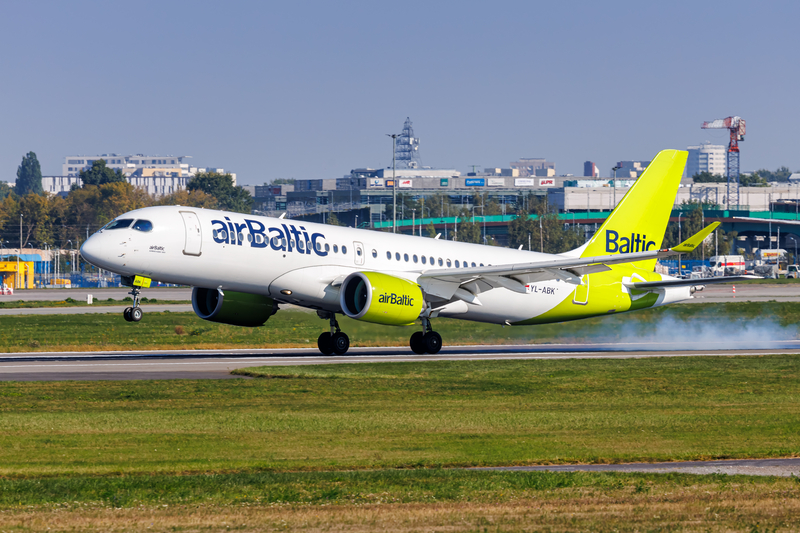
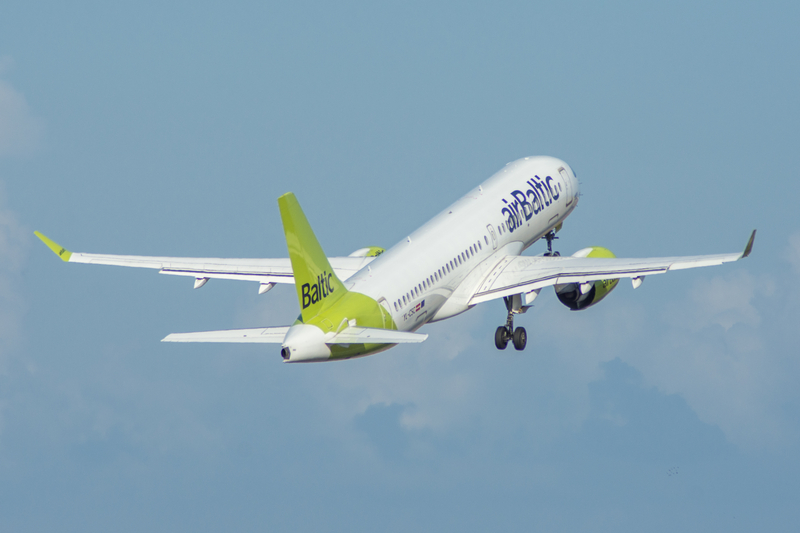
airBaltic has confirmed the write-off of Airbus A220-300 YL-AAO after concluding the aircraft was beyond economic repair following a ground fire during maintenance in 2025.
For the airline, the loss is financially manageable but still notable. For the wider industry, it is more significant. This appears to be the first total loss of an Airbus A220 family aircraft since the type entered commercial service.
That alone makes the event important. But the more interesting story is how an aircraft was lost not in flight, not in a runway accident, and not in a major crash sequence, but during a post-maintenance ground procedure.
Read our stories in your inbox
Two aviation newsletters. Zero fluff.
The Aircraft Was Lost During A Ground Test, Not In Service
The incident took place on June 14, 2025 at Riga Airport (RIX), when the aircraft was undergoing a post-maintenance auxiliary power unit ground run.
That detail matters because it immediately places the event outside the kinds of scenarios most people associate with total aircraft losses. This was not an operational accident involving passengers, crew, or airborne handling. It was a maintenance-related ground event, which makes the result more unusual and, in some ways, more revealing.
According to current reporting, the fire was traced to the ozone filter system and caused severe heat damage around the fuselage and wing root section. Once heat damage spreads into those areas, the economics become very difficult very quickly. Even if a repair is technically possible, that does not mean it is commercially sensible.
That appears to be exactly what happened here.
Airbus Determined The Aircraft Was Not Worth Repairing
The key decision came after Airbus engineering assessment.
By late 2025, Airbus had reportedly concluded that repairing YL-AAO would not be economically viable. That is the distinction that matters most in a write-off like this. “Beyond economic repair” does not always mean the aircraft is physically impossible to fix. It means the cost, complexity, and downstream commercial value no longer justify the work.

For a modern narrowbody, especially one operating on lease terms, that threshold can come sooner than some readers expect. Structural heat damage, downtime, engineering complexity, certification work, and residual value all feed into that decision.
In this case, the answer was clearly that the airframe would not return to service.
Why This Matters More Than One Aircraft
airBaltic is better placed than many airlines to absorb the loss of a single A220-300 because it remains by far the largest operator of the type.
At the end of 2025, the airline still had 51 Airbus A220-300s in active service and continues to build its entire fleet strategy around the aircraft. So operationally, losing one airframe does not change the airline’s core direction.
But symbolically, it matters.
This is not just another leased narrowbody leaving a fleet. It is the first known hull loss for the A220 program. For Airbus and for the A220’s safety record, that is notable even though the loss happened on the ground during maintenance rather than in a passenger-service accident.
That context is important. The event does not suddenly cast doubt over the A220 as an in-service aircraft. But it does end the program’s previously clean hull-loss record.
The Financial Hit Is Real, But Contained
airBaltic says the incident produced a negative financial impact of about €6.2 million.
That figure reportedly includes the write-down, related costs, and continuing lease obligations, partially offset by expected insurance recovery. The insurer is expected to take over the aircraft after claim settlement, which is currently expected by mid-2026.
For a small airline, that is not trivial. But it is also not the kind of number that fundamentally changes the company’s fleet trajectory. The real consequence is more around one-time cost and asset loss than strategic disruption.
In other words, this is painful but not destabilizing.
The Aircraft’s Identity Adds A Small Historical Twist
YL-AAO was not just another recent addition to the fleet.
It was one of airBaltic’s early Airbus A220-300 deliveries and helped mark the airline’s rapid transition toward an all-A220 operation. That gives the loss a little more historical resonance inside the company. airBaltic has effectively built its modern identity around this aircraft type, so losing one of the early examples carries more emotional and symbolic weight than the financial line item alone suggests.
Bottom Line
airBaltic’s write-off of Airbus A220-300 YL-AAO is a rare kind of fleet loss: a modern narrowbody written off after a maintenance-related ground fire rather than an in-service flight accident.
The aircraft was damaged during an APU ground run at Riga (RIX) in June 2025, with the fire later traced to the ozone filter system. Airbus concluded the damage was beyond economic repair, and airBaltic has now recognized a roughly €6.2 million financial impact while awaiting insurance settlement.
For airBaltic, it is a contained but unwelcome fleet event. For the wider industry, it is more notable: the first known total loss of an Airbus A220.
Keep reading FlyMag
Get the Daily Brief in the morning or the Route Watch weekly recap on Fridays. Or both.