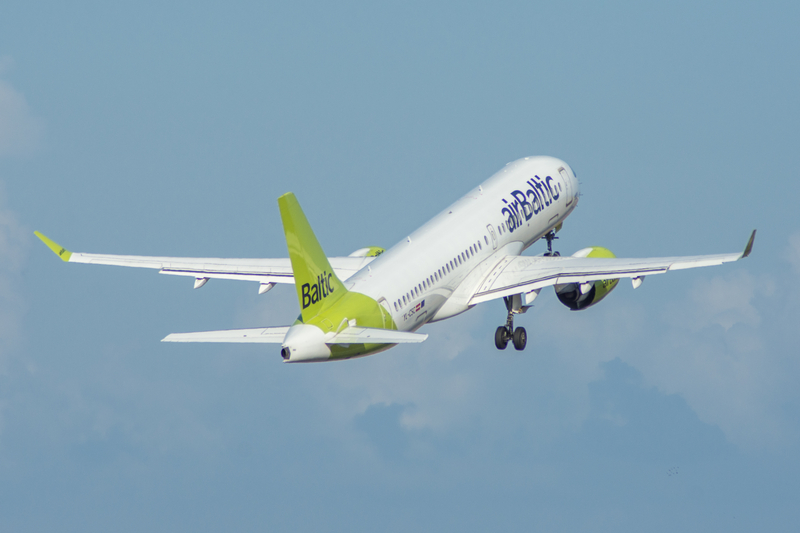
airBaltic closed 2025 with revenue of €779.3 million, up 4% year over year, while carrying 5.2 million passengers on its own network and 8.7 million passengers in total when ACMI flying is included. The airline also operated 78,400 flights during the year, confirming that demand across its network remained resilient even as the operating environment became more difficult.
Those figures give airBaltic a strong headline story going into 2026. But they also need context. This was not a clean, low-friction growth year. It was a year in which the airline managed to keep expanding revenue and traffic while absorbing heavier operational strain, higher costs, and reduced fleet flexibility.
Profitability Came Under Pressure
The weaker side of the results is profitability. airBaltic reported adjusted EBITDAR of €143.9 million, down from €184.2 million a year earlier, even as revenue rose. The airline also said the lower result reflected higher operating costs, engine-related maintenance disruption, and the use of wet-leased aircraft to support the schedule.
Read our stories in your inbox
Two aviation newsletters. Zero fluff.
For aviation readers, that is the more revealing part of the story. Growth is useful, but growth quality matters more. airBaltic was able to sell more flying and maintain demand, yet it had to work harder and spend more to do it. That makes 2025 look less like a straightforward success story and more like a year of commercially solid but operationally expensive expansion.
ACMI Is Becoming a Bigger Part of the Business
One of the most important structural themes in airBaltic’s results is the continuing rise of ACMI. The airline said its ACMI operations expanded in 2025, helping diversify revenue and improve aircraft utilization. That matters because it shows airBaltic is no longer relying only on scheduled flying from its Baltic bases to drive growth.
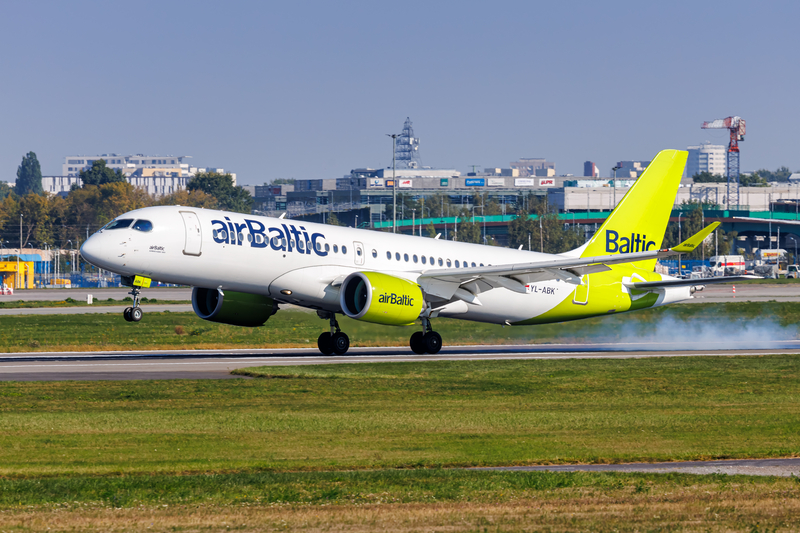
That dual model is becoming more visible. On one side, airBaltic remains the core network carrier for Riga Airport (RIX), with additional strategic weight at Tallinn Airport (TLL) and Vilnius Airport (VNO). On the other, ACMI gives the airline another way to monetize a standardized fleet across Europe, especially during peak periods when other carriers need outsourced lift. For a mid-sized operator, that is a useful hedge against seasonality and local market concentration.
The Airbus A220-300 Remains the Core Strategic Asset
Fleet strategy is still central to the airBaltic model. At the end of 2025, the airline’s results statement described a fleet of 52 Airbus A220-300 aircraft, and in March 2026 airBaltic announced the delivery of its 54th A220-300. The carrier continues to position itself as the world’s largest operator of the type.
That matters because the A220-300 is not just a fleet choice for airBaltic. It is the foundation of the business model. The airline lists the aircraft at 148 seats in its configuration, while Airbus gives the type a range of up to 3,450 nautical miles. That combination gives airBaltic a narrowbody with enough reach for a broad European network, but with economics that still suit thinner regional sectors and ACMI work.
In practical terms, that means one aircraft type can cover a large share of what the airline needs: Baltic connectivity, Western European routes, selective longer sectors, and outsourced flying for partner carriers. Few medium-sized European airlines have built such a tightly integrated model around a single modern type.
2026 Is About Turning Scale Into Better Quality
Looking ahead, airBaltic says it expects operational and commercial performance to strengthen in 2026, supported by better fleet availability, more aircraft deliveries, and continued growth across both scheduled and ACMI operations. That is a logical forecast, because many of the issues that held back 2025 were not demand-related. They were availability- and cost-related.
The commercial side of that plan is already visible. airBaltic has started Summer 2026 with nine new routes and additional frequencies across the Baltic capitals, reinforcing the idea that growth at RIX, TLL, and VNO remains central to the network strategy. At the same time, the product side is evolving too. The airline has continued to push onboard Starlink connectivity and introduced its Skynet digital onboard platform, which shows it wants to pair network expansion with a more modern passenger proposition.
Bottom Line
airBaltic’s 2025 performance was strong on the surface and more complicated underneath. Revenue rose, passenger numbers reached a new high, and the airline kept expanding both its network and ACMI footprint. But weaker profitability showed how much that growth depended on absorbing higher costs, maintenance disruption, and wet-leased support.
For airline professionals, that is the real takeaway. airBaltic is not just getting bigger. It is building a broader and more diversified business around a single-type Airbus A220-300 fleet, with the Baltic scheduled market and pan-European ACMI flying increasingly working together. If 2026 brings the fleet stability the airline is expecting, the next step will be turning that traffic growth into stronger financial quality, not just bigger headline numbers.

Keep reading FlyMag
Get the Daily Brief in the morning or the Route Watch weekly recap on Fridays. Or both.