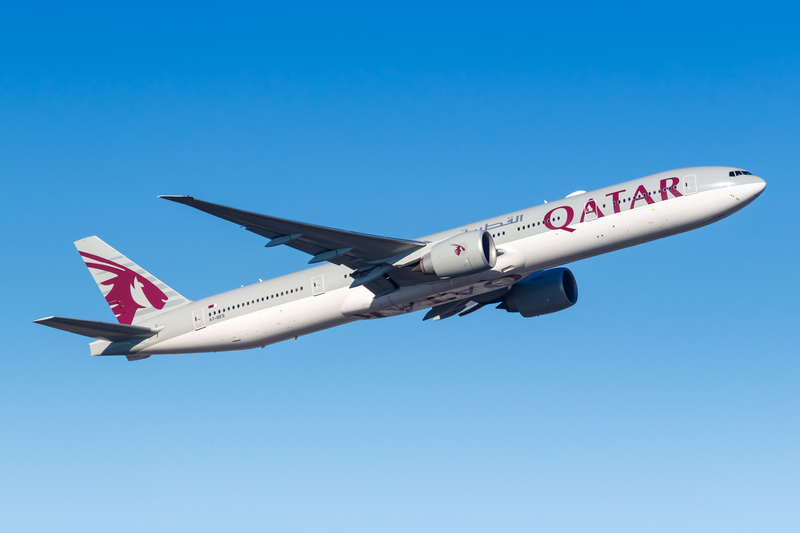
Qatar Airways is expanding its Americas network again, this time with one of its more strategically unusual moves in recent years: nonstop access from the Gulf into two northern South American capitals.
From July 22, 2026, the airline will begin service linking Hamad International Airport (DOH) with El Dorado International Airport (BOG) in Bogotá and Simón Bolívar International Airport (CCS) in Caracas. The flights will operate twice weekly, on Wednesdays and Sundays, giving Qatar Airways two new South American destinations and a much deeper presence in the region.
This is not just another long-haul launch. It is a network statement.
Read our stories in your inbox
Two aviation newsletters. Zero fluff.
Bogotá And Caracas Expand Qatar’s Americas Reach In A Meaningful Way
With the addition of Bogotá and Caracas, Qatar Airways will grow its Americas footprint to 16 destinations.
That matters because the airline is no longer just building around the biggest and most obvious gateways in North and South America. It is moving deeper into northern South America, where nonstop links to the Middle East remain extremely limited. That makes the new operation strategically valuable not just for point-to-point demand, but for the broader connectivity it creates between South America and Asia, the Gulf, and parts of Africa.

For travelers in Colombia and Venezuela, this will be a very different kind of long-haul option than the usual Europe- or North America-based connecting patterns.
The Routing Is Unusual — And Very Deliberate
Qatar Airways is not operating these as two separate standalone routes.
Instead, the service will use a triangular pattern: Doha–Bogotá–Caracas, with the return sector operating nonstop from Caracas back to Doha. That structure is important because it allows the airline to enter two markets with one aircraft rotation while managing the economics of what would otherwise be thin ultra-long-haul city pairs.
This is a classic long-haul network move for a carrier that knows how to use routing flexibility to build presence without immediately committing daily nonstop service to both cities independently.

Caracas Is The More Politically Significant Addition
The Caracas launch may be the more consequential of the two from a geopolitical standpoint.
Qatar Airways will become the first Gulf carrier to serve Venezuela, which is a notable milestone in a market that has seen highly uneven international airline access over the last several years. Entering Caracas is not just a route decision. It is also a signal that the airline sees enough commercial and strategic value in the market to take on the complexity of operating there.
That makes this more than just another city addition. It is a confidence move.
Bogotá Brings A Stronger Commercial Base
If Caracas carries more political symbolism, Bogotá likely offers the stronger immediate commercial logic.
Colombia’s capital is one of South America’s most important economic centers, with a large business market, growing premium demand, and substantial international traffic. Adding Bogotá gives Qatar Airways access to a much stronger corporate and commercial base than a pure niche leisure route would provide.
That matters because Bogotá helps anchor the wider service economically. It is the kind of market that can support the route’s long-haul profile while also feeding traffic into Qatar Airways’ global network.
The Service Is Built Around Doha’s Connecting Power
The real strength of the new operation is not just the endpoints. It is what sits behind Doha.
Qatar Airways has made clear that the new flights are designed to provide onward connections through Hamad International Airport (DOH) into markets across Asia, the Middle East, and Oceania. That is where the airline’s competitive advantage is strongest. A traveler from Bogotá or Caracas may not be flying to Qatar at all. They may be heading to Australia, China, Japan, South Korea, the United Arab Emirates, or other destinations deep in the airline’s wider long-haul system.
That is what makes the route more than a local market link. It is a hub-building move.
This Is A Delayed Launch, But A More Concrete One
Qatar Airways had originally talked about launching these routes earlier, but the start date slipped before now being fixed for July 2026.
That matters because delayed route plans can sometimes quietly disappear. In this case, the opposite has happened. The airline has now reaffirmed the launch with a clear start date, frequencies, and schedule structure. That gives the move much more weight than a tentative network concept or an exploratory filing.
In other words, this is no longer just a plan. It is now a live part of the route map.
The Twice-Weekly Frequency Is Disciplined, Not Timid
Operating the route twice weekly is a sensible opening move.
For city pairs of this length and complexity, a daily launch would have been far more aggressive. Twice-weekly service allows Qatar Airways to establish presence, test the demand profile, and support high-value connecting traffic without overcommitting capacity too early. It is the kind of frequency that makes sense when an airline is opening two new long-haul points with one integrated rotation.
This is measured expansion, not symbolic overreach.
Bottom Line
Qatar Airways’ new service to Bogotá (BOG) and Caracas (CCS) from Doha (DOH) is one of the more strategically interesting long-haul route additions of 2026. It deepens the airline’s reach in South America, gives it first-mover status in Venezuela among Gulf carriers, and creates new one-stop access between northern South America and a huge range of markets across Asia, the Middle East, and Oceania.
The triangular structure and twice-weekly frequency show a carrier expanding carefully, but with clear intent. For Qatar Airways, this is not just a new route announcement. It is another step in making Doha an even more relevant bridge between Latin America and the Eastern Hemisphere.