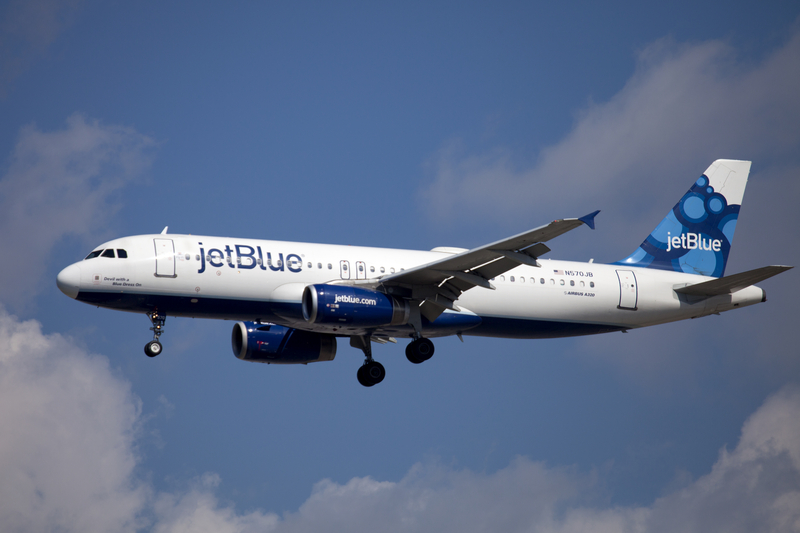
JetBlue is adding another new route from Fort Lauderdale-Hollywood International Airport (FLL) and increasing service on nine existing markets, a move that says as much about the airline’s long-term ambitions in South Florida as it does about this summer’s schedule.

The headline addition is Cleveland Hopkins International Airport (CLE), which joins the map on July 8 with daily nonstop service. At the same time, JetBlue is adding more frequencies from FLL to Atlanta (ATL), Aruba (AUA), Newark (EWR), Jacksonville (JAX), Las Vegas (LAS), Norfolk (ORF), Philadelphia (PHL), Santo Domingo (SDQ), and St. Maarten (SXM), with most of the changes taking effect on July 9.
On the surface, this is a straightforward growth announcement. In reality, it shows JetBlue moving beyond simply filling gaps left by a weakened rival and into something much more deliberate: building a denser, more defensible, and more relevant network at FLL.
Read our stories in your inbox
Two aviation newsletters. Zero fluff.
Cleveland Is New, But The Bigger Story Is Scale
Cleveland (CLE) is the 21st destination JetBlue has added from Fort Lauderdale (FLL) over the past year, and that alone is striking.
The airline is not growing at FLL through a single dramatic move. It is doing it in layers — one route, one frequency increase, one competitive win at a time. Cleveland fits that pattern neatly. It gives JetBlue another Midwestern market with strong South Florida demand and more opportunities to feed its expanding Caribbean and Latin American network from Fort Lauderdale.
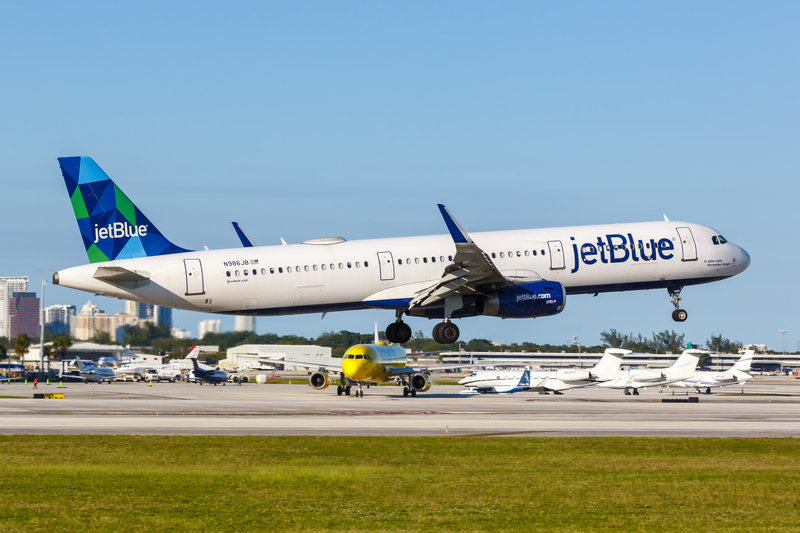
What makes the route especially interesting is that JetBlue is not entering an empty market. Frontier, Spirit, and United already operate between FLL and CLE. That matters because it shows JetBlue is no longer only exploiting openings where competition has disappeared. It is now confident enough in its Fort Lauderdale position to enter contested markets and try to win on network strength.
Frequency Growth Usually Matters More Than A New Route
The more important part of the announcement may actually be the nine existing routes getting more service.
JetBlue is increasing Atlanta (ATL) to four daily flights, Newark (EWR) to four daily, Jacksonville (JAX) to two daily, Las Vegas (LAS) to three daily, Philadelphia (PHL) to three daily, and Santo Domingo (SDQ) to two daily. Aruba (AUA), Norfolk (ORF), and St. Maarten (SXM) are all being moved up to daily service.
For airline readers, this is often the stronger signal. Adding a city to the map is one thing. Adding more frequencies to existing routes says the airline believes those markets are working well enough to justify more seats and more schedule utility. That usually means the route is not just surviving — it is contributing meaningfully.
At an airport like FLL, where local traffic is strong but network connectivity is increasingly important, more frequency makes JetBlue’s position much harder for competitors to erode.
Fort Lauderdale Is Becoming A Real Competitive Stronghold
JetBlue is now clearly treating FLL as more than a focus city in name only.
The airline says that with Cleveland and the new frequency boosts, it has added nearly 32 daily departures from Fort Lauderdale over the past year. By the third quarter of 2026, that puts the airline close to 200 daily flights at the airport.
That matters because scale changes everything. A larger schedule improves local convenience, strengthens connecting utility, gives the airline more resilience when one route underperforms, and makes it harder for rivals to compete with isolated point-to-point service alone.
In other words, JetBlue is turning FLL into a place where customers can increasingly build a trip around the airline, rather than just choose it for a single nonstop.
Spirit’s Retreat Opened The Door — But JetBlue Is Doing More Than Walking Through It
There is no ignoring the wider context.
Fort Lauderdale has long been shaped by Spirit Airlines, and Spirit’s retrenchment created the opening JetBlue has been exploiting. But what is notable now is that JetBlue’s response no longer looks opportunistic or temporary. It looks structural.
Instead of only backfilling routes Spirit left weaker, JetBlue is now reshaping the airport around itself. The growth stretches across domestic business and leisure markets, Caribbean sun destinations, and VFR-heavy international routes. That diversification matters because it gives JetBlue a much more durable position than if it had focused only on one segment.
This is how airlines quietly become the defining carrier at an airport — not with one giant announcement, but with cumulative, disciplined growth.
The Competitive Field Is Getting More Crowded, Not Less
JetBlue may be the most aggressive mover at FLL, but it is not alone.
Frontier has also expanded sharply from a lower base, Allegiant continues to grow selectively, and Breeze has entered the airport as well. That means Fort Lauderdale is no longer evolving into a one-airline low-cost fortress. It is becoming a much more fragmented battleground.
That actually makes JetBlue’s growth more interesting, not less. It is one thing to expand in a market where rivals are absent. It is another to keep building while several other low-cost and hybrid carriers are also trying to pick off opportunities.
This Is Exactly What JetBlue Needs Right Now
The timing matters too.
JetBlue is under pressure to prove that its network strategy can support a stronger financial future. That means growth cannot just be cosmetic. It has to be profitable, defensible, and tied to places where the airline has a realistic chance of becoming structurally important.
Fort Lauderdale is one of those places.
That is why this expansion matters beyond South Florida. It is a visible example of the airline trying to grow where it believes it can actually win.
Bottom Line
JetBlue’s new Cleveland (CLE) route and nine frequency increases from Fort Lauderdale (FLL) are about more than one airport’s summer schedule.
They show an airline that is no longer merely reacting to Spirit’s pullback. It is building a serious, layered position of its own. With nearly 200 daily departures in sight, stronger domestic frequencies, and more Caribbean and Latin American relevance, JetBlue is turning Fort Lauderdale into one of the clearest examples of its network strategy in action.
For aviation readers, that is the real takeaway: JetBlue is not just growing in Fort Lauderdale. It is trying to own the shape of the airport’s next era.
Keep reading FlyMag
Get the Daily Brief in the morning or the Route Watch weekly recap on Fridays. Or both.