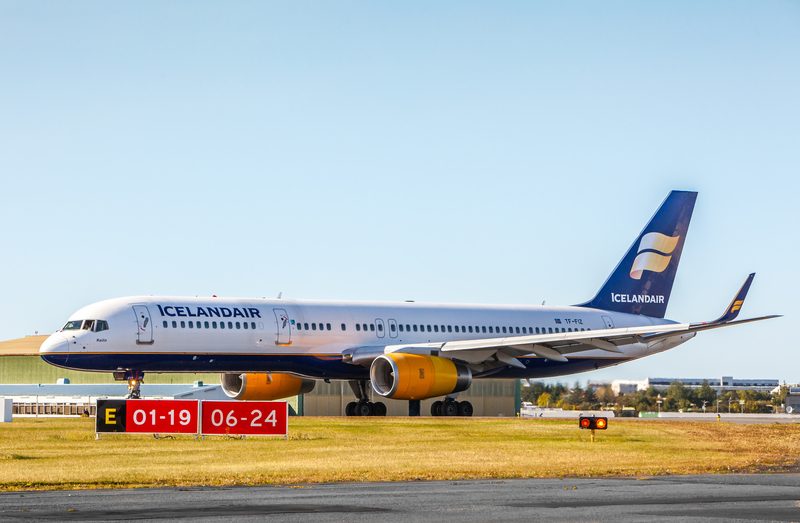
Icelandair is preparing to close one of the most important chapters in its modern history earlier than expected.

The Icelandic flag carrier now plans to retire its remaining Boeing 757 fleet this coming winter, bringing forward a phase-out that had previously been expected to stretch into the end of the 2027 summer season. For an airline whose transatlantic business model was shaped around the 757’s range, performance, and economics, this is far more than a routine aircraft retirement.
The Boeing 757 helped Icelandair become a much larger international airline than Iceland’s home market alone would suggest. From its hub at Keflavík International Airport (KEF), the aircraft allowed the carrier to connect thinner European and North American markets with a right-sized narrowbody that could cross the Atlantic reliably while avoiding the capacity risk of a widebody.
Read our stories in your inbox
Two aviation newsletters. Zero fluff.
That formula defined Icelandair for decades.
Now, the same aircraft that once gave the airline a structural advantage has become too expensive to keep in the schedule. Fuel prices, maintenance economics, and the arrival of newer-generation narrowbodies have accelerated the end of the 757 at Icelandair.
Icelandair Moves Up The 757 Retirement
Icelandair had previously expected to keep the Boeing 757 flying until the end of summer 2027. That plan has now changed.
Speaking at Routes Europe 2026 in Rimini, Italy, Icelandair Director of Network Planning and Scheduling Snorri Tomasson said the airline’s fuel-price environment had directly affected both schedule and fleet planning. He said Icelandair had expected at the beginning of the year to fly the 757s until the end of summer 2027, but that the aircraft would now be retired this coming winter.
That is a major acceleration for an aircraft that has been closely associated with Icelandair’s brand, network, and operating model.
The remaining fleet consists of Boeing 757-200 aircraft. Icelandair previously also operated the larger 757-300, but the current retirement plan centers on the last 757-200s still active in the passenger fleet.
The reason is straightforward. The 757 remains a highly capable airplane, but it is no longer efficient enough compared with the new aircraft arriving at Icelandair. Tomasson described the aircraft as having been “great” for Icelandair, while also noting its high variable cost and fuel burn.
In other words, the 757 can still do the job. The problem is that newer aircraft can do much of the same work more cheaply.
Why The 757 Was So Important To Icelandair
To understand why this retirement matters, it helps to understand what the Boeing 757 did for Icelandair.
Icelandair’s hub at Keflavík (KEF) sits in one of the most useful geographic positions in commercial aviation. It is between North America and Europe, close enough to support narrowbody transatlantic flying, but far enough north to create efficient routings between secondary cities on both sides of the Atlantic.
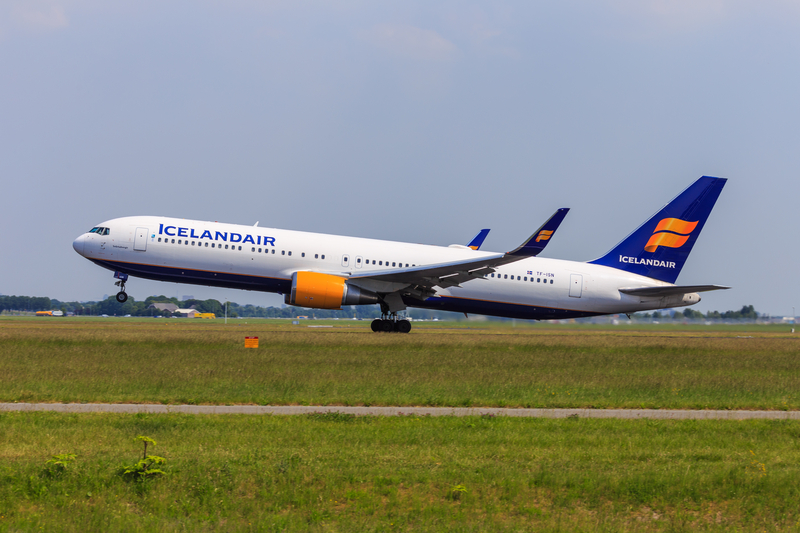
That geography gave Icelandair an opportunity. The 757 gave it the tool.
The Boeing 757-200 offered the range to fly from Keflavík (KEF) to a wide range of North American cities while carrying fewer seats than a widebody. That mattered enormously. Icelandair did not need the local population of Iceland to fill every aircraft. It could combine local Iceland demand, inbound tourism, stopover traffic, and connecting passengers moving between Europe and North America.
The aircraft was especially useful because it occupied a sweet spot. It had more range and capability than most older narrowbodies, but less capacity than a Boeing 767, Airbus A330, or Boeing 787. That allowed Icelandair to serve markets that might be too thin for a widebody but too long for conventional narrowbody aircraft of the time.
For years, that made the 757 the backbone of Icelandair’s network.
The Aircraft That Made The Stopover Model Work
The 757 was central to Icelandair’s stopover and connecting model.
A traveler could fly from a city such as Denver (DEN), Seattle (SEA), Portland (PDX), Minneapolis–St. Paul (MSP), Boston (BOS), or New York (JFK) to Keflavík (KEF), spend time in Iceland, and then continue to Europe. European passengers could do the same in reverse.
That model required an aircraft with enough range for the North Atlantic but not so much capacity that every route needed massive local demand. The 757 fit that requirement almost perfectly.
It also allowed Icelandair to build a schedule around banks at Keflavík (KEF). Aircraft from North America and Europe could arrive, exchange passengers, and depart again. The entire system depended on aircraft that could operate efficiently across both long and medium stage lengths.
The 757’s flexibility made that possible. The same aircraft could operate a long transatlantic sector to Denver (DEN) and later rotate onto a European service to London Heathrow (LHR), Copenhagen (CPH), Oslo (OSL), Amsterdam (AMS), Dublin (DUB), Zurich (ZRH), or Barcelona (BCN). That versatility is one reason the aircraft became so embedded in Icelandair’s identity.
The 757 Is Still Capable, But Its Economics Have Changed
The Boeing 757-200 remains respected for a reason.
Icelandair’s 757-200s seat 184 passengers, with Saga Premium arranged 2-2 and Economy arranged 3-3. The aircraft has a listed maximum range of 6,300 kilometers, or 3,900 miles, and is powered by Rolls-Royce RB211 engines.
For many years, that performance profile was difficult to replace. The 757 could operate long, thin routes with strong takeoff performance, transatlantic range, and enough cabin capacity to support Icelandair’s hub strategy.
But capability is not the same as efficiency.
The 757 is an older-generation aircraft. As the fleet ages, fuel burn, maintenance costs, engine support, parts availability, and reliability planning all become more important. In a high-fuel-price environment, the aircraft’s economics become even harder to defend.
That is the point Icelandair is now reaching. The 757 can still fly the routes, but the airline increasingly needs aircraft that burn less fuel, cost less to maintain, and align with a simpler future fleet plan.
The 737 MAX And A321LR Take Over
Icelandair’s replacement strategy is built around two new-generation narrowbody families: the Boeing 737 MAX and the Airbus A321LR.
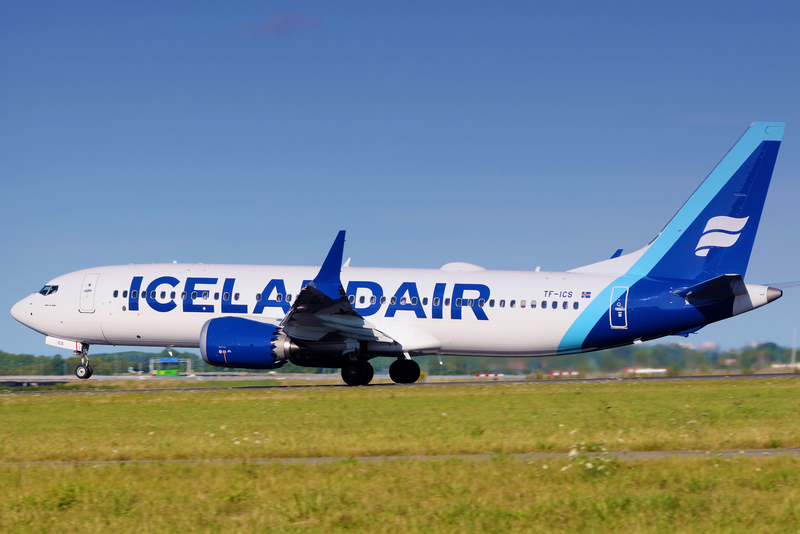
The Boeing 737 MAX 8 and 737 MAX 9 now form the bulk of Icelandair’s fleet. The MAX is especially useful on shorter and medium-range routes across Europe and the eastern side of North America. Icelandair says the 737 MAX uses 37% less fuel per trip than the Boeing 757-200, a major difference when fuel costs are reshaping network decisions.
The MAX does not fully replace the 757 on every mission, but it takes over a large part of the network where the 757’s extra capability is no longer necessary.
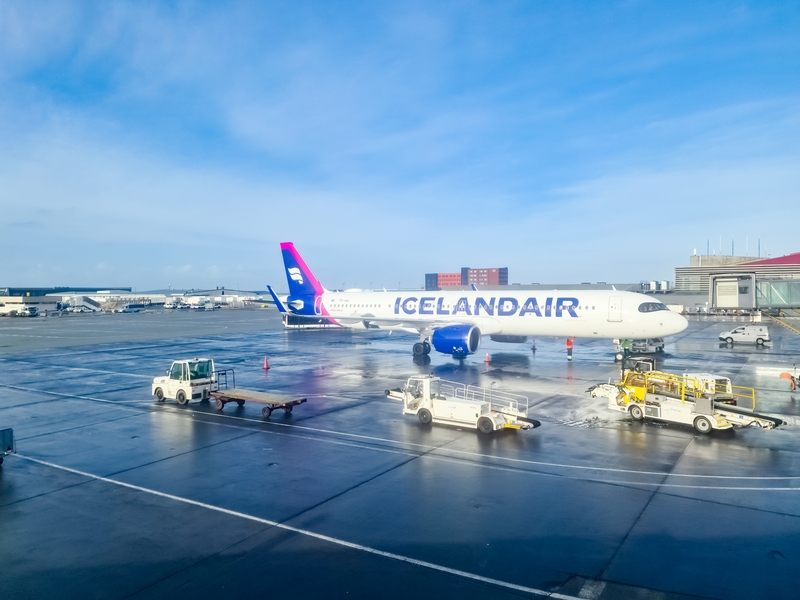
The Airbus A321LR handles the longer and more demanding narrowbody missions. Icelandair’s A321LR seats 187 passengers, including 22 in Saga Premium and 165 in Economy. It has a listed range of 7,400 kilometers, or 4,600 miles, giving it more range on paper than Icelandair’s 757-200 while offering newer-generation fuel efficiency and a more modern cabin.
That makes the A321LR a direct strategic successor to the 757. It is a long-range single-aisle aircraft designed for exactly the kind of long, thin routes Icelandair built its business around.
The A321LR Changes The Winter Network
The most interesting part of the transition is not simply that the A321LR is newer. It is that the aircraft changes which routes can work.
Icelandair has cited Portland International Airport (PDX) as an example. Portland had historically been more seasonal, but the A321LR’s improved unit economics allow the airline to consider winter flying that may not have made sense with the 757.
That is the real network story.
Retiring the 757 is not just about removing old aircraft. It is about preserving and potentially expanding the route map with aircraft that can support thinner demand during weaker periods of the year. A route that fails in winter with a high-cost 757 may become viable with an A321LR if fuel burn, maintenance cost, and total trip economics improve enough.
For an airline based in Iceland, shoulder-season and winter economics matter. The summer transatlantic market is strong, but Icelandair’s network has to work across more than just peak travel months. New-generation narrowbodies give the airline more flexibility to maintain year-round service in markets that might otherwise be reduced or suspended.
The A321XLR Is The Next Step
Icelandair’s longer-term plan includes the Airbus A321XLR, which is scheduled to arrive from 2029.
The airline has ordered 13 A321XLR aircraft, with purchase rights for additional frames. The XLR will offer more range than the A321LR and will eventually allow Icelandair to push deeper into North America or operate thinner long-haul routes with better economics than the 757 could provide late in its life.
The A321XLR is especially important because Icelandair’s network is not perfectly suited to extra-long-range narrowbody flying in its current form. Tomasson noted that the airline has been adjusting its bank structure to support current A321LR and future A321XLR operations into North America.
That is a subtle but important point. Aircraft range alone does not create a route. The schedule has to work. Connections at Keflavík (KEF) have to work. Crew rotations, maintenance timing, airport curfews, aircraft utilization, and onward banks all have to align.
The 757 era was built around one set of aircraft capabilities. The A321LR and A321XLR era will require a slightly different network architecture.
Where The 757 Still Appears In The Schedule
The Boeing 757 still has a visible role in Icelandair’s schedule as the retirement approaches.
The aircraft has remained especially important on routes where range, payload, and capacity are all useful. Denver International Airport (DEN) is one of the clearest examples. At more than 3,500 miles from Keflavík (KEF), Denver is a long narrowbody mission and one of the routes where the 757’s original value proposition was most obvious.
The 757 has also continued to appear on large European routes such as Oslo (OSL), London Heathrow (LHR), Copenhagen (CPH), Amsterdam (AMS), Dublin (DUB), Rome Fiumicino (FCO), Zurich (ZRH), Barcelona (BCN), and Milan Malpensa (MXP), depending on season and scheduling.
That mix illustrates exactly why the aircraft worked so well for Icelandair. It was not only a North Atlantic specialist. It could move between long-haul and high-density European flying, giving the airline flexibility that is difficult to replicate with a more fragmented fleet.
The challenge now is replacing that flexibility with a combination of 737 MAX, A321LR, and eventually A321XLR aircraft.
A Narrowbody Airline Again, But In A New Way
Icelandair is returning to an almost all-narrowbody international operation, but not in the same way it did before.
The old narrowbody model was built around the Boeing 757. The new one is split between the Boeing 737 MAX and Airbus A321LR/XLR. That creates a more specialized fleet structure. The MAX handles shorter and medium transatlantic missions, while the A321LR and future XLR take the longer sectors that require more range.
That should reduce costs, lower fuel burn, and improve environmental performance compared with relying on older 757s and 767s. It also gives Icelandair a more modern passenger product, especially on the A321LR, which features larger overhead bins, a quieter cabin, modern in-flight entertainment, power options, Wi-Fi, and a more contemporary interior.
The tradeoff is complexity. Icelandair historically benefited from deep experience with the 757 family. Moving to a mixed Boeing-Airbus narrowbody structure brings different pilot groups, training requirements, maintenance programs, parts inventories, and scheduling considerations.
For a carrier of Icelandair’s size, fleet complexity must be managed carefully. But the fuel and operating-cost benefits are strong enough that the transition is now unavoidable.
The 757 Passenger Club Keeps Shrinking
Icelandair’s accelerated 757 exit is part of a much wider global trend.
The Boeing 757 remains widely used in cargo service, particularly with express and freight operators. FedEx, UPS, DHL-related operators, Cargojet, and other cargo carriers still find value in the type because of its payload, range, and performance.
Passenger operations are a different story.
Among scheduled passenger airlines, the 757 is now concentrated heavily in the United States. Delta Air Lines and United Airlines remain the two largest passenger operators, using the aircraft across domestic, transcontinental, premium leisure, and select international routes. Both airlines still value the 757 for missions where its range, runway performance, and capacity remain useful.
But even at Delta and United, the long-term direction is clear. Newer aircraft such as the Airbus A321neo, Airbus A321XLR, Boeing 737 MAX, and future fleet replacements are gradually taking over roles once dominated by the 757.
For smaller international operators, the economics are becoming harder. Keeping a small subfleet of aging 757s requires specialized maintenance, expensive parts support, and operational planning around aircraft that are increasingly different from the rest of the fleet.
Icelandair’s exit will remove one of the most iconic non-U.S. 757 passenger operators from the map.
Why This Retirement Feels Different
Many airlines have retired 757s. Icelandair’s retirement feels different because the aircraft was so closely tied to the airline’s identity.
The 757 was not just another type in the fleet. It was the airplane that made the modern Icelandair network possible. It helped the carrier turn Iceland’s geography into a commercial advantage. It supported the stopover model. It allowed the airline to connect smaller cities across the Atlantic. It gave Icelandair a route map that looked far larger than its home market should have allowed.
That is why the retirement has emotional weight for aviation followers.
The A321LR and A321XLR may be better aircraft for the future. They burn less fuel, offer modern cabins, and open new network possibilities. But they are inheriting a role the 757 built over decades.
For Icelandair, the challenge is not simply to replace the aircraft. It is to preserve the network logic the aircraft made famous.
The Network Will Survive The 757
The good news for Icelandair is that the 757’s retirement does not mean the end of the model.
In many ways, the model is becoming more sustainable.
The 737 MAX and A321LR allow Icelandair to operate many of the same routes with lower fuel burn and lower trip costs. The A321XLR should add further range and flexibility from 2029. That means the core idea — using Keflavík (KEF) as a connecting bridge between Europe and North America — remains intact.
What changes is the aircraft economics. Icelandair can now support routes that might otherwise be vulnerable in winter or shoulder seasons. It can also adjust capacity more precisely across markets instead of relying so heavily on a single aging aircraft type.
The transition should make the airline more resilient if executed well.
Still, there will be tradeoffs. The 757 had unusual capability, especially on longer sectors and performance-sensitive missions. Some routes may require careful planning with the A321LR, while others may wait for the A321XLR. Schedule banks may need further adjustment. Maintenance and crew planning will continue evolving as the Airbus fleet grows.
This is not a simple one-for-one aircraft swap. It is a full network and fleet transition.
Bottom Line
Icelandair is bringing forward the retirement of its remaining Boeing 757 fleet, with the final aircraft now expected to leave service this coming winter rather than after the 2027 summer season.
The decision reflects the economics of 2026. The Boeing 757-200 remains a capable transatlantic narrowbody, but its fuel burn, maintenance profile, and variable costs no longer fit Icelandair’s long-term plan. Newer aircraft, especially the Boeing 737 MAX and Airbus A321LR, can operate much of the network at lower cost, while the Airbus A321XLR will add more range from 2029.
For Icelandair, this is the end of an era. The 757 was the aircraft that helped turn Keflavík (KEF) into a true transatlantic connecting hub and gave Icelandair reach far beyond what its home market could support.
The next chapter will be built around the 737 MAX, A321LR, and A321XLR. The model remains the same: connect Europe and North America through Iceland with right-sized narrowbody aircraft. The aircraft making that model work, however, are changing.
When Icelandair’s final 757 leaves the fleet this winter, one of the most successful long-range narrowbody stories in airline history will come to a close.