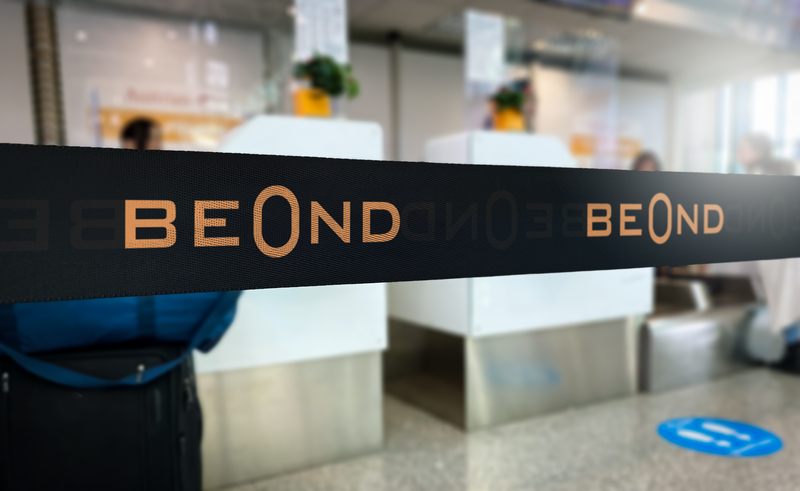
beOnd is expanding its European footprint in a way very few airlines can. The Maldives-based premium leisure carrier is set to launch new all-business-class flights to London Heathrow Airport (LHR) and Paris Charles de Gaulle Airport (CDG) in December 2026, adding two of Western Europe’s most important premium long-haul markets to its small but distinctive network.
For a carrier with just two aircraft, this is a significant move.
It is also a revealing one. beOnd is not trying to be another conventional long-haul airline serving Malé Velana International Airport (MLE). It is building a niche around premium leisure demand, using an all-business-class product and a deliberately small network aimed at affluent travelers headed directly to resort destinations.
Read our stories in your inbox
Two aviation newsletters. Zero fluff.
That makes London and Paris much more than simple new route launches. They are a test of whether beOnd’s model can scale credibly into Europe’s biggest premium markets.
London And Paris Are The Right Kind Of Cities For This Airline
If beOnd is going to grow in Europe, London (LHR) and Paris (CDG) are the sort of markets it has to be in.
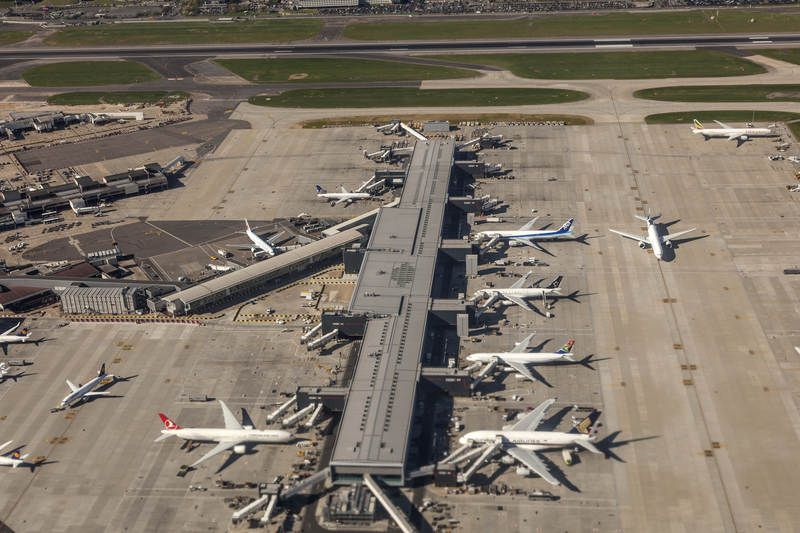
Both are large premium-origin cities, both have strong luxury travel demand, and both are home to high-spending leisure travelers who are exactly the kind of customer beOnd is trying to attract. The Maldives does not need mass-market lift from an airline like this. It needs yield.
That is the key to understanding the expansion. beOnd is not trying to compete with major Gulf carriers, European network airlines, or holiday airlines on scale. It is trying to carve out a small but lucrative slice of the market by offering a more curated, premium-heavy experience all the way from origin to destination.
From that perspective, LHR and CDG are not surprising at all. They are almost inevitable.
These Are Not Nonstops — And That Matters
One important detail needs to be framed clearly.
The new services from Malé (MLE) to London Heathrow (LHR) and Paris Charles de Gaulle (CDG) will not operate nonstop. Both routes will include a technical stop at Dubai Al Maktoum International Airport (DWC), which reflects the range limitations of the airline’s current Airbus narrowbody fleet.
That does not undermine the routes, but it does shape how they should be understood.
beOnd is selling a premium end-to-end journey, not necessarily the fastest possible one. The DWC stop is operationally necessary, and because the flights are overnight in both directions, the carrier is clearly betting that its target customer will accept the stop as part of a boutique premium experience rather than judge it by the standards of a major global network carrier.
For aviation readers, that is one of the most interesting aspects of the launch. beOnd is trying to prove that product and positioning can offset the lack of true nonstop capability.

The Airbus A321 Is Doing A Job Usually Handled By Widebodies
Both London (LHR) and Paris (CDG) will be served by beOnd’s Airbus A321-200, currently registered 8Q-FBB.
That aircraft seats just 68 passengers, all in business class. For a route to the Maldives from major European capitals, that is highly unusual. Most carriers serving MLE from Europe rely on widebody aircraft with a mixed cabin layout. beOnd is doing the opposite: a narrowbody aircraft configured entirely around premium seating.
That gives the route a very different profile.
Instead of maximizing seat count, the airline is trying to maximize yield and exclusivity. It is a model that only works if the premium demand is there and willing to pay for it. But if it does work, it gives beOnd something powerful: a highly differentiated product in a market that is otherwise crowded with much larger airlines.
Zurich And Munich Are Also Growing
The London and Paris launches do not stand alone.
At the same time, beOnd is increasing its Zurich Airport (ZRH) service from twice weekly to five weekly from December 15, and Munich Airport (MUC) from two weekly to four weekly from December 17. That matters because it shows this is not a one-off publicity move. The airline is broadening its European schedule overall, which suggests it sees enough demand to support a more substantial winter 2026/27 operation.
That is especially important for a carrier this small. Every route addition carries real weight. Expanding London and Paris while also increasing Zurich and Munich points to a genuine scaling-up of the European strategy rather than a simple experiment.
beOnd’s Whole Model Is Built Around The Resort Passenger
What makes beOnd interesting is that it is not pretending to be a classic network airline.
The carrier is very explicitly built around premium leisure traffic to the Maldives. It is not trying to funnel passengers through a global hub or build a giant onward network. It is trying to move high-end travelers more directly from major origin markets to Malé (MLE), with the rest of the journey into resorts forming part of the broader luxury proposition.
That is why the all-business-class model matters so much. The airline’s value proposition begins before passengers even reach the airport, with chauffeur-style ground elements and a deliberately boutique service design. The flying itself is only part of the product.
For a destination like the Maldives, that makes more sense than it might in a conventional business market. The country is inherently premium, resort-driven, and destination-focused. An airline designed specifically around that logic is unusual, but not irrational.
The Challenge Is Scale
The opportunity is clear, but so is the risk.
beOnd remains a very small airline, and with only two aircraft, network resilience is naturally limited. Any disruption can quickly affect multiple routes, and the addition of London and Paris increases the complexity of the operation considerably. A boutique product may appeal strongly to a niche market, but a tiny fleet leaves very little room for operational slack.
That is why these launches are so important. They are not just new city pairs. They are a stress test of whether beOnd can expand its premium leisure model into larger and more demanding European markets without losing the exclusivity and reliability on which the concept depends.
Bottom Line
beOnd’s new flights from Malé (MLE) to London Heathrow (LHR) and Paris Charles de Gaulle (CDG) in December 2026 are some of the most unusual long-haul route launches of the year.
Not because the Maldives lacks demand — it clearly does — but because the airline serving them is so small, so niche, and so deliberately different. Using a 68-seat all-business-class Airbus A321 with a technical stop at Dubai Al Maktoum (DWC), beOnd is trying to prove that a boutique premium leisure carrier can compete in some of Europe’s biggest long-haul markets.
For aviation readers, that is the real appeal of the story. These are not just new flights to the Maldives. They are a direct test of whether one of the industry’s most unusual business models can grow beyond novelty and become something more durable.
Keep reading FlyMag
Get the Daily Brief in the morning or the Route Watch weekly recap on Fridays. Or both.