Air Congo is preparing to launch intercontinental service between Kinshasa N’Djili International Airport (FIH) and Brussels Airport (BRU), marking the Democratic Republic of the Congo’s most important long-haul aviation move in years.
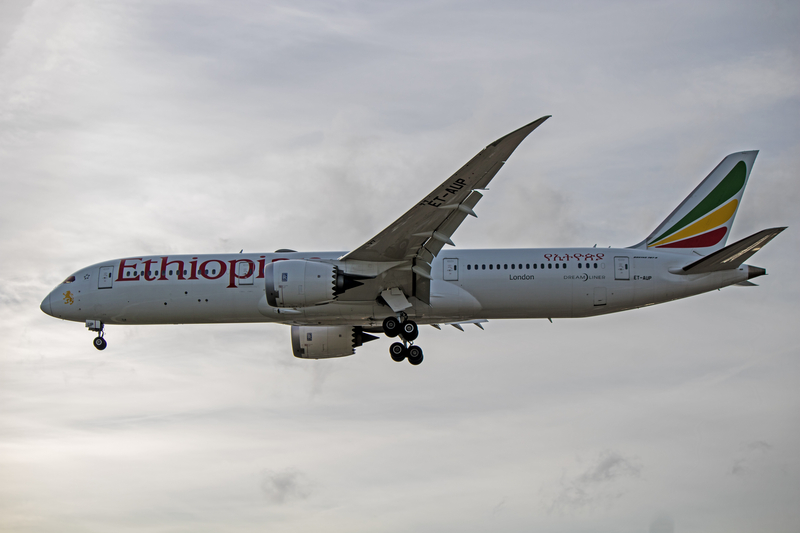
The route is scheduled to begin on July 1, 2026, with five weekly flights using a Boeing 787-8 Dreamliner supplied and operated by Ethiopian Airlines. The aircraft will be deployed under a wet-lease, or ACMI, arrangement, allowing Air Congo to offer a Europe-bound long-haul product while relying on Ethiopian’s aircraft, crews, maintenance, and operational infrastructure.
That structure is central to the route. Air Congo is certified in the Democratic Republic of the Congo, and DRC-certified airlines remain subject to the European Union’s air safety operating ban. A wet lease from Ethiopian Airlines, which is not subject to the EU ban, gives the airline a practical path to Brussels while the DRC continues working through broader safety-oversight issues.
Read our stories in your inbox
Two aviation newsletters. Zero fluff.
For Kinshasa (FIH), the route would restore a second nonstop option to Brussels (BRU), a market with deep historical, political, business, and diaspora demand. For Air Congo, it would be the airline’s first intercontinental destination and a major step beyond its current domestic and regional African network.
Five Weekly Flights To Brussels
Air Congo’s Kinshasa (FIH)–Brussels (BRU) route is scheduled to operate five times weekly from July 1, 2026, subject to government approval.
The latest filed schedule shows a revised timing pattern from the airline’s original overnight Kinshasa departure. The current plan has morning departures from Kinshasa and evening departures from Brussels.
Flights from Kinshasa (FIH) to Brussels (BRU) operate as ET098 on Mondays, Tuesdays, Fridays, Saturdays, and Sundays. On Fridays, Saturdays, and Sundays, the flight is scheduled to depart Kinshasa at 10:00 a.m. and arrive in Brussels at 7:00 p.m. On Mondays and Tuesdays, the flight departs Kinshasa at 11:00 a.m. and arrives in Brussels at 8:00 p.m.
The return flight, ET099, operates from Brussels (BRU) to Kinshasa (FIH) on the same operating days. On Fridays, Saturdays, and Sundays, it departs Brussels at 9:00 p.m. and arrives in Kinshasa at 4:00 a.m. the following morning. On Mondays and Tuesdays, it departs Brussels at 10:00 p.m. and arrives in Kinshasa at 5:00 a.m. the next day.
The use of ET flight numbers reflects the Ethiopian Airlines operating structure behind the service. Commercially, the route is being positioned as an Air Congo long-haul launch. Operationally, Ethiopian’s Boeing 787-8, crew, and certificate are the key pieces that make the Brussels flight possible.
Why Ethiopian’s Wet Lease Matters
The wet-lease structure is not a technical footnote. It is the heart of the route.
Air carriers certified in the Democratic Republic of the Congo are included on the EU Air Safety List because of concerns about national aviation safety oversight. That does not necessarily mean every individual aircraft or airline is unsafe, but it does mean DRC-certified airlines cannot operate into the European Union under their own operating authority.
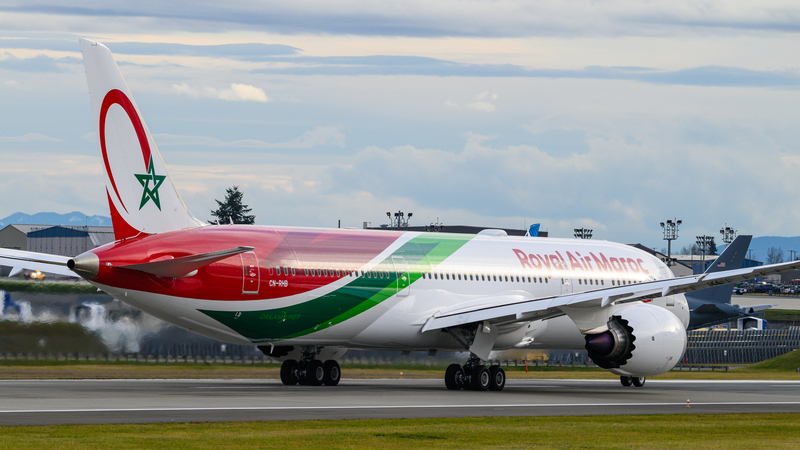
The European Commission allows a path around that restriction when a banned carrier uses a wet-leased aircraft from an airline that is not subject to an EU ban, provided the required safety standards are met. In practice, that means Ethiopian Airlines can supply the Boeing 787-8, operate the aircraft under its own safety and operational framework, and support Air Congo’s service to Brussels.
This is why the route can move forward before Air Congo itself is removed from the EU Air Safety List.
It also gives the service credibility. Ethiopian Airlines is Africa’s largest airline group, an experienced long-haul operator, and a major Boeing 787 customer. For passengers, the practical operating product will be built around Ethiopian’s widebody experience rather than a newly created long-haul operation from scratch.
A Boeing 787-8 For The Congo–Belgium Market
The Boeing 787-8 is a logical aircraft for Kinshasa (FIH)–Brussels (BRU).
The route covers roughly 3,900 miles and sits well within the 787-8’s operating range. The Dreamliner gives the operator long-haul efficiency, twin-engine economics, modern cabin systems, and enough capacity for a market with strong point-to-point demand but not necessarily the scale for very large widebody aircraft.
Ethiopian Airlines operates a large 787 fleet, including both 787-8 and 787-9 aircraft. The 787-8 is the smaller Dreamliner variant and is well suited to long-haul routes where a carrier wants range and cargo capability without the larger seat count of the 787-9 or Airbus A350.
For Air Congo, the aircraft provides an instant long-haul product. The alternative would be building widebody capability internally, which would require aircraft acquisition, crew training, maintenance systems, regulatory approvals, long-haul dispatch experience, and significant capital. With Ethiopian operating the aircraft, Air Congo can launch the route much faster.
The aircraft is also important for cargo. Kinshasa–Brussels is not only a passenger market. It also has freight potential tied to pharmaceuticals, documents, high-value goods, government traffic, humanitarian supply chains, business shipments, and Congo–Europe trade flows.
Brussels Is The Natural First European Destination
Brussels is the obvious first European destination for Air Congo.
Belgium and the Democratic Republic of the Congo have deep historical, political, economic, and diaspora links. Brussels remains one of the most important European cities for Congolese travelers, government officials, business passengers, students, families, NGOs, and development organizations.
The route also has strong symbolic value. For decades, air links between Belgium and Congo have carried more than ordinary commercial traffic. They have connected families, institutions, companies, embassies, aid organizations, and cultural communities.
Brussels Airlines has long been the dominant nonstop operator between Brussels (BRU) and Kinshasa (FIH). Air Congo’s entry would add a second nonstop product in the market and give passengers another option on one of Central Africa’s most politically and commercially important routes.
The competitive impact will depend on pricing, reliability, schedule utility, distribution, and how clearly passengers understand that Ethiopian Airlines is operating the aircraft. But the market itself is strong enough to justify competition.
A Major Step For Air Congo
Air Congo is still a young airline.
The carrier was launched as a joint venture between the DRC government and Ethiopian Airlines, with the DRC holding 51% and Ethiopian holding 49%. Ethiopian manages day-to-day operations and provides aircraft, technical support, training, maintenance oversight, and broader operational expertise.
The airline began with Boeing 737-800 operations and has since expanded with domestic and regional flying. Its first international route was to Johannesburg (JNB), initially linked with Lubumbashi (FBM) and later expanded with nonstop Kinshasa (FIH)–Johannesburg (JNB) flights.
The Brussels route is a much larger step. It moves Air Congo from regional African flying into intercontinental long-haul operations. It also places the airline in a highly visible market where reliability, safety perception, and customer service will be scrutinized.
That is why Ethiopian’s role is so important. Air Congo is not attempting to build a long-haul operation alone. It is using Ethiopian’s platform while developing its own brand and network.
Domestic Growth Supports Long-Haul Ambitions
Air Congo’s long-haul plans are being built on top of a growing domestic network.
The airline has been adding ATR 72-600 turboprops to improve connectivity across the Democratic Republic of the Congo. Ethiopian Airlines leased two new ATR 72-600s for Air Congo operations, with the aircraft intended to serve domestic routes and smaller airports where Boeing 737s are too large or operationally less practical.
That matters because the DRC is a vast country with difficult surface transportation links. Air connectivity is not merely a convenience; it is essential infrastructure. A stronger domestic network can feed Kinshasa (FIH), support government and business travel, connect provincial cities, and help Air Congo develop a national presence.
The ATR 72-600 is well suited to that role. It has lower trip costs than a jet, can operate into smaller airports, and offers the right capacity for thinner domestic sectors. Air Congo’s Boeing 737-800s then serve higher-demand trunk and regional routes, while the Ethiopian-operated 787-8 opens the long-haul layer.
That combination gives the airline a basic three-tier fleet strategy: ATR turboprops for regional domestic connectivity, 737-800s for trunk and regional jet flying, and 787s under wet lease for long-haul service.
Fleet Now Spans Turboprops, 737s And A Planned 787
Air Congo’s fleet is developing quickly.
The airline operates Boeing 737-800 aircraft for its main domestic and regional routes. It has also taken ATR 72-600 turboprops, including ET-BCO and ET-BCM, to support smaller domestic markets. The planned Brussels route adds Boeing 787-8 capability through Ethiopian Airlines rather than through Air Congo’s own certificate.
That is a pragmatic fleet approach, but it also creates complexity.
Air Congo’s own fleet must build reliability across a challenging domestic operating environment. Ethiopian must ensure that the wet-leased 787 operation integrates smoothly with Air Congo’s commercial platform, reservations, ground handling, airport processes, and customer service. Brussels Airport and Belgian authorities must be satisfied with the operating structure. Passengers must be confident in the product.
The fleet mix gives Air Congo reach. The challenge is execution.
Paris And Dubai Could Follow
Air Congo’s long-haul ambitions do not stop with Brussels.
The airline has previously discussed plans that could include two Ethiopian Airlines Boeing 787-8s and additional long-haul routes to Paris Charles de Gaulle (CDG) and Dubai International (DXB). Those destinations would make sense.
Paris (CDG) is another major European market with strong African and Congolese traffic flows, while Dubai (DXB) is one of the world’s largest trade, tourism, and connecting hubs. Both would give Air Congo important international reach beyond Belgium.
Still, Brussels must work first.
Launching one long-haul route is difficult enough. Expanding to multiple intercontinental services requires aircraft availability, government approvals, strong commercial demand, reliable operations, and enough feed on the Kinshasa side. Air Congo’s domestic network will need to mature if the airline wants to support a broader long-haul map.
The airline’s partnership with Ethiopian gives it a faster path, but it does not remove the commercial risks.
The Regulatory Challenge Remains
The wet lease solves the immediate Brussels problem, but it does not solve the DRC’s broader EU safety-list issue.
For Air Congo to operate its own aircraft to the European Union in the future, the DRC would need to address the aviation oversight concerns behind the EU ban. That means improving regulatory capacity, airworthiness oversight, flight-operations supervision, certification processes, and alignment with international safety standards.
This is a long-term institutional challenge rather than a route-planning issue.
In the meantime, Ethiopian’s involvement gives Air Congo a bridge. It allows the DRC’s new national carrier to build brand presence in Europe while the actual operating safety case is provided by Ethiopian Airlines.
That may be commercially effective, but it also creates a clear distinction: Air Congo can sell and promote the route, but Ethiopian is the operating backbone.
For aviation professionals, that distinction should be clearly understood.
What This Means For Brussels Airlines
Brussels Airlines remains the incumbent on the Brussels–Kinshasa market.
The Lufthansa Group carrier has deep experience in Central Africa and a long-established role in Belgium–Congo connectivity. It has brand recognition, distribution, corporate relationships, and a mature operational structure at both Brussels (BRU) and Kinshasa (FIH).
Air Congo’s entry will not automatically overturn that position. But it will introduce new competitive pressure.
Passengers may benefit from more choice, potentially better fares, and additional capacity. Air Congo may also appeal to Congolese travelers who want to support a national carrier, particularly if the product is reliable and well marketed. Ethiopian’s operational role could further reassure passengers who know the airline’s long-haul reputation.
The market is large enough for competition, but consistency will be critical. If Air Congo’s schedule is unreliable or if passengers are confused by the Ethiopian-operated structure, Brussels Airlines will retain a strong advantage.
A Route With Political And Economic Weight
Kinshasa–Brussels is more than an airline route.
It carries diplomatic traffic, business ties, diaspora flows, education travel, NGO and humanitarian movement, family visits, and cargo. The DRC is one of Africa’s largest countries by population and geography, and Belgium remains one of its most important European links.
A new Congolese-branded nonstop service therefore carries political weight. It signals an effort to rebuild national aviation capacity, reconnect the DRC with Europe, and restore some of the presence lost after years of aviation-sector challenges.
The route also has economic value. Better access to Brussels supports trade, investment, government engagement, and diaspora mobility. For Kinshasa (FIH), a second nonstop Europe operator helps strengthen the airport’s role as the DRC’s main international gateway.
The symbolism is strong, but the operational details will determine whether the route succeeds.
Bottom Line
Air Congo plans to launch five weekly Kinshasa (FIH)–Brussels (BRU) flights on July 1, 2026, using an Ethiopian Airlines Boeing 787-8 under a wet-lease arrangement.
The structure is essential. DRC-certified airlines remain subject to the EU Air Safety List operating ban, but EU rules allow a banned carrier to serve the EU using a wet-leased aircraft from an airline that is not banned, provided safety standards are met. Ethiopian Airlines supplies the aircraft, crew, maintenance, and operational framework that make the Brussels route possible.
For Air Congo, Brussels would be its first intercontinental destination and a major milestone in the airline’s development. For passengers, it would add competition to Brussels Airlines on one of the most important Europe–Central Africa routes.
The plan is ambitious but logical. Brussels is the natural first European city for a Congolese national carrier, Ethiopian provides the long-haul operating credibility, and Air Congo’s growing domestic network gives the airline a stronger base at Kinshasa.
The next test is execution. If the route launches on schedule and operates reliably, it could become the foundation for Air Congo’s wider long-haul ambitions, including possible future service to Paris (CDG) and Dubai (DXB).
Keep reading FlyMag
Get the Daily Brief in the morning or the Route Watch weekly recap on Fridays. Or both.