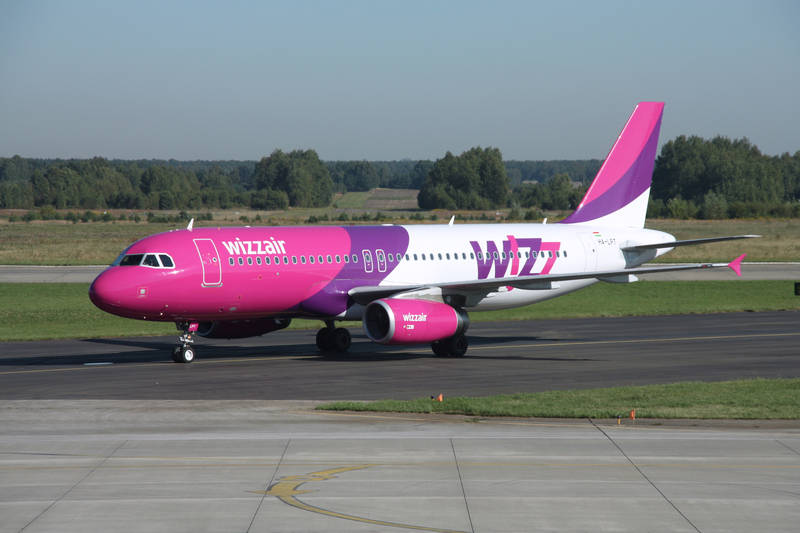
Wizz Air is strengthening its reach between Western Europe and the South Caucasus with two more routes from Yerevan Zvartnots International Airport (EVN), adding Eindhoven Airport (EIN) and Brussels South Charleroi Airport (CRL) as part of a wider Armenia expansion.

The first move is Yerevan–Eindhoven, which is scheduled to launch on October 26, 2026 with three weekly flights. Brussels South Charleroi follows on February 1, 2027, also at three weekly frequencies. On paper, these are just two additional city pairs. In practice, they represent a more deliberate widening of Wizz Air’s Western European footprint from EVN, using two airports that fit the carrier’s cost-conscious, catchment-driven model.
That matters because neither EIN nor CRL is a prestige gateway in the conventional sense. Both are secondary airports, but both give Wizz access to large and highly relevant catchment areas without the operating cost structure that would come with Amsterdam Schiphol Airport (AMS) or Brussels Airport (BRU). For an ultra-low-cost carrier, that is often where the real strategic value sits.
Read our stories in your inbox
Two aviation newsletters. Zero fluff.
Why Eindhoven and Charleroi Fit the Wizz Model
From a network-planning standpoint, these are highly characteristic Wizz Air routes. Eindhoven Airport (EIN) gives the airline a strong position in the southern Netherlands, while Brussels South Charleroi Airport (CRL) opens access not only to Belgium, but also to nearby cross-border demand flows that routinely use Charleroi because of its low-cost profile.
For Yerevan Zvartnots International Airport (EVN), this is useful connectivity. The two markets should appeal to a mix of visiting-friends-and-relatives traffic, price-sensitive discretionary travel, and smaller business or student flows that do not always justify service through the largest primary airports. That combination is often where Wizz is at its most effective: thinner long sectors, secondary airports, and strong local demand that responds quickly to lower fares.
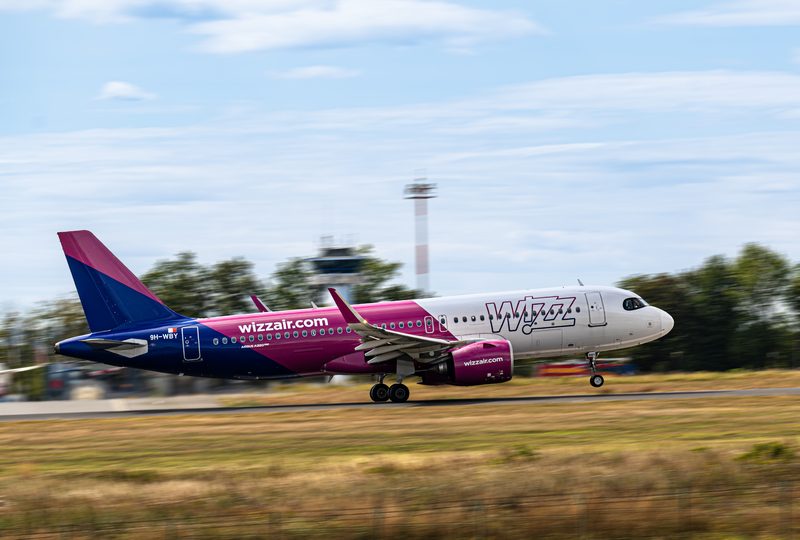
There is also a structural point here. Wizz is not trying to make EVN a spoke fed by one-off opportunistic routes. It is steadily building a deeper local network that can support more relevance in both directions. That is a different proposition from simply adding flights for seasonal visibility.
The Armenia Expansion Is Bigger Than Two Routes
The new Eindhoven and Charleroi services sit inside a broader Armenia build-up that is arguably the more important story. Wizz Air has said it will increase its based fleet in Armenia from two aircraft to three from October 2026, a sign that Yerevan is becoming a more serious operating point inside the group’s network.
With that additional aircraft, Wizz says its Armenia operation will grow to 18 routes across 10 countries. The airline also outlined frequency increases on selected existing routes, including Budapest Ferenc Liszt International Airport (BUD) and Frankfurt Airport (FRA), showing that this is not just a route-launch headline. It is a broader capacity deployment decision.
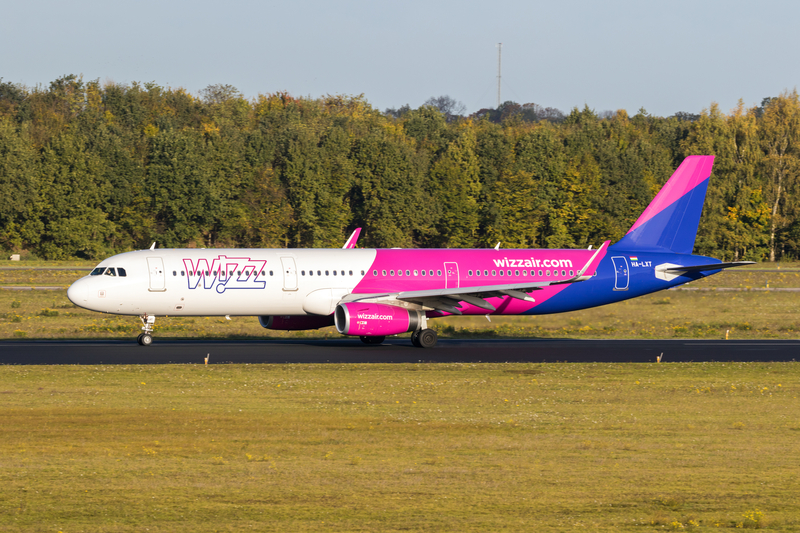
That distinction is important for industry readers. New destinations can always be marketed as growth, but adding based aircraft is the stronger signal. It points to a longer-term commitment of crews, maintenance planning, rotations, and local market development. In airline terms, that is where expansion becomes operationally meaningful.
Aircraft Economics Help Explain the Strategy
Aircraft choice is a key part of why this expansion makes sense. Wizz Air’s Yerevan base was initially built around Airbus A321neo aircraft, and that matters because the type is exceptionally well suited to the airline’s model. In Wizz configuration, the A321neo carries a very high seat count, allowing the carrier to spread costs across more passengers while still operating sectors that are long enough to benefit from the neo’s improved economics.
That matters on routes such as EVN–EIN and EVN–CRL. These are not short intra-Schengen hops. They are longer, price-sensitive sectors where seat cost discipline can make the difference between a viable low-fare market and an unsustainable one. The A321neo gives Wizz a strong tool for that job: narrowbody economics, dense capacity, and the range to connect Armenia to deeper points in Western Europe without requiring widebody scale.
For passengers, the aircraft is also a better fit than many legacy-era narrowbodies that still appear on comparable markets elsewhere. For the airline, though, the real story is efficiency. Wizz’s expansion logic almost always starts there.

Yerevan Is Becoming More Than a Peripheral Station
The bigger takeaway is that Yerevan Zvartnots International Airport (EVN) is starting to look less like a niche outstation and more like a meaningful Wizz platform. The addition of a third based aircraft, two more Western Europe routes, and selective frequency growth elsewhere all point in the same direction.
That does not make EVN a major pan-European base overnight. But it does suggest Wizz sees Armenia as more than a marginal market. The airline is building depth, not just breadth. It is also using that growth to connect the South Caucasus more directly with secondary airports in Western Europe, where cost discipline and underserved demand can create durable route opportunities.
For Eindhoven Airport (EIN) and Brussels South Charleroi Airport (CRL), the upside is also clear. Both gain a direct Caucasus link that fits their role in the low-cost ecosystem. For Wizz, that is an efficient way to add relevance on both ends of the route.
Bottom Line
Wizz Air’s new Yerevan links to Eindhoven Airport (EIN) and Brussels South Charleroi Airport (CRL) are not standalone route additions. They are part of a broader Armenia strategy centered on deeper commitment at Yerevan Zvartnots International Airport (EVN), more based capacity, and a larger Western European footprint.
The real significance lies in the structure behind the announcement. A third aircraft, a larger country network, and more secondary-airport connectivity all suggest that Wizz is moving Armenia into a more substantial position inside its broader system. For airline professionals, that is the more important story: not simply that EVN is getting two new routes, but that Wizz Air is giving the market a more permanent role in its network architecture.