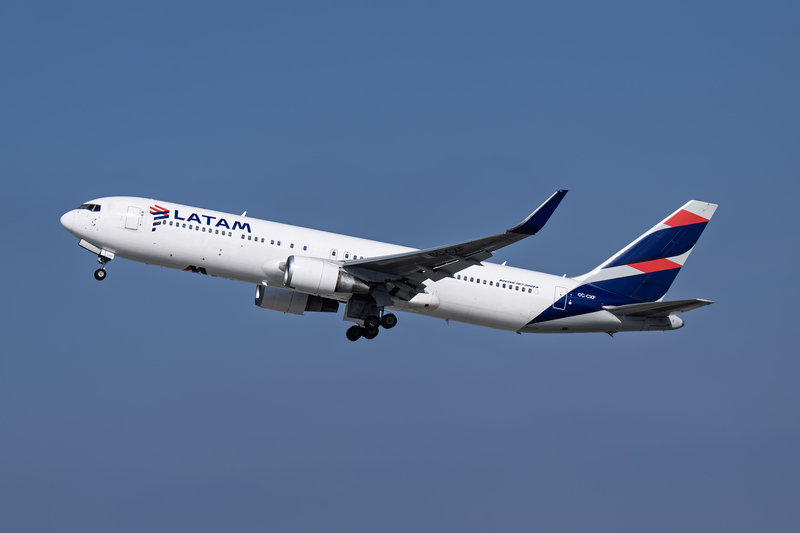
LATAM Airlines Brasil is widening its European reach through a new codeshare agreement with Brussels Airlines, adding a much more useful beyond-Brussels network just as it prepares to launch nonstop service between São Paulo/Guarulhos International Airport (GRU) and Brussels Airport (BRU) in June 2026.

That timing is what makes the move strategically important. A new long-haul route can add prestige and local traffic on its own, but a codeshare is what often turns it into a real network asset. In this case, LATAM is not just opening Brussels as a destination. It is opening Brussels as a connector.
For passengers traveling from Brazil, that means one ticket, one check-in process, and through-checked baggage to a much wider range of European cities. For LATAM, it means the new GRU-BRU service arrives with a stronger commercial case from day one.
Read our stories in your inbox
Two aviation newsletters. Zero fluff.
Brussels Becomes More Than a Standalone Destination
The codeshare covers 17 onward European destinations from BRU on Brussels Airlines metal, giving LATAM a broader footprint into markets it does not serve directly from Brazil.
The destination mix is telling. Germany is well covered with Berlin Brandenburg Airport (BER), Frankfurt Airport (FRA), Hamburg Airport (HAM), and Munich Airport (MUC). France adds Lyon-Saint Exupéry Airport (LYS), Marseille Provence Airport (MRS), and Toulouse-Blagnac Airport (TLS). The United Kingdom is represented by Manchester Airport (MAN), while Scandinavia includes Copenhagen Airport (CPH), Oslo Airport (OSL), Stockholm Arlanda Airport (ARN), and Gothenburg Landvetter Airport (GOT). Switzerland brings Geneva Airport (GVA) and Zurich Airport (ZRH), while Central Europe adds Kraków John Paul II International Airport (KRK), Václav Havel Airport Prague (PRG), and Warsaw Chopin Airport (WAW).
That is a smart spread rather than a random one. LATAM is using Brussels to reach business centers, secondary corporate markets, and high-value regional cities that would be difficult to justify with nonstop service from Brazil on their own.
The São Paulo–Brussels Flight Is the Foundation
The codeshare only works because the underlying route is meaningful.
LATAM’s São Paulo/Guarulhos (GRU) to Brussels (BRU) service will begin in June 2026 and will operate three times weekly. Just as importantly, it restores a direct passenger link between Brussels and Latin America for the first time in more than 25 years, giving BRU a long-haul connection it has been missing for a generation.
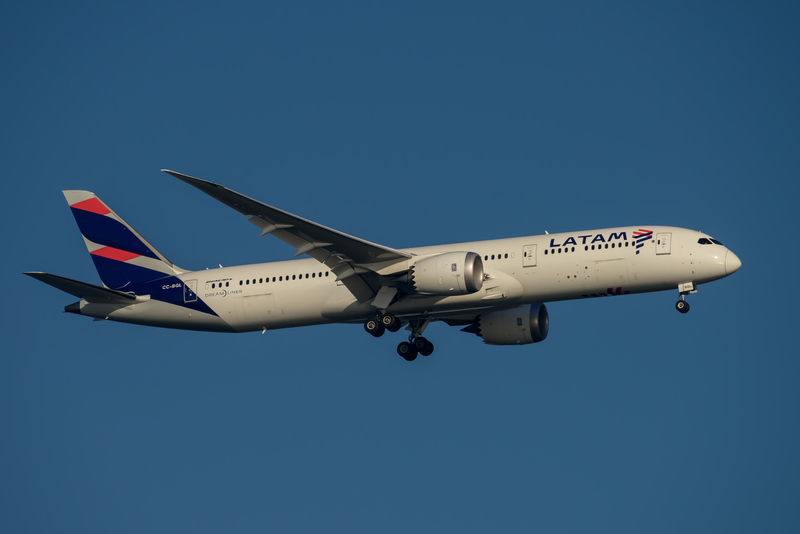
Aircraft choice also matters. The route is planned with the Boeing 787-9, a long-haul widebody well suited to thinner intercontinental markets that still need proper premium capacity and cargo capability. In LATAM’s configuration, the 787-9 offers a sensible balance between long-range economics and a credible business-class product, which is exactly what a market like Brussels needs.
This is not a mass-volume trunk route in the way Madrid or Paris can be. It is a more specialized long-haul link, and the 787-9 is the right aircraft for that kind of mission.
Why This Fits LATAM’s European Strategy
The broader logic is clear. LATAM has spent the last several years rebuilding and reshaping its international network with a sharper focus on markets where nonstop flying can be supported by alliance, codeshare, and partner feed.
Brussels fits that approach well. It is not Europe’s largest hub, but it is one of the continent’s most useful connecting points for the right set of markets. It offers strong political and business relevance, a dense regional network, and efficient onward access into parts of Europe that are important but not always easy to serve directly from South America.
For LATAM Airlines Brasil, that means BRU can complement larger European gateways rather than compete directly with them. It gives the airline another entry point into the continent without forcing it to overconcentrate all of its European growth in a handful of mega-hubs.
Brussels Airlines Also Gains Something Valuable
The partnership is not one-sided.
For Brussels Airlines, LATAM’s arrival brings South American feed into BRU that the airport has lacked for years. That matters because a direct GRU-BRU flight is not only about local Brazil-Belgium traffic. It is also about building a broader South America-Europe flow through Brussels that can support more premium, corporate, and connecting demand than a point-to-point market alone would provide.
In practical terms, Brussels Airlines gets a stronger long-haul anchor for its own European network, while LATAM gets a ready-made set of onward spokes. That is exactly what a useful codeshare is supposed to do.
Bottom Line
LATAM Airlines Brasil’s new codeshare with Brussels Airlines is much more than a booking convenience. It is what turns the upcoming São Paulo/Guarulhos (GRU) to Brussels (BRU) route into a stronger strategic play.
With 17 onward destinations now available on a single ticket, Brussels becomes a genuine European gateway for LATAM rather than simply another city on the map. The Boeing 787-9 service from GRU provides the long-haul backbone, while Brussels Airlines supplies the regional reach.
For airline professionals, that is the real takeaway. LATAM is not just adding Brussels. It is adding a much broader slice of Europe through Brussels.
Keep reading FlyMag
Get the Daily Brief in the morning or the Route Watch weekly recap on Fridays. Or both.