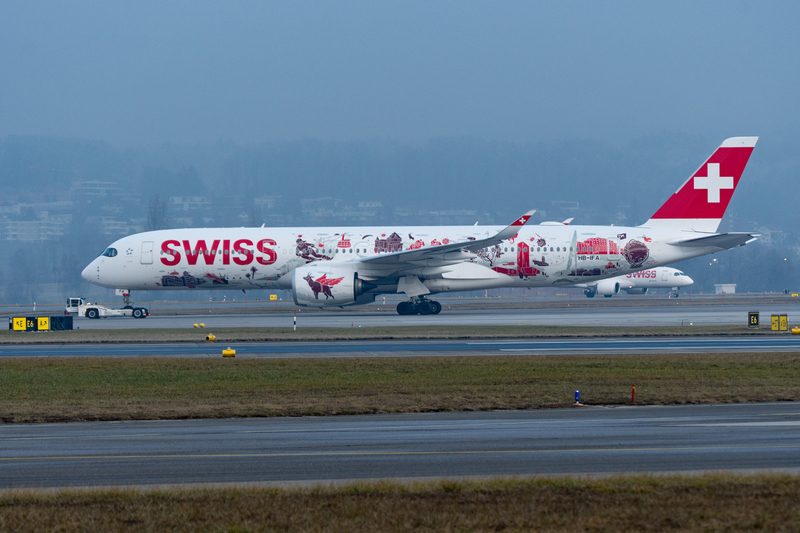
A SWISS long-haul flight from Seoul Incheon International Airport (ICN) to Zurich Airport (ZRH) was forced to divert to Almaty International Airport (ALA) after the co-pilot suffered a medical emergency in flight, turning a routine intercontinental sector into a high-stakes operational and medical event.

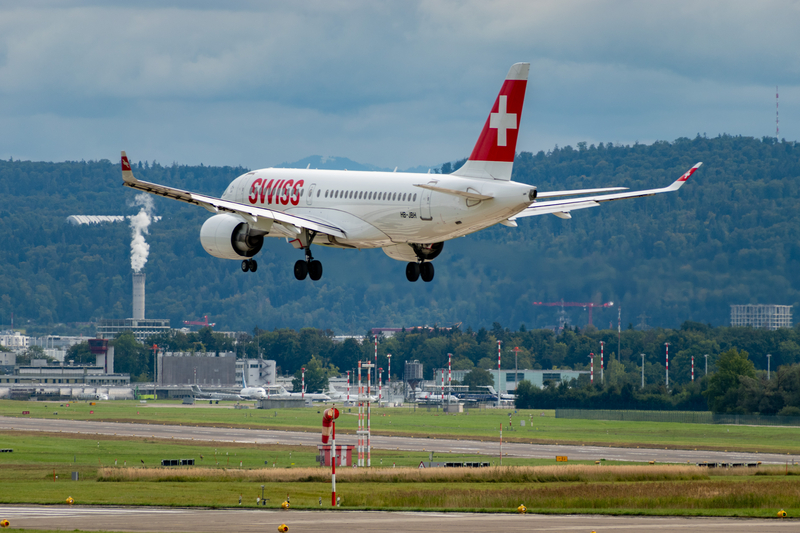
The aircraft involved was Airbus A350-941 HB-IFB, operating as LX123. While over Kazakhstan, the crew declared an emergency and diverted to Almaty, where the aircraft landed safely and medical personnel were waiting on arrival. For SWISS, the incident was a reminder that even on a modern long-haul flagship, the most serious in-flight disruption is often not technical, but human.
The Diversion Happened Mid-Flight Over Central Asia
The flight had already covered a substantial portion of its journey from Seoul to Zurich when the co-pilot became unwell.
Read our stories in your inbox
Two aviation newsletters. Zero fluff.
That detail matters because it shaped the operational response. On a long-haul route like ICN-ZRH, a medical emergency involving a flight crew member is not handled in the same way as a passenger illness. Airlines can often continue for some time with a sick passenger if doctors onboard or ground-based medical support deem it safe. A co-pilot’s incapacitation is a different kind of event entirely. It affects the cockpit, the legal crew structure, and the decision-making framework immediately.
That is why the diversion to Almaty was the correct move.
Three Doctors On Board Became An Immediate Asset
One of the most important details to emerge is that three doctors were onboard and able to provide immediate assistance to the co-pilot.
That likely proved critical in two ways. First, it allowed rapid medical support to begin before landing. Second, it gave the operating crew informed advice on whether the diversion needed to happen immediately. In serious in-flight medical events, especially involving crew, doctors onboard can be decisive not just medically but operationally, because their assessment helps determine how urgently the aircraft must be on the ground.
In this case, their recommendation appears to have reinforced the decision to land in Almaty as quickly as possible.
The Airbus A350 Landed Safely, But The Flight Could Not Continue
The aircraft landed safely in Almaty, and the co-pilot was transferred for hospital treatment.
But the story did not end there. Even though the aircraft itself was fine and the diversion was successful, the flight could not simply refuel and continue to Zurich the same day. That is because long-haul flight operations are governed not only by whether an aircraft can fly, but by whether the crew composition and duty limits still comply with regulations.
SWISS said the flight could not continue the same day because the remaining cockpit crew did not meet the required operating structure for the onward sector and because crew-duty limits would have been exceeded before the aircraft could reach Switzerland.
That is a key operational detail, and one that casual readers often miss. In airline operations, a successful diversion does not guarantee an immediate restart.
Why An Additional Pilot Was Needed
One of the more interesting technical points here is that SWISS had to fly in an additional pilot before the aircraft could continue.
That reflects how strictly long-haul flight deck roles are defined. Even if there were other pilots onboard, not every pilot can simply step into any cockpit seat under all conditions. Qualification, seat role, recent experience, and duty-time limitations all matter. In this case, SWISS indicated that the cockpit structure required for the continuation to Zurich was not available after the co-pilot became ill.
That is why the passengers and crew had to remain overnight in Almaty.
The Diversion Shows Why Crew Medical Events Are So Serious
A co-pilot medical emergency is one of the most sensitive types of inflight event because it strikes directly at the flight deck’s redundancy.
Modern commercial aviation is built around multiple safety layers, including two qualified pilots on the flight deck. If one becomes incapacitated, the aircraft can still be flown safely, but the margin changes immediately. Workload rises, checklists become more demanding, and the legal and procedural framework around the flight changes at once.
That is why airlines are so quick to divert in these situations. It is not because the aircraft cannot continue physically. It is because the safety system is designed to restore full operational margin as quickly as possible.
Passengers Were Left In Almaty While SWISS Reset The Operation
With 227 passengers and 14 crew onboard, the diversion created a large downstream operational problem for SWISS.
The airline had to arrange accommodation in Almaty, coordinate the medical response, reposition an additional pilot, and then rebuild the flight for the continuation to Zurich. That is a complex process even for a major international airline, especially at an unscheduled stop in Central Asia.
For passengers, the delay would have been substantial. For the airline, it was the unavoidable consequence of handling the event correctly.
This Is Exactly What A Diversion Is For
Incidents like this are a useful reminder of what diversions are actually for.
A diversion is not evidence that something has gone wrong with the system. In many cases, it is evidence that the system is working exactly as intended. The crew identified a serious issue, onboard medical support helped assess it, the aircraft landed safely at the nearest suitable point, and medical care was waiting on the ground.
That sequence is what professional airline emergency handling is supposed to look like.
Bottom Line
SWISS flight LX123 from Seoul Incheon Airport (ICN) to Zurich Airport (ZRH) diverted safely to Almaty International Airport (ALA) after the co-pilot suffered a medical emergency in flight. The Airbus A350-941 HB-IFB landed safely, the co-pilot was taken for treatment, and passengers were accommodated while the airline arranged an additional pilot for the onward flight.
For aviation professionals, the significance is clear. This was not just a medical event. It was a cockpit medical event on a long-haul sector, and it was handled exactly the way such incidents are supposed to be handled: quickly, conservatively, and with safety margins restored before the aircraft continued.