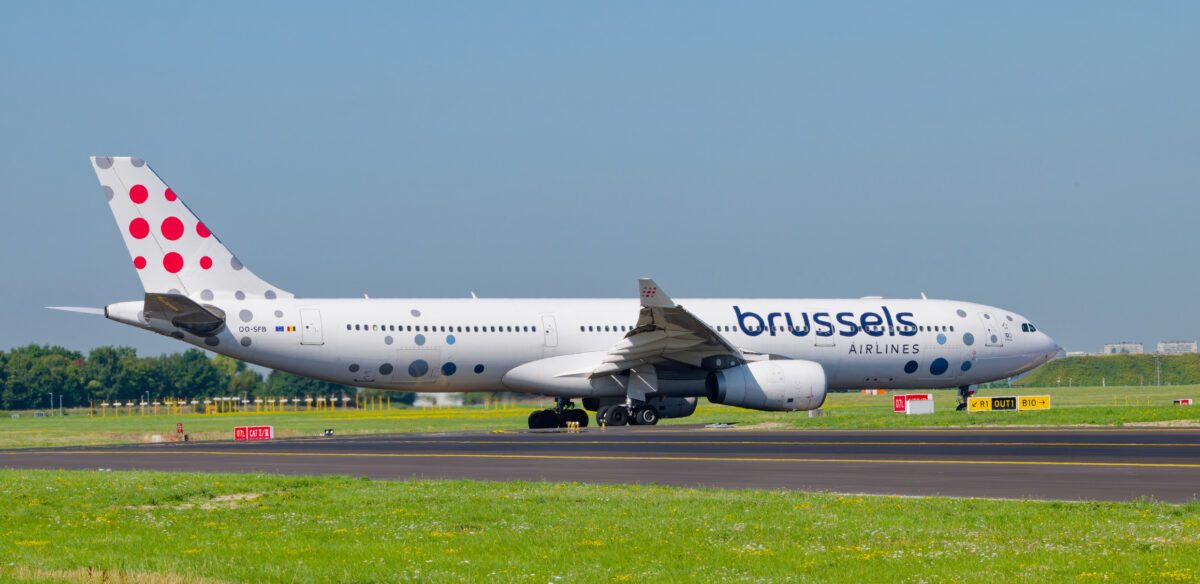
A Brussels Airlines Airbus A330-300 returned safely to Kotoka International Airport (ACC) in Accra shortly after departure on July 20, 2026, after its crew detected an unspecified technical problem.

Flight SN278 had departed Kotoka International Airport (ACC) at 6:06 p.m. local time for the short sector to Lomé Airport (LFW), with onward service to Brussels Airport (BRU). The crew elected to return to Accra as a precaution, and the widebody touched down at ACC at 6:18 p.m.—just 12 minutes after departure.
No injuries were reported among the passengers or crew.
Read our stories in your inbox
Two aviation newsletters. Zero fluff.
The aircraft involved was OO-SFP, an Airbus A330-300 that Brussels Airlines uses on its long-haul network to Africa and North America. The flight was canceled following the air return, while the aircraft remained in Accra until the following evening.
Brussels Airlines Flight SN278
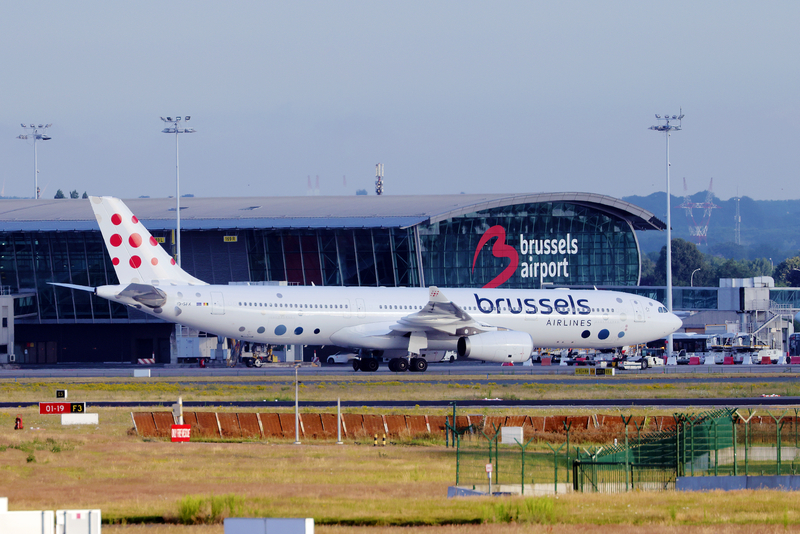
Crew Made a Precautionary Return to Accra
The Ghana Civil Aviation Authority’s account of the incident said the technical problem was identified after the aircraft became airborne.
The regulator did not disclose which aircraft system was affected, whether the crew declared an emergency or whether airport emergency services were placed on standby. Brussels Airlines is investigating the issue under GCAA oversight.
Without additional information from the airline or regulator, it would be inappropriate to characterize the event as an engine failure, pressurization problem or another specific type of malfunction.
A technical return shortly after departure does not necessarily indicate that the aircraft was in immediate danger. Modern airliners have extensive monitoring systems, and crews may return when a warning, abnormal indication or system fault makes continuing the flight operationally undesirable.
The unusually short flight time suggests the crew made the decision promptly rather than continuing toward Lomé Airport (LFW), which is less than an hour from Accra under normal operating conditions.
SN278 Was Operating a Multi-Stop West African Service
Brussels Airlines combines Accra and Lomé on several of its services between West Africa and Belgium.
The airline’s published Accra-Lomé schedule lists a normal flight time of approximately 50 minutes between Kotoka International Airport (ACC) and Lomé Airport (LFW). The actual airborne time can be considerably shorter, depending on the direction of travel, winds and air traffic routing.
Using one Airbus A330 to serve both cities allows Brussels Airlines to combine traffic from two comparatively small long-haul markets onto a single flight to Brussels Airport (BRU).
Brussels Airport Hit By Four-Hour Queues As EU Border System Strains Passport Control
These triangular services may operate in different sequences depending on the day and schedule. An aircraft can fly Brussels Airport (BRU)-Kotoka International Airport (ACC)-Lomé Airport (LFW)-Brussels Airport (BRU), or serve Lomé before Accra.
The short regional sector also carries local passengers where permitted, giving Brussels Airlines a limited fifth-freedom operation between Ghana and Togo.
For the airline, combining the cities improves aircraft utilization and makes it possible to offer more frequent service than either destination might support independently with a nearly 300-seat widebody.
However, the arrangement also creates additional operational exposure. A technical problem on the short intra-African sector can affect passengers traveling locally, passengers continuing to Brussels Airport (BRU) and travelers awaiting the same aircraft in Lomé Airport (LFW).
OO-SFP Is a 21-Year-Old Airbus A330-300
The aircraft involved, OO-SFP, is an Airbus A330-343 with manufacturer serial number 645. It was manufactured in late 2004 and originally entered service with Lufthansa as D-AIKG in January 2005.
Aircraft records show that it later operated for Brussels Airlines and Eurowings before returning to the Brussels Airlines fleet in June 2024. It is powered by two Rolls-Royce Trent 772B turbofan engines.
Brussels Airlines configures its A330-300s with as many as 295 seats:
30 in Business Class, 21 in Premium Economy and 244 in Economy Class.
The airline lists a range of approximately 9,000 kilometers, or 5,592 miles, for the type. The A330-300 has a wingspan of 60.3 meters, a length of 63.7 meters and a maximum takeoff weight of 233 metric tons.
Brussels Airlines describes the A330-300 as the largest aircraft in its fleet and primarily uses the twin-engine widebody for flights to Africa and North America. Its long-haul fleet stood at 11 A330s at the end of 2025, with plans to expand to 13 aircraft as the airline adds capacity to sub-Saharan Africa. (Brussels Airlines)
An aircraft’s age alone does not determine its safety or airworthiness. Commercial aircraft remain in service as long as they comply with mandatory inspection, maintenance and structural requirements.
The A330-300 remains widely used on long-haul routes, and the Rolls-Royce Trent 700 engine family has accumulated more than 60 million operating hours since entering commercial service in 1995. (Rolls-Royce)
Flight SN278 Was Canceled
Brussels Airlines canceled the remainder of SN278 after OO-SFP returned to Kotoka International Airport (ACC).
The GCAA said the airline provided assistance to affected passengers under the Ghana Civil Aviation Economic Directives, which establish passenger rights and airline obligations involving delays, cancellations, denied boarding and related disruptions.
The regulator did not disclose how many passengers were aboard OO-SFP or how they were rebooked.
Because SN278 included an onward long-haul sector to Brussels Airport (BRU), the cancellation would have affected more than the passengers booked solely between Accra Airport (ACC) and Lomé Airport (LFW). Brussels-bound travelers also required replacement transportation, while some connecting passengers may have missed onward flights from BRU.
Brussels Airlines is part of Lufthansa Group and the Star Alliance, giving it access to a wider range of rebooking options. However, direct replacement capacity from Accra can be limited when a nearly full A330 flight is canceled at short notice.
OO-SFP Returned to Service the Following Evening
Public flight-tracking records show that OO-SFP remained at Kotoka International Airport (ACC) for approximately 27 hours after the air return.
The aircraft departed Accra Airport (ACC) at 9:02 p.m. UTC on July 21 as recovery flight SN1278. It reached Lomé Airport (LFW) after a 28-minute flight, landing at 9:30 p.m.
OO-SFP then departed Lomé Airport (LFW) at 10:37 p.m. UTC and continued to Brussels Airport (BRU). The aircraft landed in Brussels at 4:36 a.m. UTC on July 22, or 6:36 a.m. local time, after a flight of five hours and 59 minutes. (Flightradar24)
The aircraft’s departure on July 21 indicates that it had been inspected and released back into service, although neither Brussels Airlines nor the GCAA has disclosed what maintenance was performed.
The recovery routing through Lomé Airport (LFW) allowed Brussels Airlines to restore the portion of the operation that had been abandoned the previous evening before returning OO-SFP to its main base at Brussels Airport (BRU).
The additional flight number—SN1278 rather than the regular SN278—identified the operation as a recovery or irregular service and separated it from the airline’s normal scheduled flight record.
A Technical Return Is a Safety Procedure, Not an Accident
Air returns receive attention because passengers see an aircraft land at the same airport from which it departed. Operationally, however, returning after identifying an abnormal condition is a routine risk-management decision available to the flight crew.
Pilots assess the nature of the warning, weather, aircraft weight, runway availability, maintenance support and the suitability of nearby airports before deciding whether to continue, divert or return.
In this case, the crew chose to land at Kotoka International Airport (ACC), where the aircraft had departed only minutes earlier. The A330 landed normally, and no injuries were reported.
The GCAA praised the crew for following established safety procedures and said Ghana’s aviation safety and security oversight system continued to operate normally. The regulator will oversee Brussels Airlines’ investigation into the event.
Until the technical findings are released, the most significant facts remain the crew’s rapid decision, the safe landing and OO-SFP’s return to operation the following day.
Bottom Line
Brussels Airlines flight SN278 returned to Kotoka International Airport (ACC) only 12 minutes after departure on July 20 after the crew identified an unspecified technical problem.
The Airbus A330-300, registered OO-SFP, landed safely, and there were no reported injuries. Brussels Airlines canceled the flight and assisted passengers under Ghana’s aviation consumer-protection rules.
After remaining in Accra for approximately 27 hours, the aircraft returned to service on July 21 as SN1278. It operated from Accra Airport (ACC) to Lomé Airport (LFW) before continuing overnight to Brussels Airport (BRU), where it arrived on the morning of July 22.
The exact cause of the technical issue remains under investigation. Until Brussels Airlines or the GCAA releases further information, claims identifying a particular aircraft system or component as the cause would be speculation.
Keep reading FlyMag
Get the Daily Brief in the morning or the Route Watch weekly recap on Fridays. Or both.