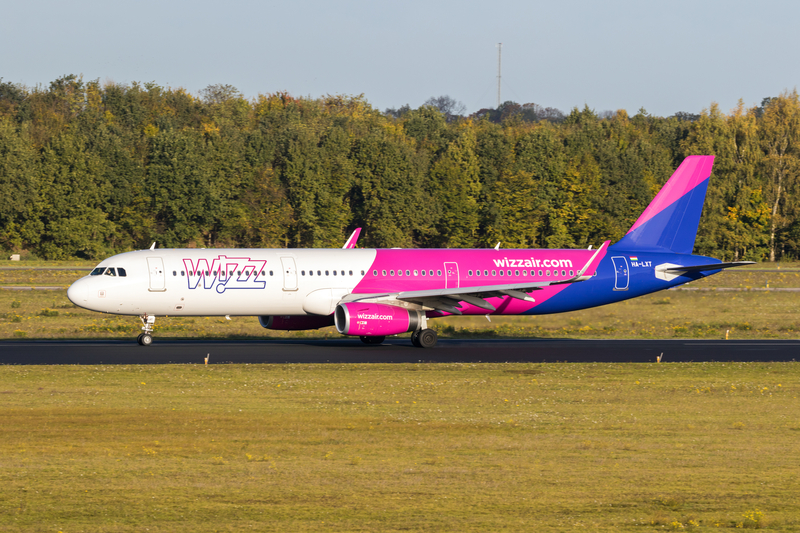
Wizz Air has begun retiring its older Airbus A321ceo aircraft, opening a new phase in the carrier’s long-running fleet renewal strategy. The move is important not simply because aircraft are leaving the fleet, but because the A321ceo has been one of the airline’s most important growth tools over the past decade.

In Wizz Air’s configuration, the Airbus A321ceo seats 230 passengers in a single-class layout, giving the airline a dense and efficient platform for high-volume short- and medium-haul flying. It helped the carrier push lower unit costs across much of its European network while adding more seats without moving into widebody economics.
Now, however, Wizz Air is moving firmly toward a neo-dominated future. The airline says 41 A321ceo aircraft will be phased out by March 2029, making room for newer Airbus A321neo-family jets across the group.
Read our stories in your inbox
Two aviation newsletters. Zero fluff.
Why the A321ceo Is Leaving Now
This is not a case of Wizz Air walking away from the Airbus A321 platform. Quite the opposite. The airline is doubling down on it. What is changing is the generation of aircraft it wants at the center of the business.
The A321ceo remains a highly capable narrowbody, but the economics of the Airbus A321neo are stronger. Airbus says the A321neo delivers a 20% reduction in fuel burn and CO2 emissions per seat compared with previous-generation aircraft, while also offering the range and capacity to cover a wide mix of European and near-regional sectors. For a carrier built around aggressive cost discipline, that matters enormously.
Wizz Air’s A321neo fleet is configured with 239 seats, giving the airline an additional nine seats over the A321ceo while also improving fuel efficiency. That is a meaningful combination. In airline planning terms, it means lower seat-mile costs, better environmental performance, and a stronger platform for flying dense routes where price sensitivity is high and margins can be thin.
Fleet Simplification Is as Important as Fleet Renewal
The retirement plan is about more than replacing older jets with newer ones. It is also about simplifying the fleet.
At the end of December 2025, Wizz Air reported a fleet of 257 aircraft, including 41 A321ceos. As those aircraft leave, the airline will move closer to a more standardized operation centered on the Airbus A321neo and, increasingly, the Airbus A321XLR. That matters because simplification improves far more than the headline age of the fleet.
A tighter fleet structure helps reduce maintenance complexity, streamlines parts support, and improves crew planning. For an ultra-low-cost carrier, those back-end gains are often just as valuable as the fuel savings. A more uniform fleet also gives network planners greater flexibility when rotating aircraft across bases and high-demand markets.
The Strategic Logic Runs Deeper Than Sustainability
Wizz Air has framed the transition around lower fuel burn, lower emissions, and higher efficiency, and that is certainly part of the story. But for industry readers, the more important point is strategic discipline.
The airline has built its business on keeping costs low, aircraft utilization high, and fleet commonality strong. Retiring the A321ceo supports all three aims. It also fits the broader direction of travel at Wizz Air, where larger-gauge narrowbodies are central to the model. The airline is not shrinking. It is sharpening the type of aircraft it wants to grow with.
That distinction matters. The A321ceo played a major role in Wizz Air’s rise, especially as the carrier expanded across Central and Eastern Europe and then deeper into Western Europe, the Middle East, and North Africa. But the next chapter is clearly built around neo-family aircraft, which offer stronger economics and a longer strategic runway.
What It Means for Passengers and the Network
From a passenger perspective, this is not a dramatic product overhaul in the traditional full-service sense. Wizz Air remains an ultra-low-cost carrier, and its competitive edge still comes from cost structure more than onboard frills.
Even so, newer aircraft do bring advantages. A younger fleet generally supports better reliability, lower technical disruption risk, and more consistent cabin standards across the operation. For passengers, that often shows up not in luxury, but in predictability. For the airline, it shows up in utilization, scheduling resilience, and lower operating cost.
The bigger benefit, though, sits at network level. As Wizz Air continues shifting toward the A321neo and A321XLR, it gives itself more flexibility to operate dense short-haul sectors efficiently while also opening the door to longer, thinner markets that suit the economics of the latest Airbus narrowbody family.
Bottom Line
Wizz Air’s A321ceo retirement plan is not a symbolic fleet tidy-up. It is a meaningful structural change in how the airline wants to operate over the next several years.
The Airbus A321ceo helped Wizz Air scale with low seat costs and high-density capacity. But the Airbus A321neo now offers an even stronger version of that formula, with more seats, lower fuel burn, and better long-term economics. For Wizz Air, that makes the decision straightforward.
The airline is not moving away from the A321. It is moving toward a more standardized, more efficient, and more strategically useful version of it.
Keep reading FlyMag
Get the Daily Brief in the morning or the Route Watch weekly recap on Fridays. Or both.