Delta Air Lines has acknowledged that advance bookings for its new nonstop service between Hartsfield-Jackson Atlanta International Airport (ATL) and King Khalid International Airport in Riyadh (RUH) are running below expectations.
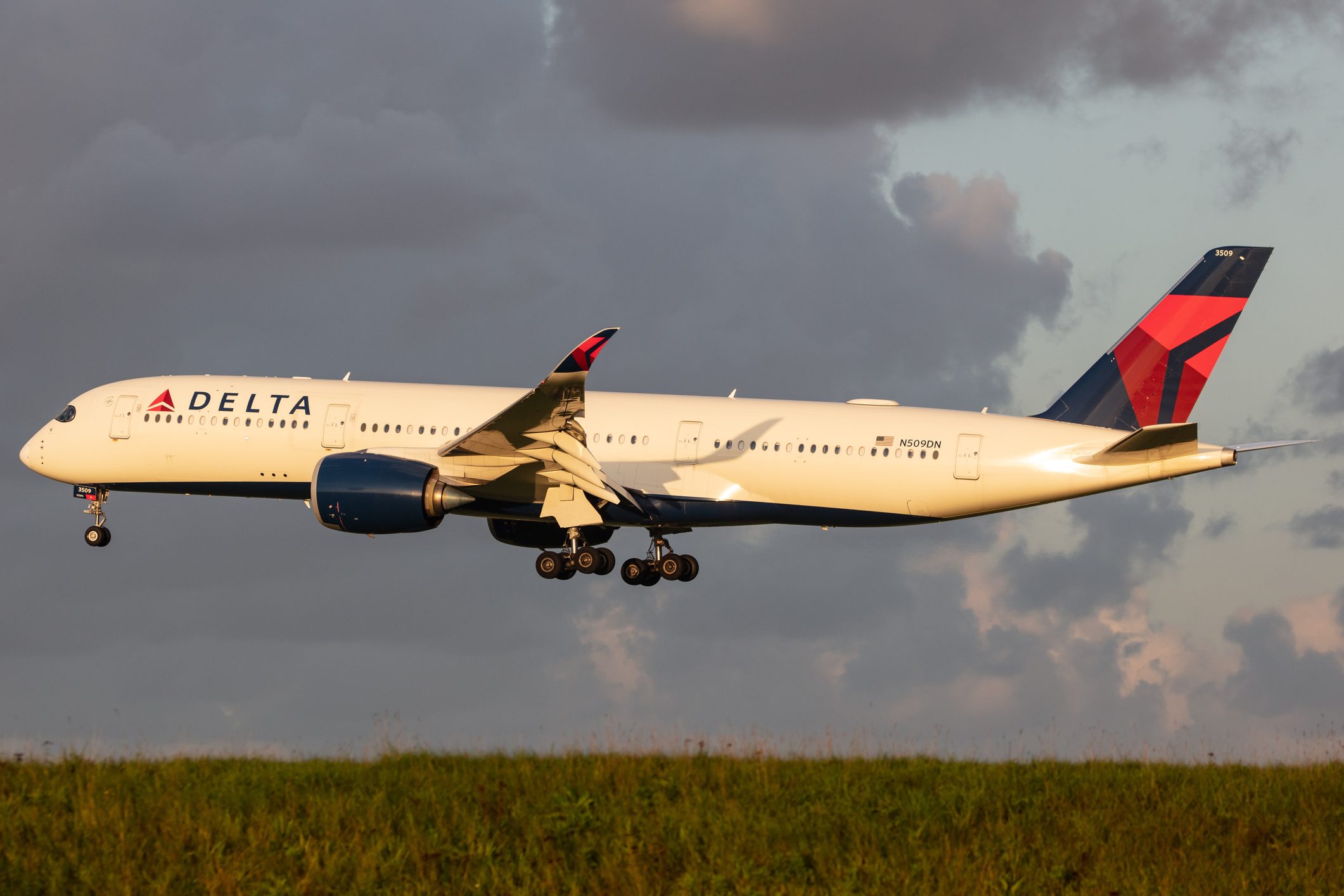
The admission is notable because airlines rarely discuss the early performance of an individual route before it begins. Delta is still scheduled to launch the more than 7,000-mile service on October 23, 2026, using an Airbus A350-900.
However, widely circulated claims that Delta has sold only five tickets require significant qualification.
Read our stories in your inbox
Two aviation newsletters. Zero fluff.
The figure did not come from Delta’s reservation system or an official airline disclosure. It came from a public seat map for one Atlanta Airport (ATL)-Riyadh Airport (RUH) departure on November 4, which showed five seats selected at the time it was reviewed.
A seat map can provide evidence of weak demand, but it cannot reveal exactly how many passengers have purchased tickets.
Delta Admits Demand Is “Softer Than Anticipated”
Delta President Peter Carter confirmed the subdued booking environment during an interview in Riyadh.
Carter told Semafor that ticket sales were “softer than anticipated”, attributing the weakness largely to the continuing conflict involving Iran and the broader uncertainty surrounding travel to the Middle East.
Delta nevertheless believes the situation is temporary and continues to publicly support the route.
Carter argued that Riyadh could benefit from remaining comparatively stable while other Gulf aviation centers experienced repeated airspace disruptions and airline suspensions. He suggested that King Khalid International Airport (RUH) could increasingly be viewed as a regional safe haven.
That is a more nuanced position than suggesting Delta is preparing to cancel the route because five passengers have booked.
The airline has admitted demand is below its forecast, but it has not disclosed the number of reservations, current load factor, average fare, corporate bookings or expected revenue for any Atlanta Airport (ATL)-Riyadh Airport (RUH) departure.
The Five-Seat Figure Came From One Seat Map
The original claim appeared in an Enilria analysis of Delta’s November 4 flight.
At the time of the review, five seats appeared occupied on the aircraft’s seat map. The publication described those seats as five tickets sold, but the two figures are not necessarily the same.
A separate review of the opening Atlanta-Riyadh flights found only eight assigned seats across the first eight non-inaugural eastbound departures. Several flights showed no selected seats at all.
That is an unusually weak visible booking pattern for an international route approximately three months from launch. It provides reasonable evidence supporting Delta’s admission that sales are soft.
It still does not prove that only eight passengers had purchased tickets.
Public users cannot see Delta’s complete passenger-name records, corporate contracts, group reservations, connecting itineraries or bookings without advance seat assignments. Only Delta knows the true number of passengers currently holding confirmed reservations.
Why Seat Maps Do Not Equal Passenger Loads
Airline seat maps are useful, but they are imperfect tools for measuring demand.
A seat marked as occupied generally indicates that another passenger has selected it. An empty seat, however, does not necessarily mean that no passenger has booked it.
Some travelers purchase tickets without immediately choosing seats. Other assignments may be withheld until check-in for operational reasons. Airlines can also block seats for airport assignment, passengers requiring assistance, crew rest, weight-and-balance management or other internal purposes.
Delta’s fare structure makes this distinction particularly relevant.
Under Delta’s expanded Basic fare options, customers purchasing certain entry-level Main Cabin, Delta Comfort, Delta Premium Select and Business Class products may not receive seats until after check-in.
That means a passenger can hold a valid reservation while still appearing as an unassigned traveler on the public seat map.
The introduction of Basic options in premium cabins makes seat-map analysis less reliable than it previously was. A Delta One passenger paying a lower Basic Business fare, for example, may not select a specific suite months before departure.
Partner sales and certain agency reservations can also take time to appear as individually selected seats.
The nearly empty maps are still concerning. They simply should be described as showing very few assigned seats, rather than being presented as definitive ticket-sales data.
Delta Will Initially Operate the Route Daily
Delta’s official Atlanta-Riyadh announcement calls for service to begin on October 23.
Although the regular schedule will operate three times per week, Delta plans to fly daily between Atlanta Airport (ATL) and Riyadh Airport (RUH) from October 23 through October 30.
That unusually intensive opening week is not accidental.
The 10th Future Investment Initiative conference will take place in Riyadh from October 26 through October 29. The event attracts senior corporate executives, investors, government officials and financial institutions from around the world.
Launching immediately before the conference allows Delta to target precisely the type of high-yield business traffic needed to support an ultra-long-haul flight.
The initial daily operation also provides better scheduling flexibility for conference attendees than the route’s normal three-times-weekly timetable. A traveler can arrive shortly before the event and return on several different days rather than arranging an extended stay around a limited flight schedule.
After October 30, the route will settle into its planned three-times-weekly operation.
Delta Is Assigning Its Airbus A350-900
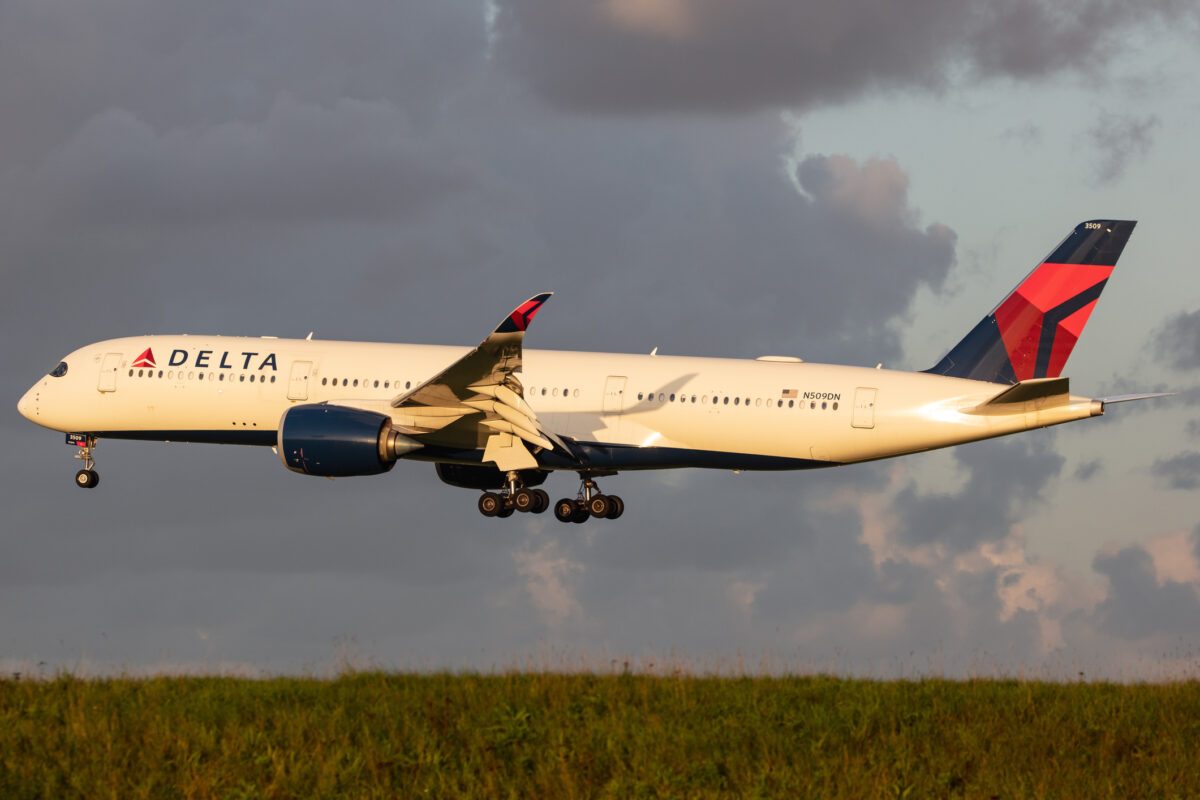
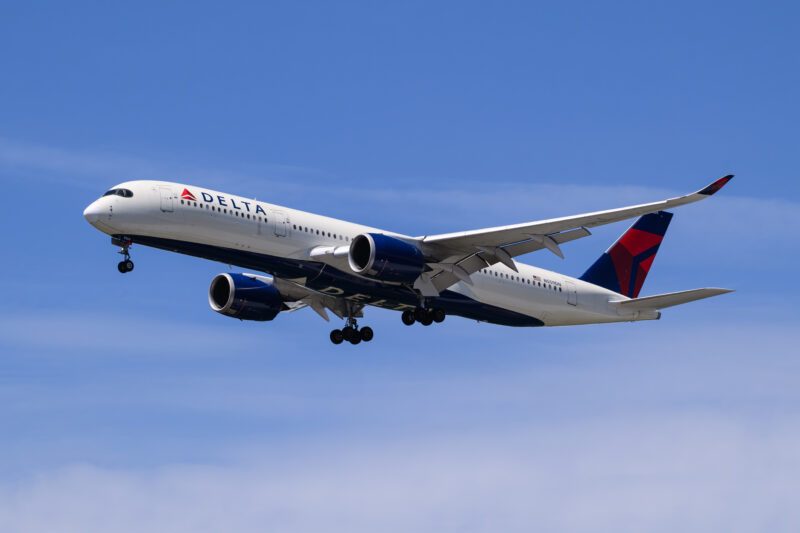
Delta will operate the Atlanta Airport (ATL)-Riyadh Airport (RUH) route with the Airbus A350-900, its most capable current long-haul aircraft.
The A350-900 is a twin-engine widebody built extensively from carbon-fiber-reinforced materials. Its aerodynamic wing, composite structure and Rolls-Royce Trent XWB engines give it the range and fuel efficiency required for long missions without the four-engine operating costs associated with older Airbus A340s or Boeing 747s.
Delta advertises an operating range of approximately 8,000 miles for its A350-900, placing the more than 7,000-mile Riyadh sector comfortably within the aircraft’s intended mission profile.
The scheduled service will offer four cabins:
- Delta One
- Delta Premium Select
- Delta Comfort
- Delta Main
Delta has several A350-900 interior layouts, and the airline has not guaranteed one specific seating configuration for every Riyadh departure. Its current premium-heavy A350 configuration accommodates 275 passengers, including 40 Delta One suites, 40 Premium Select seats, 36 Delta Comfort seats and 159 Main Cabin seats.
Aircraft substitutions or a different A350 subfleet remain possible.
Even with the A350’s favorable economics, the route will be expensive to operate. A round trip will consume more than a full day of aircraft time and require long-haul flight crews, international catering, overflight planning and significant fuel.
A few additional passengers will not determine the route’s viability. Delta needs meaningful premium-cabin revenue, connecting traffic, corporate contracts and potentially cargo income to support the operation.
Atlanta Provides a Large Connecting Network
The route is not designed solely around passengers living in metropolitan Atlanta or Riyadh.
Hartsfield-Jackson Atlanta International Airport (ATL) is Delta’s largest hub, allowing the airline to collect passengers from across the United States and place them onto one long-haul departure.
Delta says travelers arriving from Riyadh Airport (RUH) will have one-stop access to more than 150 U.S. destinations through Atlanta Airport (ATL).
That connectivity is essential. The local Atlanta-Riyadh market alone would be unlikely to support an A350 throughout the year, especially at the premium fares needed to make a route of this length commercially attractive.
Potential traffic includes government travelers, energy-industry employees, consultants, financial professionals, defense contractors and passengers working on Saudi Arabia’s major infrastructure and tourism projects.
Leisure demand is likely to take longer to develop. Saudi Arabia has expanded international tourism under its Vision 2030 program, but it remains a relatively unfamiliar vacation destination for many U.S. travelers.
Delta must therefore build a market rather than simply enter an established flow of passengers.
Riyadh Air Is Central to the Strategy
Delta’s relationship with Riyadh Air is one of the strongest strategic arguments for the route.
The carriers signed a partnership agreement in July 2024, with plans covering interline connectivity, codesharing, loyalty cooperation and potentially a deeper joint venture, subject to regulatory approval.
Riyadh Air describes Delta as its future North American partner, providing access to more than 300 destinations across the continent. Delta, in return, could use Riyadh Air to carry passengers beyond King Khalid International Airport (RUH) to cities across Saudi Arabia, the Middle East, Africa and Asia.
The Saudi carrier received U.S. Department of Transportation authority in June 2026, clearing an important regulatory hurdle for its own future U.S. operations and commercial relationships.
The problem for Delta is timing.
Riyadh Air is still building its fleet and network. Its full connecting schedule, codeshare integration and customer-recognition systems may not be mature when Delta begins Atlanta Airport (ATL)-Riyadh Airport (RUH) service.
Until those connections develop, Delta may rely more heavily on local Riyadh traffic and passengers beginning their journeys elsewhere in the United States.
A three-times-weekly schedule also limits the number of convenient connections available on both sides. Daily service would be more attractive to corporate travelers, but it would expose Delta to substantially more financial risk while the market is still developing.
The Regional Conflict Has Changed Booking Behavior
Delta is introducing the route during an exceptionally unstable period for Middle Eastern aviation.
Renewed conflict involving Iran has led multiple international carriers to suspend or reduce flights to destinations including Dubai Airport (DXB), Doha Airport (DOH), Riyadh Airport (RUH), Bahrain Airport (BAH), Tel Aviv Airport (TLV) and Beirut Airport (BEY).
Even when Saudi airspace remains open, travelers may postpone bookings because they are uncertain about connecting flights, insurance coverage, company travel policies or the possibility of future schedule changes.
Corporate security departments can impose restrictions that individual travelers would not apply themselves. A business may prohibit or postpone employee travel to an entire region even when the specific destination remains operational.
That is especially important for Delta because corporate travelers are likely to account for a disproportionate share of the route’s expected premium revenue.
Carter’s comments suggest Delta believes demand can recover if the conflict eases before October. However, the airline has limited time to close the gap between current bookings and the passenger volumes needed to support an A350.
Saudi Arabia May Be Supporting the Route
Saudi Arabia has used financial incentives to attract international airlines and accelerate Riyadh’s development as a global aviation hub.
The country’s Air Connectivity Program provides support for routes considered strategically important to tourism and economic development. The precise terms of any agreement involving Delta have not been publicly disclosed.
It would therefore be inappropriate to state as fact that Saudi subsidies will cover a specific amount of Delta’s operating losses.
However, financial support could alter the route’s economics considerably.
An airline normally evaluates whether ticket and cargo revenue will cover operating costs and provide an acceptable return. Incentive payments, marketing support, reduced airport charges or revenue guarantees can reduce the amount of passenger revenue required during a route’s development period.
Such arrangements are common when governments and airports want service to strategically important but commercially unproven destinations.
They do not guarantee long-term success. Once introductory support expires, the route must eventually produce enough underlying demand to remain sustainable.
What Delta Could Change Before October
Delta still has several options if reservations remain weak.
The airline could reduce the initial daily schedule, delay the launch, shorten the operating season or retain the route while using aggressive fare promotions to stimulate demand.
It could also adjust the aircraft assignment, although few aircraft in Delta’s fleet combine the range, premium capacity and operating economics of the A350-900.
Switching to a smaller widebody would not necessarily solve the problem. Delta’s Airbus A330-900neo has fewer seats in some configurations but may offer less payload flexibility on a route exceeding 7,000 miles. A Boeing 767 does not have an appropriate combination of range and economics for the mission.
Canceling the route would carry its own costs. Delta has publicly committed to the service, coordinated its launch with the Future Investment Initiative and positioned Riyadh Air as an important strategic partner.
Operating at least the introductory period may be commercially and diplomatically preferable even if the first flights perform poorly.
Bottom Line
Delta has confirmed that bookings for its new Atlanta Airport (ATL)-Riyadh Airport (RUH) route are softer than anticipated.
That admission should be taken seriously. Public seat maps showed remarkably few selected seats approximately three months before launch, suggesting that the service has not yet generated the demand Delta expected.
However, the claim that Delta has sold only five seats is not established.
Five seats were shown as assigned on one November 4 departure. Other early flights also displayed very few occupied seats, but seat maps do not include every ticketed passenger. Delta’s Basic fare products can leave customers without assignments until check-in, and only the airline has access to complete reservation data.
The strategic case for the route remains understandable. Atlanta Airport (ATL) provides extensive U.S. feed, Riyadh is attracting growing corporate investment, the opening week coincides with the Future Investment Initiative, and Delta’s partnership with Riyadh Air could eventually create connections across a much larger network.
The challenge is converting that strategy into passengers.
An Airbus A350-900 flying more than 7,000 miles three times each week requires premium traffic, corporate contracts and connecting demand—not merely long-term optimism.
For now, the route remains scheduled to launch on October 23. The next several weeks will show whether bookings accelerate as the regional security environment develops or whether Delta is forced to reconsider one of the boldest additions to its international network.
Keep reading FlyMag
Get the Daily Brief in the morning or the Route Watch weekly recap on Fridays. Or both.