An attack on Riyadh’s King Khalid International Airport (RUH) killed 12 people and injured 309 on Saturday, October 10, prompting Saudi Arabia’s General Authority of Civil Aviation to suspend airport operations while emergency teams assessed the damage.
GACA initially reported an unspecified number of injuries following the afternoon attack. In a subsequent casualty update, the regulator said four Saudi citizens and eight foreign nationals had died. The foreign victims included two Bangladeshi citizens and one citizen each from the United States, Egypt, Jordan, Syria, Palestine and Sudan.
The 309 injured people were being treated at several hospitals, with some described as being in critical condition. GACA also reported material damage that remained under assessment.
Read our stories in your inbox
Two aviation newsletters. Zero fluff.
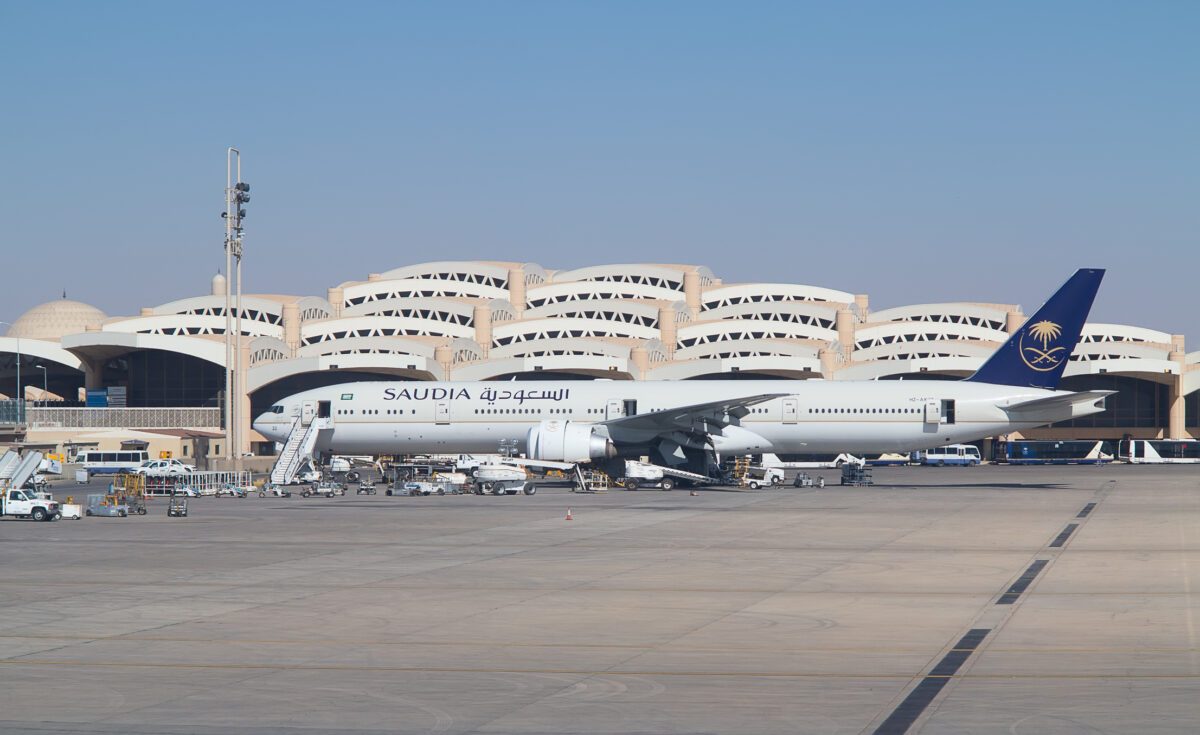
Operations were halted pending inspections of airport facilities and coordination with security and emergency authorities. The suspension affected Saudi Arabia’s principal capital-city gateway and the main operating base in Riyadh for Saudia and flynas.
Second Attack at RUH in Three Days
Saturday’s closure followed two attacks at RUH on Thursday, October 8. GACA said one struck airport facilities and another targeted a Saudia aircraft. Emergency teams responded under the airport’s established contingency procedures.
Those earlier attacks killed three Saudi citizens and injured Saudi and foreign residents, with injuries ranging from minor to serious. They also caused material damage. The airport subsequently reopened and traffic returned to normal before the latest attack forced another suspension.
The regulator’s statement on the October 8 attacks did not identify the Saudia aircraft type. Saturday’s announcement concerned airport infrastructure and the resulting casualties rather than an aircraft accident.
The sequence has required RUH to move repeatedly between emergency response, damage assessment and normal operations. That creates a more complex recovery than a single short-duration closure: airlines must account for aircraft that did not reach Riyadh, crews displaced from their planned rotations and passengers whose connections were broken by cancellations or diversions.
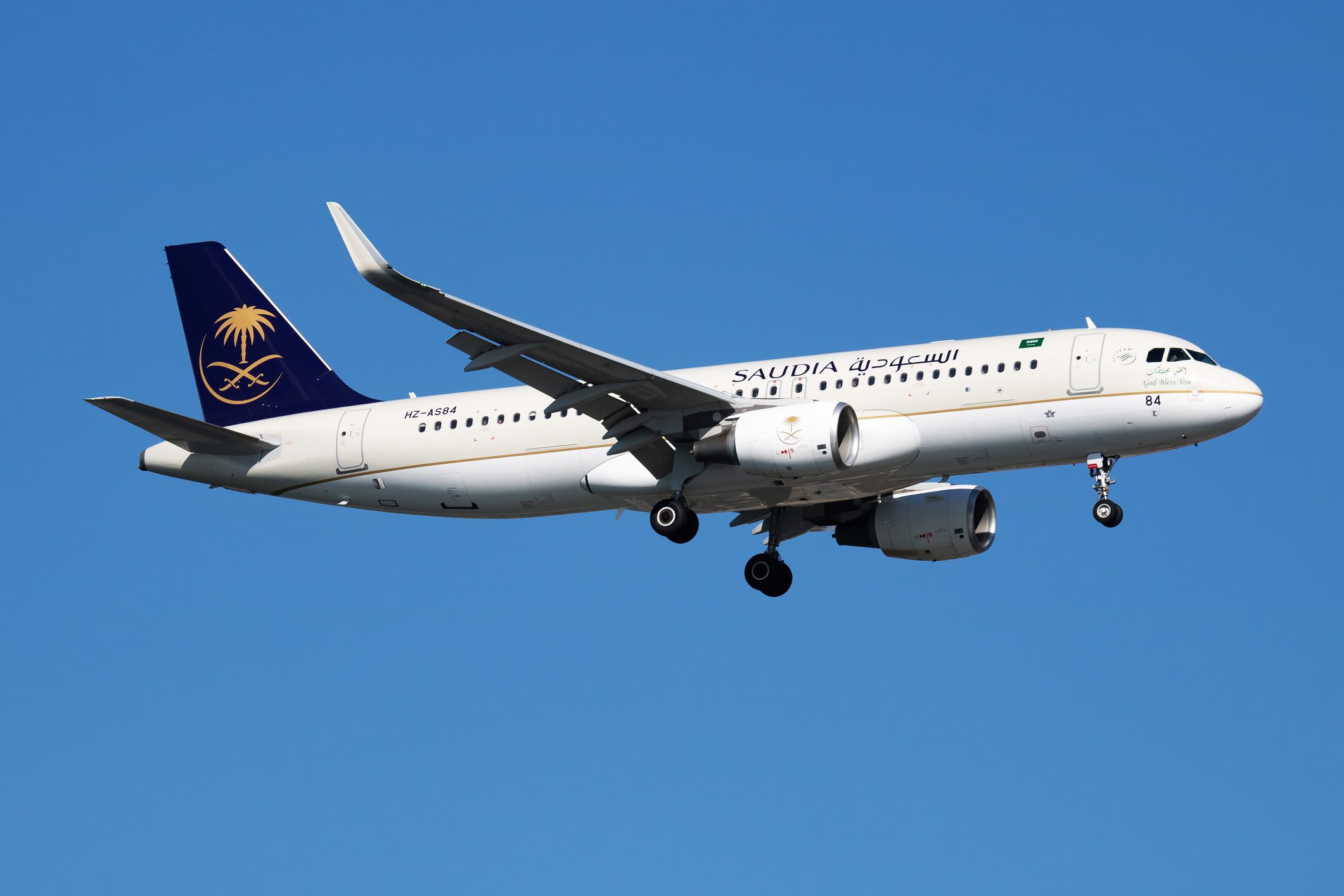
BREAKING: Footage shows a Saudia Airbus A320-200 narrow-body airliner being hit while parked at Riyadh Airport, Saudi Arabia, in a successful one-way attack drone strike by Houthi terrorists. https://t.co/WuFWKH0hvF
— Babak Taghvaee – The Crisis Watch (@BabakTaghvaee1) October 8, 2026
Closure Disrupts a Reorganized Terminal Operation
RUH completed a major redistribution of airline operations across its five passenger terminals in February. Under the revised arrangement, Terminals 1 and 2 handle international flights by Saudi carriers, Terminals 3 and 4 handle their domestic operations, and Terminal 5 serves international flights by foreign airlines.
The terminal transition was designed to reduce transfer times for the national carriers and increase the capacity of Terminals 3 and 4 from 16 million to 25 million passengers annually. More than 1.04 million passengers and 7,650 flights used the airport during the 10-day transition period in February.
That terminal specialization makes a prolonged interruption at RUH consequential beyond the immediate loss of takeoff and landing capacity. Saudia and flynas use Riyadh for domestic and international connections, while foreign operators are concentrated in Terminal 5. A suspension therefore affects separate passenger-processing systems, transfer flows and airline handling operations at the same time.
Riyadh Airports Company has been working toward increasing total terminal capacity from 42 million passengers in 2025 to 56 million by the end of 2026. It also expects the airport eventually to accommodate 7.5 million transfer and connecting passengers annually. Those plans depend on tightly coordinated movements between terminals, airlines and ground transport systems.
Airlines Face a Complicated Restart
GACA said the airport would remain suspended while authorities evaluated the damage and verified that its facilities were safe. That process covers more than the physical condition of the runways. Passenger terminals, airfield systems, security areas, baggage infrastructure, communications and access routes may all need to be cleared before a full schedule can resume.
Once reopening is authorized, airlines will have to rebuild their schedules around the aircraft and crews available in Riyadh. Inbound flights held at their departure points can return relatively quickly, but diverted aircraft may require repositioning sectors, new crew assignments or revised duty plans. Long-haul services are particularly difficult to restore because aircraft availability, crew hours and onward rotations can be affected for more than one operating day.
The Saudi Foreign Ministry asked citizens affected overseas by stopped or delayed Riyadh flights to contact Saudi diplomatic missions for assistance. The measure indicated that the disruption extended beyond passengers already at RUH to travelers unable to begin their journeys to Saudi Arabia.
The airport’s public flight information page remained the central source for individual arrival and departure status, while passengers were also directed to confirm arrangements with their airlines before traveling to the airport.
Bottom Line
The immediate priority is the treatment of the injured and the safe recovery of the airport. Operationally, the attack also tests a Riyadh hub structure that Saudi Arabia has spent 2026 expanding and reorganizing. The new terminal allocation should help airport management isolate and restore individual processes, but it also means disruption can spread quickly through dedicated domestic, Saudi international and foreign-airline operations.
Saudia and flynas carry the greatest network exposure because aircraft and crews based at RUH support flights throughout their schedules. Foreign airlines may be able to resume isolated services once the airport reopens, while the Saudi carriers must reconstruct connecting banks and reposition assets across a much larger network. The pace and shape of that recovery will be the clearest indication of how much of the airport’s operational infrastructure was affected.
The repeated attacks on October 8 and October 10 also add a security constraint to Riyadh’s rapid capacity growth. RUH is being developed for 56 million annual passengers and substantially more connecting traffic, making resilience, redundancy and rapid terminal recovery as important as physical expansion. Airlines will be watching whether the next restart is complete or phased, and whether further schedule reductions are required after safety inspections are finished.
Keep reading FlyMag
Get the Daily Brief in the morning or the Route Watch weekly recap on Fridays. Or both.