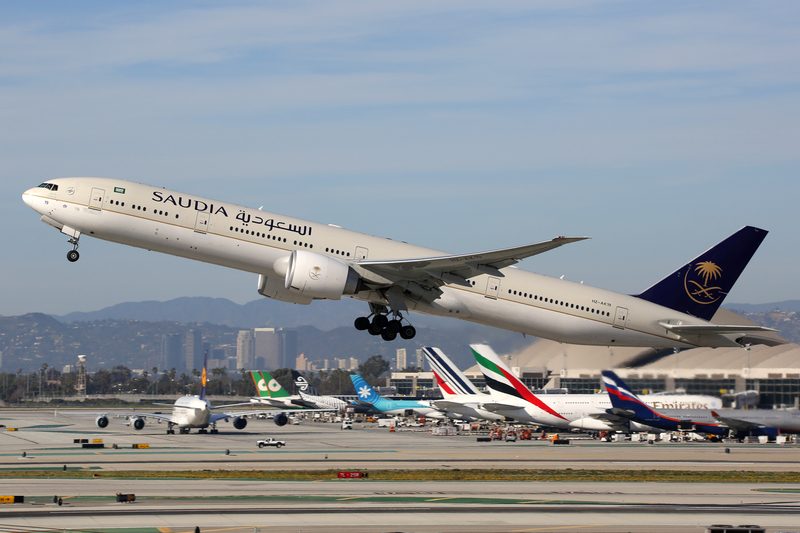
Saudia is pushing back against reports linking former aircraft from its fleet to Iran’s sanctioned aviation sector, after claims surfaced that Boeing 777-200ER widebodies once operated by the Saudi flag carrier are now connected to Mahan Air.
The issue is sensitive for several reasons. The aircraft in question are U.S.-built Boeing 777 widebodies. Mahan Air has long been subject to U.S. sanctions. And the aircraft reportedly moved through the secondary market after Saudia had already disposed of them, raising questions about ownership chains, export controls, end-user checks, and how older long-haul jets can move between jurisdictions after leaving a major airline fleet.
Saudia says the story is being misread. The carrier has stated that the aircraft were sold on June 7, 2023, to a company registered outside Saudi Arabia, and that the sale was completed under applicable commercial and legal procedures. The airline also says it has had no operational or commercial relationship with the aircraft since the sale.
Read our stories in your inbox
Two aviation newsletters. Zero fluff.
That distinction matters. Saudia is not saying the aircraft never existed in its fleet. It is saying that any later movement of those aircraft happened after ownership had already transferred away from the airline.
Saudia Draws a Line at the 2023 Sale
The timing is central to the dispute. According to Saudia’s statement, the aircraft had already been sold more than three years before the current reports linked them to an airline subject to sanctions. The carrier did not identify the buyer, disclose the aircraft registrations, or provide the full ownership chain after the transaction.
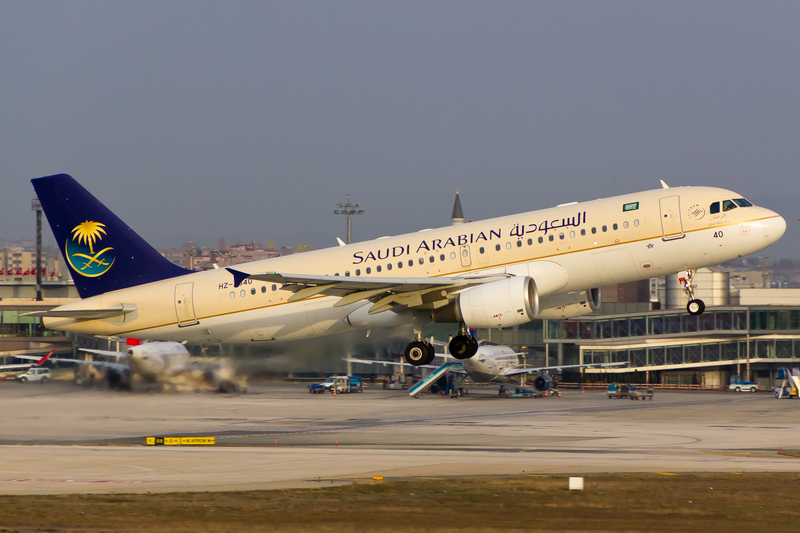
That leaves an important gap for aviation observers. Without publicly confirmed manufacturer serial numbers, delivery records, and registration history, it is difficult to independently trace each aircraft from Saudia’s fleet to its current reported location.
This is why the story should be treated carefully. Reports have described the aircraft as former Saudia Boeing 777-200ER jets destined for, or connected to, Mahan Air. However, at least one aviation outlet has noted that no public registrations or serial numbers have yet been identified to fully support the ex-Saudia claim. That does not mean the reports are wrong, but it does mean the available evidence is incomplete.
For a professional aviation audience, that is the key point: this is not simply a “Saudi airline sold aircraft to Iran” story. Based on what is publicly known, it is a secondary-market aircraft ownership story with a politically sensitive final destination.
Why the Boeing 777-200ER Is Valuable to Iran
The aircraft type is a major part of the story. The Boeing 777-200ER was one of the most important long-haul aircraft of the late 1990s and 2000s, offering airlines twin-engine range and payload capability at a time when many carriers were moving away from four-engine widebodies.
Saudia operated Boeing 777-268ER aircraft, with “268” being Boeing’s historic customer code for Saudi Arabian Airlines. These are 777-200ER airframes, part of the extended-range version of the original 777-200 family. The type was designed for intercontinental operations and remains attractive in restricted markets because it can carry meaningful passenger and cargo payloads over long distances.
For a carrier such as Mahan Air, a usable 777-200ER is not merely another aircraft. It can provide long-haul lift, high-density passenger capacity, and valuable belly cargo space. It can also serve as a source of parts if it cannot be fully returned to scheduled service.
That last point is important in Iran. Iranian airlines have long faced difficulty obtaining Western aircraft, engines, avionics, components, and maintenance support because of sanctions. In that environment, even aging aircraft can have substantial strategic and operational value.
Mahan Air Remains a Sanctions-Sensitive Operator
Any report linking aircraft to Mahan Air immediately raises compliance concerns. The U.S. Treasury designated Mahan Air in 2011 for providing support to the Islamic Revolutionary Guard Corps-Qods Force. Treasury later warned the aviation industry about the sanctions risk associated with providing services, parts, maintenance, ground handling, ticketing, refueling, and other support to designated Iranian airlines.
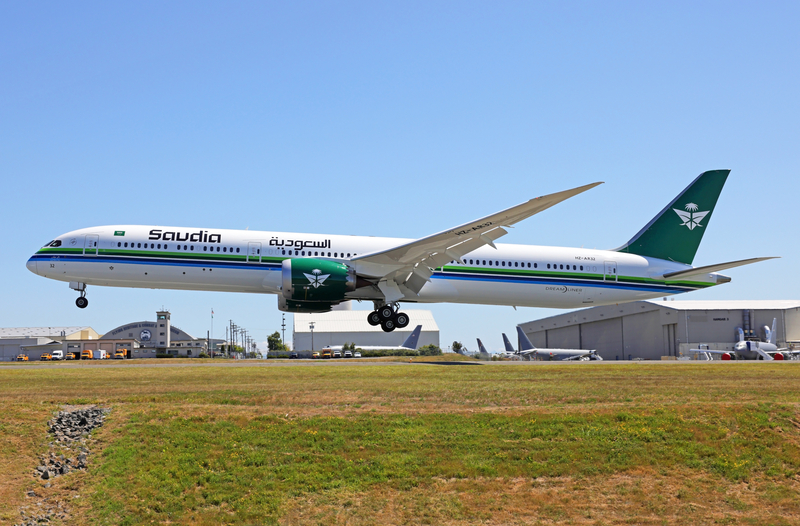
That is why these aircraft are drawing attention. A retired widebody moving through brokers, storage locations, and temporary registrations is not unusual in normal aviation commerce. But when the reported end user is a sanctioned Iranian airline, the same movement becomes a sanctions-enforcement issue.
The concern is not limited to the sale itself. Boeing aircraft contain substantial U.S.-origin technology, and continued operation depends on parts, technical documentation, overhaul capability, engines, avionics support, and component repair. Even if an aircraft is physically outside the United States, U.S. export-control rules can still matter because of the aircraft’s origin and the parts ecosystem required to keep it flying.
Reports Point to Tehran, But the Paper Trail Is Still Thin
Some reports have claimed that at least two aircraft are already in Iran, with Tehran Mehrabad International Airport (THR) mentioned as a possible refurbishment location. Others have claimed additional aircraft are or were positioned in the Gulf region, including Muscat International Airport (MCT) and Fujairah International Airport (FJR), before potential onward movement.
Those claims should be handled with caution unless backed by verified registration histories, flight-tracking data, photographs, and manufacturer serial numbers. In aircraft tracing, the registration alone can be temporary or misleading. The manufacturer serial number is the stronger identifier because it remains with the airframe for life.
That is especially important in this case because Mahan Air has already been linked to other Boeing 777-200ER aircraft that entered Iran through complex registration and ferrying patterns. In 2025, five 777-200ERs formerly associated with Singapore Airlines and NokScoot were reported to have reached Iran via a purported Malagasy registration structure. Ch-aviation later reported that two of those aircraft, EP-MTB and EP-MTE, were sanctioned by OFAC in 2026.
That earlier 777 case provides the backdrop for the current Saudia-linked reports. Iran has demonstrated that it can still obtain Western-built widebodies through indirect channels. The open question is whether the latest aircraft are fully traceable to Saudia’s retired 777-200ER fleet, and if so, how the ownership path developed after the 2023 sale.
Saudia’s Fleet Renewal Makes the Sale Plausible
From Saudia’s perspective, the disposal of older Boeing 777-200ER aircraft fits a normal fleet-renewal pattern. The airline has been modernizing around newer Airbus and Boeing aircraft, including Airbus A320-family jets, Airbus A330s, Boeing 777-300ERs, and Boeing 787 Dreamliners.
Older 777-200ERs are natural candidates for retirement, sale, storage, part-out, or secondary-market placement. Many first-generation 777-200ERs are now approaching or exceeding 25 years of age, and their value depends heavily on condition, engine status, maintenance history, cabin configuration, and remaining life-limited parts.
For a major airline, retiring an aging 777-200ER can be a straightforward commercial decision. For a buyer several steps removed, that same airframe can become a high-value asset if it can be moved into a market where new aircraft access is blocked.
That is the uncomfortable reality of the used-aircraft market. Once an aircraft leaves a flag carrier’s fleet, its future can become difficult to control unless contractual restrictions, sanctions screening, export-control checks, and end-user provisions remain enforceable through the resale chain.
The 777-200ER Is Old, But Still Operationally Useful
The Boeing 777-200ER is not a modern aircraft by today’s efficiency standards. It predates the 787 Dreamliner, the Airbus A350, and the newest generation of high-bypass engines and composite-heavy airframes. Compared with newer long-haul aircraft, it is heavier, generally less fuel efficient, and more maintenance intensive.
But it remains a capable widebody. Depending on configuration, a 777-200ER can carry roughly 300 passengers in a typical long-haul layout, or significantly more in high-density seating. It also offers strong cargo volume and enough range for many Asia, Middle East, Africa, and Europe missions from Iranian airports such as Tehran Imam Khomeini International Airport (IKA) or Tehran Mehrabad (THR), depending on operational approvals and aircraft condition.
For Mahan Air, which has historically operated older Airbus A300s, A310s, A340s, Boeing 747s, and more recently Boeing 777-200ERs, the type could help support trunk routes, pilgrimage demand, charter flying, or high-volume regional operations.
That does not mean every reported aircraft will enter revenue service. Some may require heavy maintenance, cabin refurbishment, engine work, documentation review, or cannibalization. A widebody can be physically present at an airport without being close to commercial operation.
Why This Story Matters Beyond Saudia and Mahan Air
This case is a reminder that aircraft retirement is no longer a purely commercial matter. In a sanctions-sensitive environment, older aircraft can become geopolitical assets.
For airlines, lessors, brokers, and maintenance providers, the lesson is clear: the end-user question does not end at the first sale. Aircraft can move through multiple companies, temporary registrations, storage airports, ferry permits, and maintenance stops before reaching their final operator.
That creates risk for everyone in the chain. A sale that looks routine at the time can later draw scrutiny if the airframe ends up with a restricted operator. The seller may no longer control the aircraft, but regulators, media, and the public will still look backward to the aircraft’s previous owner, especially when the previous owner is a national carrier.
For Saudia, the public statement is an attempt to separate a 2023 fleet-disposal transaction from any later movement of the aircraft. For Mahan Air, the reported aircraft would represent another potential expansion of long-haul capacity despite sanctions. For regulators, the case shows how difficult it remains to monitor the global used-aircraft market once airframes move through opaque ownership structures.
Bottom Line
Saudia’s position is straightforward: the Boeing 777-200 aircraft were sold in 2023 to a company outside Saudi Arabia, and the airline says it has had no operational or commercial relationship with them since. That is a critical distinction, especially because the later reports involve Mahan Air, a carrier long subject to U.S. sanctions.
What remains unresolved is the complete paper trail. Reports have linked former Saudia 777-200ERs to Iran, but the publicly available evidence has not yet fully established the registrations and serial numbers needed to verify every airframe.
The larger story is not just about five retired widebodies. It is about how aging Boeing 777s, secondary-market brokers, temporary registrations, and sanctions enforcement now intersect. In today’s aviation market, an aircraft’s retirement from a major airline is not always the end of its story. Sometimes, it is the beginning of a far more complicated one.
Keep reading FlyMag
Get the Daily Brief in the morning or the Route Watch weekly recap on Fridays. Or both.