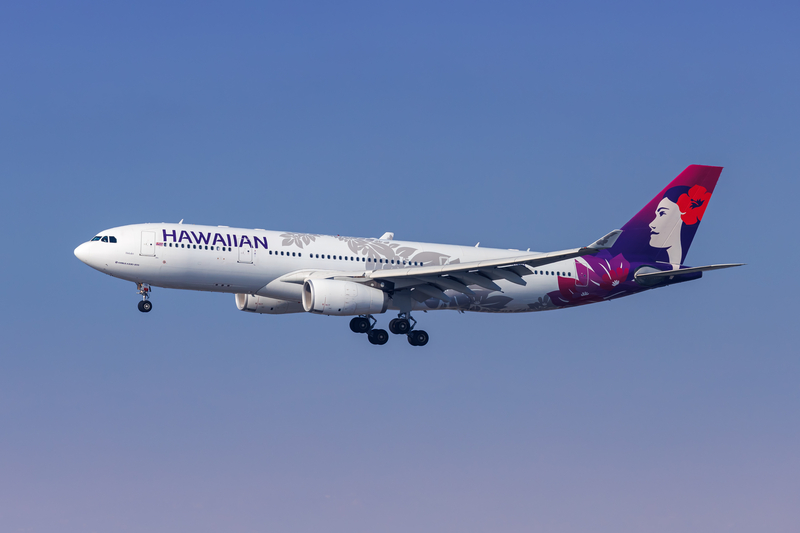
Hawaiian Airlines is preparing to phase out Airbus A321neo service between Daniel K. Inouye International Airport (HNL) and Oakland International Airport (OAK), replacing it with the larger Airbus A330-200 as part of the Alaska Air Group network realignment now taking shape across the combined operation.

That is the key point. This is not just a summer upgauge for peak demand. It increasingly looks like a structural shift. The route has already been moving gradually toward more widebody flying, but the latest schedule changes show the A330-200 taking over from June 10, 2026 and remaining in place beyond the summer peak, with the aircraft now scheduled on the route into early 2027.
For airline readers, that changes the story. This is no longer a temporary aircraft swap. It is a route philosophy change.
Read our stories in your inbox
Two aviation newsletters. Zero fluff.
A Widebody Makes Honolulu–Oakland a Different Product
The move from the Airbus A321neo to the Airbus A330-200 materially changes the route.
Hawaiian’s A321neo seats 189 passengers and has long been one of the airline’s most useful tools on thinner West Coast–Hawaii markets. It offered the economics of a modern long-range narrowbody while still giving Hawaiian a product strong enough for transpacific leisure flying.
The A330-200, by contrast, carries 278 passengers in Hawaiian’s current layout. That means a sizable jump in capacity, but also a different onboard proposition. The widebody gives the route a larger premium cabin, a roomier cabin environment, and much stronger cargo capability. On a sector of roughly five hours, that matters. This is not simply more seats. It is a more substantial airplane with a more long-haul style product.
The Shift Says Something About Demand
When airlines move a route from a narrowbody to a widebody on a sustained basis, they are making a statement about demand.
Oakland has long been one of Hawaiian’s more important Bay Area markets, supported by a mix of leisure demand, visiting-friends-and-relatives traffic, and cargo flows. The A321neo was ideal when the objective was frequency and cost discipline. The A330-200 suggests that Alaska Air Group now sees stronger value in concentrating more capacity into a larger aircraft on this corridor.

That does not necessarily mean the route has suddenly transformed. But it does suggest that HNL–OAK is being treated more like a core trunk market than a thinner niche link.
This Is Also an Integration Story
The equipment change matters on its own, but it matters even more in the context of Alaska’s integration with Hawaiian.
One correction to the original draft is important here: this is not best described as Alaska Airlines directly taking over the route with its own aircraft. The service remains tied to Hawaiian’s Airbus A330-200 fleet, even as the broader network planning is now being shaped inside Alaska Air Group.
That distinction matters because the combined airline is still operating with two brands. But behind the scenes, the route map is clearly being reevaluated. Some markets are being right-sized, some are being strengthened, and some are being reallocated to the aircraft type that best fits the new group strategy.

HNL–OAK now appears to have landed firmly in the category of a widebody market.
The A321neo Still Matters Elsewhere
This does not mean the A321neo has lost its value in Hawaii flying.
Quite the opposite. The aircraft remains one of the smartest tools in Hawaiian’s fleet for thinner mainland routes and secondary West Coast markets where a widebody would be too much airplane. It was built for exactly those missions, and it remains very good at them.
That is why removing it from HNL–OAK is meaningful. It suggests the route no longer needs to be treated as a thinner, more carefully calibrated A321neo market. Instead, the group appears comfortable redeploying the narrowbody elsewhere while using the A330 to deepen one of its stronger Bay Area links.
Capacity, Cargo, and Consistency Are All Part of the Logic
The A330-200 brings three things the A321neo cannot match at the same level: more seats, more cargo, and a more consistent premium-heavy product.
For a Hawaii route, cargo should not be overlooked. Belly capacity matters on island services in a way that is sometimes underestimated in passenger-focused route discussions. The A330 gives the airline more room for that traffic, and that alone can improve the economics of a market that is already heavily leisure-driven on the passenger side.
Then there is product consistency. A wider cabin and larger premium footprint make the route easier to position for higher-yield travelers, especially as the combined Alaska-Hawaiian group tries to sharpen where and how it deploys its best onboard product.
Bottom Line
Hawaiian Airlines’ withdrawal of the Airbus A321neo from the Honolulu (HNL) to Oakland (OAK) route is more significant than a routine equipment swap.
The route is moving to the Airbus A330-200 from June 10, 2026, and the latest schedule changes show that widebody service is now set to remain in place beyond the summer season and into 2027. That points to a more durable network decision shaped by Alaska Air Group’s post-merger planning.
The bigger takeaway is simple. HNL–OAK is no longer being treated like a narrower, more experimental West Coast market. It is being recast as a core widebody corridor.