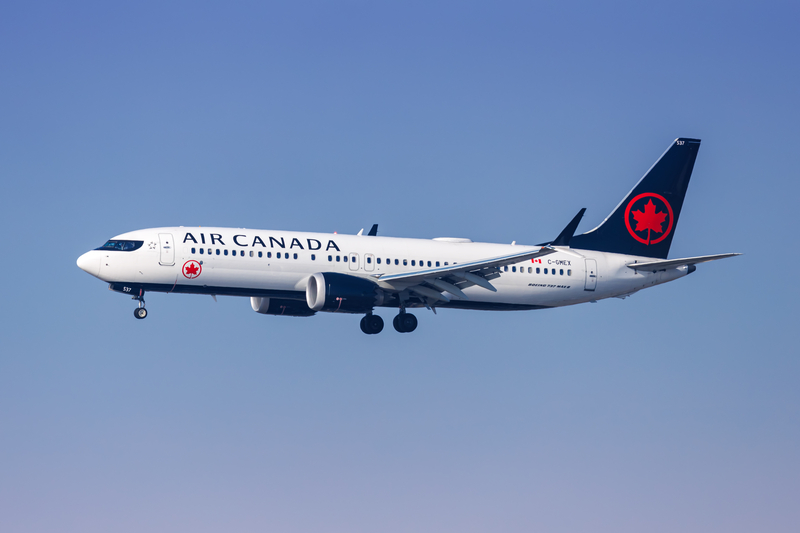
Air Canada has launched a new seasonal nonstop route between Halifax and Brussels, giving Atlantic Canada another direct link to Europe for the summer travel season.

The service connects Halifax Stanfield International Airport (YHZ) with Brussels Airport (BRU). It launched on June 18, 2026, and will operate three times weekly until early September.
For Halifax, the new route is more than another summer flight. It adds a European capital, a major diplomatic center and a strong connecting hub to the airport’s growing international map.
Read our stories in your inbox
Two aviation newsletters. Zero fluff.
For Air Canada, it strengthens the airline’s Atlantic Canada network while adding another transatlantic route that can be served efficiently with a narrowbody aircraft.
Three Weekly Flights From Halifax To Brussels
Air Canada will operate Halifax (YHZ)–Brussels (BRU) three times per week.

Flights depart Halifax (YHZ) on Tuesdays, Thursdays and Saturdays from June 18 through September 5, 2026. The return service from Brussels (BRU) operates on Wednesdays, Fridays and Sundays from June 19 through September 6, 2026.
The schedule is designed for summer demand. It supports leisure traffic from Atlantic Canada to Europe while also giving European travelers a direct path into Nova Scotia.
That matters for Halifax.
The city is not a mega-hub like Toronto (YYZ), Montreal (YUL) or Vancouver (YVR). However, its geography gives it a natural advantage for transatlantic flying. Halifax sits far east in Canada, which makes many Europe sectors shorter than they would be from central or western Canada.

That helps make narrowbody transatlantic routes more practical.
The Aircraft: Boeing 737 MAX 8
The Halifax–Brussels route is operated by the Boeing 737 MAX 8, one of Air Canada’s key medium-haul aircraft.
Air Canada’s published 737 MAX 8 configuration seats 169 passengers. That includes 16 seats in a 2-2 premium cabin and 153 economy seats in a 3-3 layout.
That makes the aircraft a logical fit for Halifax (YHZ)–Brussels (BRU).
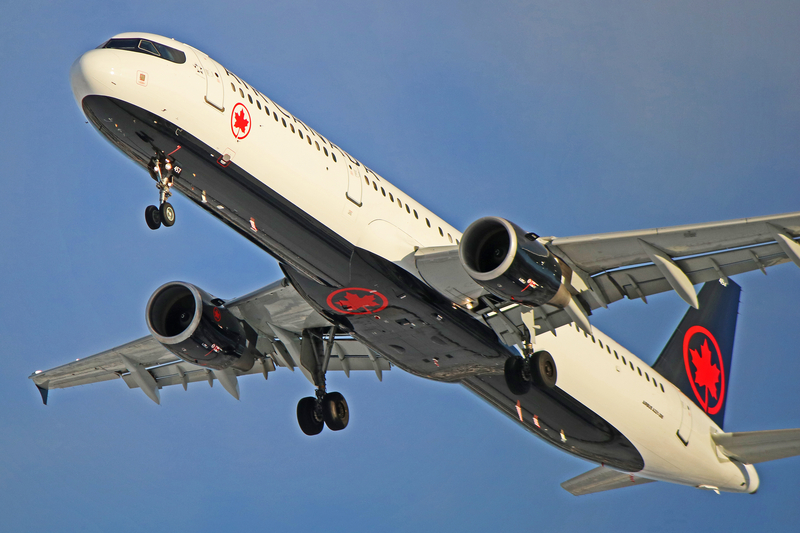
The route is long enough to be a true transatlantic service, but short enough for the MAX 8’s range profile. It also avoids the seat-risk of a larger widebody aircraft.
This is exactly where long-range narrowbody flying can work well.
A Boeing 787 or Airbus A330 would bring more capacity, but it would also need more demand. The MAX 8 gives Air Canada a lower-risk way to open a seasonal European route from a smaller Canadian gateway.
Why Brussels Works For Halifax
Brussels is not just a leisure destination.
Belgium’s capital is a major center for diplomacy, business, technology and international affairs. The city is home to NATO headquarters and major European institutions.
That gives the route a stronger profile than a simple summer city break.
Halifax also has important links to defence, aerospace, ocean technology, trade and government activity. A direct flight to Brussels (BRU) gives Nova Scotia better access to one of Europe’s most influential capitals.
It also works for tourism.
Belgium offers strong city-break appeal, with Brussels, Bruges, Ghent and Antwerp all within reach. In the other direction, Nova Scotia gains better access to Belgian and European visitors looking for Atlantic Canada, coastal scenery, culture and nature-based tourism.
Brussels Adds Valuable Connections
The route is also built around connections.
Air Canada has highlighted Brussels as a gateway to Europe and Africa through Brussels Airlines, its Star Alliance partner.
That is important for the route’s economics.
A Halifax–Brussels flight does not need to depend only on passengers staying in Belgium. It can also carry travelers connecting beyond Brussels to other European cities, Africa and the Middle East.
Air Canada noted that a significant share of passengers on the inaugural flight were connecting beyond Belgium. That shows the route is already being used as a network bridge, not just as a point-to-point service.
For passengers in Atlantic Canada, this creates more choice.
Instead of routing through Toronto, Montreal or another major hub, travelers can fly directly from Halifax to Brussels and connect onward from there.
A New European Option For Atlantic Canada
The Brussels service complements Air Canada’s year-round Halifax–London Heathrow route.
That London route remains the anchor of Air Canada’s international operation from Halifax. Brussels now adds another European gateway for the summer season.
Halifax Stanfield’s own route listing shows a strong 2026 European program. In addition to Brussels, the airport lists nonstop European services to cities such as Amsterdam, Barcelona, Copenhagen, Dublin, Frankfurt, London, Lisbon, Madrid, Paris, Reykjavik and Zurich.
That is a notable lineup for an airport of Halifax’s size.
It also shows how Atlantic Canada is becoming more visible in transatlantic planning. Airlines can use Halifax to serve Europe with shorter stage lengths and strong seasonal demand.
The result is a broader international offering for Nova Scotia travelers and more direct access for inbound visitors.
Strategic Value For Air Canada
Air Canada has described Halifax–Brussels as part of its wider Summer 2026 European expansion.
The airline is adding new European services from several Canadian cities, including Halifax, Montreal and Toronto. Air Canada also said it would offer North America’s second-largest transatlantic network by destinations in summer 2026.
The Halifax route fits that strategy.
It gives Air Canada another transatlantic city pair without needing to base a widebody in Halifax. It also connects the airline’s Atlantic Canada network with a strong European partner hub.
That is a smart use of the 737 MAX 8.
The aircraft can open routes that might not support larger long-haul equipment. It can also help Air Canada test and develop seasonal markets with less capacity risk.
Trade, Tourism And Business Links
Air service often follows economic ties. It can also help create new ones.
Nova Scotia officials have emphasized the province’s long-standing links with Belgium. They also see the route as a way to support trade, tourism, investment and collaboration.
That is credible.
A nonstop flight reduces friction. It makes business trips easier. It supports meetings, delegations and tourism programs. It also gives exporters and service companies a more direct connection to European markets.
There may be cargo value as well.
The 737 MAX 8 is not a widebody, so belly cargo capacity is limited. Still, every scheduled international flight creates some freight opportunity. Air Canada Cargo can use passenger aircraft capacity to support smaller, time-sensitive shipments.
For a market like Halifax–Brussels, the cargo story is secondary. But it still adds value.
Halifax’s International Role Keeps Growing
Halifax Stanfield is positioning itself as a stronger international gateway for Atlantic Canada.
Airport officials said the Brussels launch strengthens the region’s ties to the world and helps Halifax remain competitive. The airport has also promoted its role as one of the most internationally connected airports of its size in North America.
That kind of positioning matters.
Airports outside the largest metropolitan areas often need to prove that they can support international service. Halifax has several advantages. It has geography, a strong tourism market, a regional catchment area and growing business links.
It also has a summer season that supports transatlantic leisure demand.
The Brussels route builds on that base.
A Route That Depends On Seasonality
This is a seasonal service, and that is the right approach.
Summer is the strongest period for transatlantic leisure travel. It is also when Halifax sees more inbound demand from Europe and more outbound demand from Atlantic Canada.
A three-weekly summer route lets Air Canada match capacity to demand.
It also gives the airline room to evaluate performance. If the route performs well, Air Canada could consider bringing it back in future summers, adding frequency or extending the season.
If demand is weaker outside peak summer, the airline avoids the risk of year-round operation.
That flexibility is one reason narrowbody long-haul flying has become so useful.
What Passengers Gain
The biggest passenger benefit is convenience.
Travelers in Atlantic Canada gain a direct flight to Brussels (BRU), plus onward access through Brussels Airlines and Star Alliance partners.
That can reduce backtracking through larger Canadian hubs. It can also create smoother itineraries to parts of Europe and Africa.
European travelers gain easier access to Nova Scotia.
That includes Halifax, the Bay of Fundy, Cape Breton, coastal communities, universities and Atlantic Canada’s tourism regions.
In both directions, the route shortens the journey and makes the market more visible.
Bottom Line
Air Canada’s new Halifax (YHZ)–Brussels (BRU) service is a smart seasonal addition to the airline’s transatlantic network.
The route operates three times weekly from June 18 to September 5, 2026, with return flights from Brussels continuing through September 6. It uses the Boeing 737 MAX 8, a right-sized aircraft for a summer route from Atlantic Canada to Europe.
For Halifax, Brussels adds a major European capital and a useful Star Alliance connection point. For Air Canada, the route strengthens Atlantic Canada’s international reach without requiring widebody capacity.
The service also has strategic value beyond tourism.
It supports trade, business, diplomacy, cultural exchange and onward connectivity across Europe, Africa and the Middle East.
For passengers, the appeal is simple. Halifax now has another nonstop gateway to Europe, and Brussels gives Atlantic Canada a wider bridge to the world.