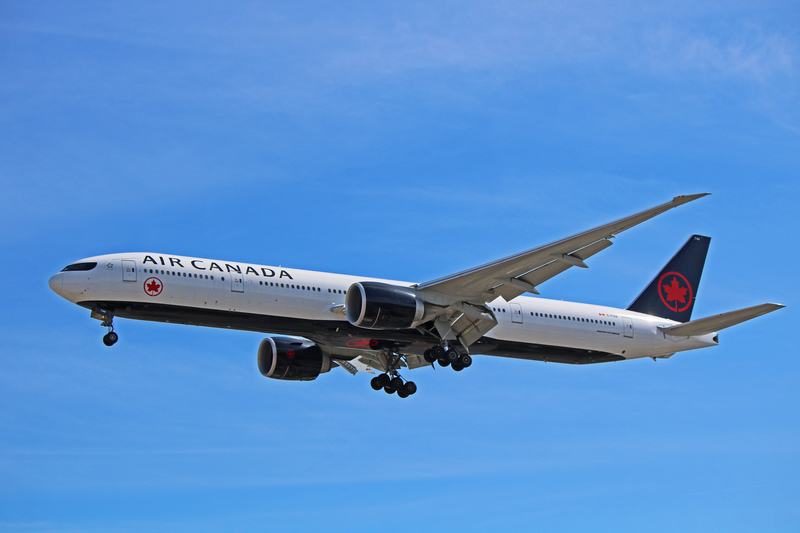
Air Canada (AC) has quietly made a meaningful move in its Europe-to-Türkiye playbook—without adding a single long-haul frequency of its own.


The carrier has signed an interline agreement with Pegasus Airlines (PC) that allows Air Canada customers to book select Pegasus-operated services on the same ticket, with baggage checked through to the final destination. In practical terms, it turns several of Air Canada’s key European connection points into one-stop gateways to Istanbul Sabiha Gökçen International Airport (SAW), and adds an additional option to İzmir Adnan Menderes Airport (ADB) via Frankfurt (FRA).
For travellers—and for airline network and partnerships teams—this is the kind of “small” agreement that can produce outsized impact: broader sellable network footprint, fewer self-transfer itineraries, and better protection in irregular operations than two separate tickets.
Read our stories in your inbox
Two aviation newsletters. Zero fluff.
What’s Included in the Initial Rollout
The agreement covers nine Pegasus-operated routes that can now be combined with Air Canada itineraries via a set of European gateways. Most of the new connectivity funnels into Pegasus’ main hub at Istanbul Sabiha Gökçen (SAW), with Frankfurt (FRA) also providing access to İzmir (ADB) on the Aegean coast.
In route terms, the Pegasus legs now available for interline ticketing are:

-
Amsterdam Schiphol (AMS) – Istanbul Sabiha Gökçen (SAW)
-
Frankfurt (FRA) – Istanbul Sabiha Gökçen (SAW)
-
Copenhagen (CPH) – Istanbul Sabiha Gökçen (SAW)
-
Munich (MUC) – Istanbul Sabiha Gökçen (SAW)
-
Geneva (GVA) – Istanbul Sabiha Gökçen (SAW)
-
Vienna (VIE) – Istanbul Sabiha Gökçen (SAW)
-
Zurich (ZRH) – Istanbul Sabiha Gökçen (SAW)
-
Athens (ATH) – Istanbul Sabiha Gökçen (SAW)
-
Frankfurt (FRA) – İzmir Adnan Menderes (ADB)

That list matters because it’s not just “Europe–Istanbul.” It’s eight different funnels into SAW, plus a targeted Aegean entry point via FRA—suggesting the two carriers have prioritized connection markets where schedules, demand, and transfer infrastructure can support a smooth itinerary.
Why SAW Changes the Equation (and Why It’s Not the Same as IST)
Most North American travellers equate “Istanbul” with Istanbul Airport (IST)—the global hub dominated by Turkish Airlines. Pegasus’ center of gravity is different.
Istanbul Sabiha Gökçen (SAW) sits on the Asian side of the city and functions as Pegasus’ primary hub. That hub role is the strategic point here: SAW is not just a destination, it’s a distribution center. For Air Canada, interlining into SAW creates a pathway into a dense domestic and near-international network without needing to build those markets itself.
For travel buyers and airline professionals, SAW also adds practical utility:
-
More precise Istanbul access depending on where the passenger actually needs to be (Asian side vs. European side).
-
A low-cost hub with high-frequency domestic feed, which can be more “schedule-friendly” for onward Turkish domestic flying than relying solely on point-to-point options.
-
Alternative inventory when peak-season capacity into IST is tight, fares are high, or corporate policies allow mixed-carrier itineraries.
Meanwhile, İzmir Adnan Menderes (ADB) is a very different proposition: it’s the gateway to Türkiye’s Aegean region—popular for leisure, but also significant for business traffic tied to industry and regional commerce. Adding ADB via Frankfurt (FRA) is a clear attempt to make “Türkiye beyond Istanbul” easier to sell without forcing a domestic connection after arrival.
The Real Value: One Ticket, Through-Checked Bags, Less “Self-Connect Risk”
Interline agreements don’t always sound exciting, but the mechanics are what make them valuable.
With a true interline itinerary, passengers can book:
-
A single ticket (one booking, one fare construction, one set of ticketing rules)
-
Through-checked baggage to SAW or ADB, rather than reclaim-and-recheck in the middle of Europe
-
A protected connection on a single itinerary, which typically reduces the risk profile compared with separate tickets—especially when a long-haul arrival delay cascades into a short-haul misconnect
From an operations and customer-experience perspective, it also reduces friction at complex hubs like Frankfurt (FRA), Munich (MUC), Amsterdam (AMS), or Zurich (ZRH), where terminal transfers, Schengen/non-Schengen controls, and minimum connection times can quickly make self-transfer itineraries unreliable.
Airline professionals will also note the behind-the-scenes implication: this is not merely a marketing handshake. A functional interline partnership requires alignment on e-ticketing, baggage messaging, and settlement processes that allow two carriers with very different models—full-service global network airline versus digital-first LCC—to ticket and service passengers end-to-end.
The Hardware: Widebodies to Europe, High-Density Narrowbodies into Türkiye
This partnership also reflects a classic fleet “handoff” that works well operationally:
Air Canada across the Atlantic to Europe:
Most long-haul Europe flying from Air Canada’s Canadian hubs—Toronto Pearson (YYZ), Montréal–Trudeau (YUL), and Vancouver (YVR)—is typically handled by widebodies such as the Boeing 787 Dreamliner and Airbus A330 family. That’s the long stage length where premium cabins, cargo capacity, and network connectivity justify widebody deployment.
Pegasus from Europe into SAW and ADB:
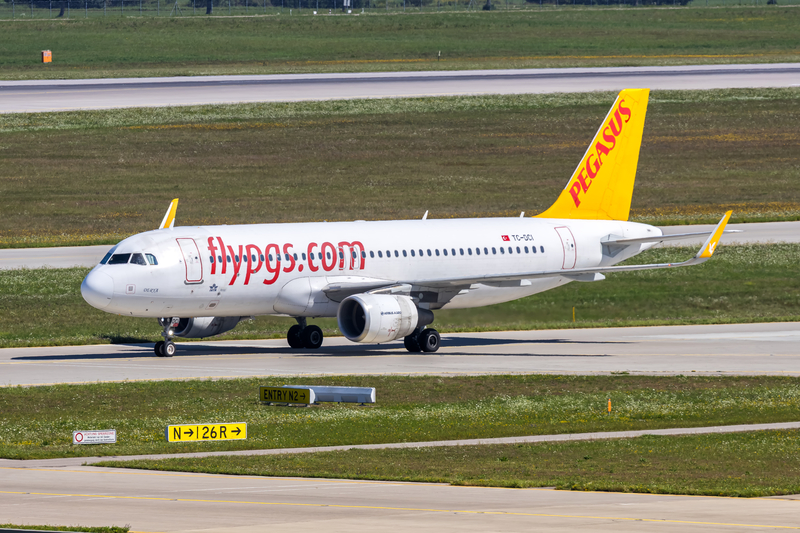
Pegasus operates a single-aisle fleet optimized for high utilization and dense seating—exactly what you want for 2–4 hour sectors linking Europe to Istanbul (SAW) and onward Turkish markets.
Pegasus’ current fleet mix is centered on the Airbus A320neo and A321neo, with a smaller number of Boeing 737-800s still in service. In typical Pegasus configuration, you’re looking at all-economy layouts around 186 seats on the A320neo and 239 seats on the A321neo, with the remaining 737-800 aircraft generally around 189 seats.
From a performance standpoint, the A320neo-family economics are the headline. The “neo” platform’s fuel-burn improvements—and, for Pegasus specifically, its use of CFM LEAP-1A engines—support the carrier’s cost base and range flexibility across Europe, the Middle East, and Türkiye. Slot-constrained banks at airports like Amsterdam (AMS) or Zurich (ZRH) also favor higher-gauge narrowbodies like the A321neo, which can drive unit costs down while keeping frequencies competitive.
For passengers connecting from an intercontinental Air Canada widebody to a Pegasus narrowbody, the product shift will be noticeable—especially in cabin service style and inclusions—but that’s the tradeoff that makes the network math work.
Why These Gateways—and Why Frankfurt Also Gets ADB
The chosen connection points are not random dots on a map. They’re airports with:
-
strong Canada–Europe lift (either nonstop or via domestic feed into Air Canada’s transatlantic network),
-
reliable onward short-haul schedules,
-
and enough connectivity scale to support misconnect recovery when things go sideways.
Frankfurt (FRA) stands out because it’s a transfer heavyweight with a deep schedule, and it’s the only gateway in this launch that also adds İzmir (ADB). That’s a fairly clear signal: FRA is being positioned as the most robust one-stop option for travellers whose final destination is not Istanbul (SAW), but the Aegean region.
Codeshare on the Horizon: What Would Change If AC and PC Go Further
Both airlines have indicated they’re already discussing an expansion of the relationship into a full codeshare. For the industry, that’s the more consequential step—because a codeshare often unlocks:
-
broader distribution with an AC flight number on PC-operated segments,
-
more consistent itinerary shopping and availability display,
-
and potentially loyalty integration (Air Canada Aeroplan and Pegasus BolBol), depending on how far the agreement evolves.
Just as important, a codeshare typically signals deeper coordination around schedules, connection windows, and customer servicing. In other words, interline reduces friction; codeshare starts to look like real network integration.
Bottom Line
Air Canada’s new interline partnership with Pegasus Airlines is a smart, low-capex way to expand sellable coverage into Türkiye—particularly by tapping Pegasus’ hub at Istanbul Sabiha Gökçen (SAW) and adding İzmir (ADB) access via Frankfurt (FRA).
For travellers, the headline is simple: one ticket, bags checked through, and more one-stop options to SAW and ADB via major European gateways like Amsterdam (AMS), Munich (MUC), Vienna (VIE), Zurich (ZRH), and Athens (ATH). For airline professionals, the move is even more interesting: a full-service global carrier and a high-density LCC are building connective tissue that could later mature into a codeshare—with the potential for loyalty reciprocity and deeper commercial alignment.
Keep reading FlyMag
Get the Daily Brief in the morning or the Route Watch weekly recap on Fridays. Or both.