Air Canada’s winter 2026–27 expansion is about more than adding a few leisure routes. It is about using new-generation narrowbody aircraft to open markets that would have been harder to serve efficiently with the airline’s older fleet mix.

The headline move is the launch of nonstop service from Montréal-Trudeau International Airport (YUL) and Toronto Pearson International Airport (YYZ) to Tenerife South Airport (TFS). Those flights will make Air Canada the only airline offering nonstop service between North America and the Canary Islands, which immediately gives the carrier a differentiated product in a crowded winter-sun market.
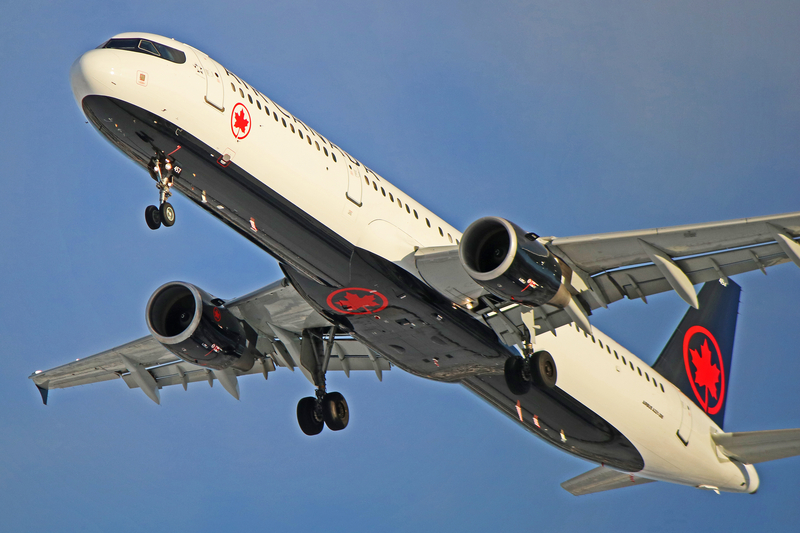
That matters because Tenerife is not a routine sun destination from Canada. It is farther, more operationally demanding, and more difficult to serve profitably with the wrong aircraft size. This is exactly the kind of route the Airbus A321XLR was built to unlock.
Read our stories in your inbox
Two aviation newsletters. Zero fluff.
Why the A321XLR Changes the Equation
Air Canada will operate the Tenerife flights with its new Airbus A321XLR, and that aircraft is central to the logic of the launch. In Air Canada’s configuration, the A321XLR seats 182 passengers, including 14 Signature Class seats and 168 Economy seats. More importantly, it brings lie-flat business-class seating to a narrowbody, giving the airline a product that feels much closer to a widebody experience than a traditional single-aisle transatlantic flight.
That is a major strategic advantage on a route like YUL-TFS or YYZ-TFS. The airline gets long-range capability and a premium cabin strong enough to support higher-yield demand, but without the risk of putting a much larger widebody into a market that is still fundamentally leisure-led.

This is where the economics get interesting. The A321XLR allows Air Canada to stretch its network deeper into thinner long-haul markets while still protecting margins. For Tenerife, that makes the route feel less like a publicity play and more like a carefully matched aircraft-market decision.
Toronto and Montréal Both Get a New Winter Niche
The schedule design reinforces that point. Montréal (YUL) will see weekly Saturday departures to TFS, while Toronto (YYZ) will get twice-weekly Thursday and Sunday service. That gives Air Canada a useful combination of Eastern Canada feed and long-haul leisure demand, while keeping the market disciplined rather than oversupplied.
The Toronto side is especially notable because YYZ already supports a huge long-haul network and a deep portfolio of sun flying. For Air Canada to carve out TFS there suggests real confidence in the route’s commercial appeal. Montréal, meanwhile, has increasingly become one of the airline’s most interesting long-haul platforms for thinner international flying, so the YUL-TFS link fits neatly into that broader pattern.

Porter Adds Austin and Levels Up Chicago to O’Hare as Toronto Flying Gets More Choice
In both cases, the Canary Islands launch says something important about Air Canada’s planning style: the airline is looking for differentiated markets where aircraft technology can create a competitive advantage.
Vancouver’s Latin America Push Is a Different Kind of Expansion
On the other side of the strategy sits Vancouver International Airport (YVR), where Air Canada is broadening its reach into Latin America, Mexico, and Central America.
The airline tied this growth to its expanding Airbus A220 and Air Canada Rouge bases at YVR, which is an important distinction. It did not assign the A220 to every new route individually, but it made clear that the growing A220 presence in Vancouver is part of what enables more nonstop flying into thinner western sun markets.
That matters because the A220-300 is a very different tool from the A321XLR. In Air Canada’s fleet, it seats 137 passengers in a two-class layout and delivers up to 25% lower fuel burn per seat than previous-generation aircraft. That makes it highly useful for right-sized growth from YVR, where the airline is trying to add more direct flying without overcommitting capacity.
In simple terms, the A321XLR is helping Air Canada stretch. The A220 is helping it refine.
YVR Is Becoming a More Important Sun Gateway
The Vancouver expansion itself is substantial. Air Canada is adding new nonstop service from YVR to Mazatlán International Airport (MZT), Guanacaste Airport in Liberia (LIR), Monterrey International Airport (MTY), and Puerto Escondido Airport (PXM).
Each of those markets tells a slightly different story. MZT and PXM strengthen Air Canada’s beach and leisure presence in Mexico, while LIR adds another strong Costa Rica link from the West Coast. MTY is especially interesting because it brings a more business-oriented destination into the same wider Latin America push, showing that this is not purely a resort strategy.
That is why the YVR piece matters so much. Air Canada is no longer treating Western Canada only as a feed point into eastern hubs for many of these markets. It is building more nonstop depth directly out of Vancouver, which improves competitiveness and shortens the journey for West Coast travelers.
The Bigger Winter Network Is Broader Than Tenerife
Tenerife may be the most eye-catching addition, but it is not the only new destination in the winter 2026–27 plan. Air Canada is also adding Roatán International Airport (RTB), Las Américas International Airport in Santo Domingo (SDQ), Mérida International Airport (MID), and MZT as new destinations, alongside more route additions across the Caribbean and Mexico.
That wider context matters because it shows Tenerife is not a standalone experiment. It sits inside a much broader winter strategy that is clearly focused on higher-value leisure demand, diversified seasonal flying, and more effective aircraft deployment from multiple Canadian gateways.
The common thread is right-sizing. Some of these markets need the reach and premium flexibility of the A321XLR. Others benefit more from the lower trip costs and smaller gauge associated with the A220 or the leisure specialization of Air Canada Rouge. Together, they give the airline a much more nuanced winter network than a traditional one-size-fits-all approach would allow.
What This Says About Air Canada’s Strategy
For Air Canada, this is fundamentally a fleet story disguised as a route story.
The airline is using new aircraft technology to do something carriers always want to do but cannot always achieve: match capacity more precisely to demand while still keeping the network ambitious. The A321XLR opens new long-thin opportunities such as TFS from YUL and YYZ. The A220 helps make western expansion from YVR more commercially workable. Rouge adds another layer of flexibility where lower-cost leisure flying makes more sense.
That gives Air Canada a stronger hand in winter markets that have become intensely competitive. It also helps the airline defend its position against rivals that have been aggressive in leisure expansion from Western Canada and in transatlantic experimentation from Eastern Canada.
Bottom Line
Air Canada’s winter 2026–27 expansion is not just about adding sunshine destinations. It is about deploying the right narrowbody for the right mission.
The Airbus A321XLR gives the airline the range and premium cabin strength to launch the only nonstop flights from North America to Tenerife South Airport (TFS) from Montréal (YUL) and Toronto (YYZ). The Airbus A220, alongside a growing Rouge operation at Vancouver (YVR), gives Air Canada a more precise way to deepen its Latin America and Mexico network with routes such as Liberia (LIR), Monterrey (MTY), Puerto Escondido (PXM), and Mazatlán (MZT).
For airline professionals, that is the real takeaway. This is not just expansion. It is aircraft-led network design.
Keep reading FlyMag
Get the Daily Brief in the morning or the Route Watch weekly recap on Fridays. Or both.