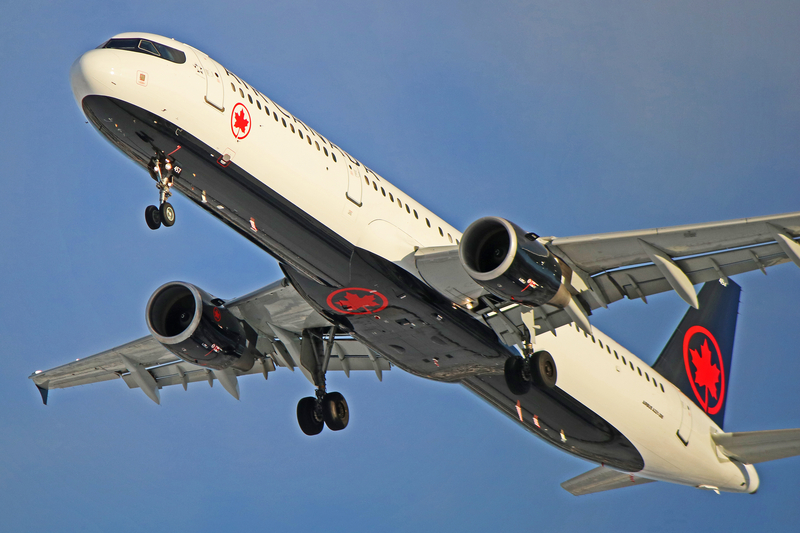
Air Canada’s Airbus A321XLR program is getting closer to the pointy end, and the latest schedule filings offer a telling preview of how the carrier may introduce its newest long-range narrowbody into the busiest parts of its network.

As things stand today, Air Canada is showing a time-limited switch to the A321XLR on the flagship Toronto Pearson (YYZ)–London Heathrow (LHR) market for a short window at the tail end of Northern Summer 2026. If it holds, it would mark the first time Air Canada deploys the A321XLR on a Heathrow operation from Toronto—an important proving ground for an aircraft designed to let airlines “right-size” long-haul flying without sacrificing premium product.
The Schedule Filing: Eight Days of A321XLR on YYZ–LHR
Air Canada’s current filing shows the A321XLR operating both directions on YYZ–LHR for eight days, with the aircraft listed under the equipment code “32Q” in schedule data.
Read our stories in your inbox
Two aviation newsletters. Zero fluff.
The flights (local times) are filed as:
-
AC852: Toronto Pearson (YYZ) 21:05 → London Heathrow (LHR) 09:35+1
-
AC855: London Heathrow (LHR) 12:05 → Toronto Pearson (YYZ) 15:45
The planned A321XLR window is currently shown as August 31 through September 7, 2026 for YYZ departures (with the corresponding LHR departures running the following day).
Two important caveats for professionals tracking this: first, this is exactly the kind of “micro-window” swap that often moves around as fleets, maintenance plans, and slot usage are optimized. Second, the same filing has already shown signs of volatility—appearing, disappearing, and then reappearing—so treat it as a meaningful signal, not a final promise.
Why Heathrow is a Big Deal for the XLR Program
London Heathrow (LHR) is a stress test for any fleet plan. It’s slot-constrained, premium-heavy, and operationally unforgiving—precisely the kind of market where capacity decisions get scrutinized by revenue management, alliance planners, and corporate contracting teams.
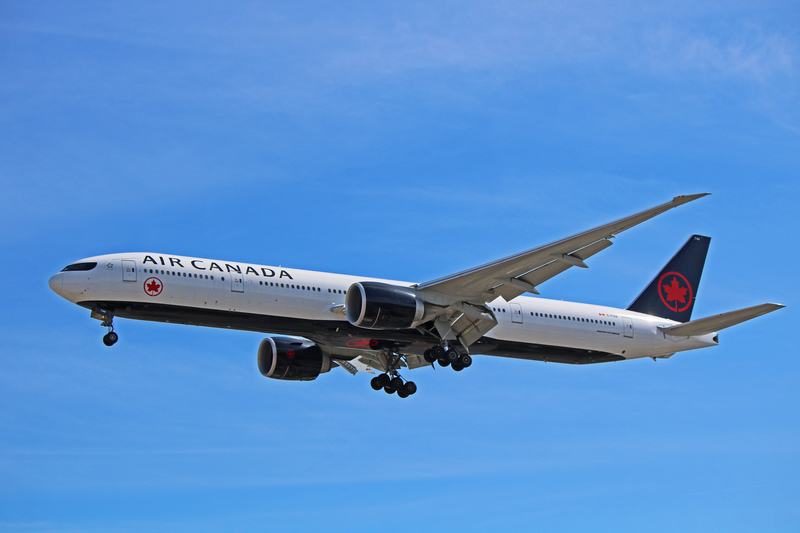
For Air Canada, deploying the A321XLR to LHR isn’t just about range. It’s about calibrating gauge without surrendering schedule relevance. If the airline can maintain frequency and preserve high-yield demand while redeploying widebodies to other missions, the XLR becomes a network lever—not merely a new aircraft type.
There’s also a strategic narrative Air Canada has leaned into: rebuilding flexibility for transatlantic flying, including the long-discussed idea of restoring a more business-friendly Heathrow offering from Toronto. The current filed pattern is still a classic overnight eastbound (not a true daytime “day tripper”), but the very fact the airline is even modeling XLR flying into LHR from YYZ suggests the internal planning is moving from concept to execution.
Aircraft Deep Dive: What Air Canada’s A321XLR Brings to the Table
The Airbus A321XLR is built for missions that used to sit in an awkward gap—too thin for a widebody, too long for a conventional single-aisle. Airbus markets the type at up to 4,700 nautical miles of range, supported by design changes such as higher MTOW and additional fuel capacity, giving it legitimate transatlantic legs while retaining narrowbody economics.
For Air Canada specifically, the A321XLR is expected to enter the fleet with a 182-seat layout that leans premium up front without going overboard on total J count:
-
14 lie-flat Signature Class seats in a 1-1 layout
-
168 Economy seats in 3-3
Notably, this configuration omits a separate Premium Economy cabin—an interesting choice given how central Premium Economy has become to transatlantic revenue stacks. The implication is that Air Canada is betting on (1) a strong lie-flat proposition at the top, (2) high-density economy to keep unit costs tight, and (3) segmentation within economy (preferred/extra-space seating) to recover some of the typical “middle cabin” upsell economics.
The Gauge Swap: From A330-300 to a Long-Haul Narrowbody
On paper, the filed switch is a meaningful capacity downshift. Air Canada’s Airbus A330-300 long-haul configuration is typically shown with 297 seats across three cabins, including Premium Economy. Moving to a 182-seat A321XLR changes the market profile overnight:
-
Total seats drop sharply, which can protect yields during shoulder periods or when forward bookings soften.
-
Premium cabin math changes: fewer total premium seats than a widebody, but a more modern, boutique-style lie-flat experience on a single aisle.
-
Cargo capability tightens: belly capacity and payload constraints on a narrowbody can matter on a Heathrow route, where cargo revenue can be meaningful—especially when the passenger cabin isn’t maxed.
For network planners, this is exactly where the A321XLR earns its keep: it can hold the route open with a credible premium product while freeing a widebody for higher-demand peaks, different geographies, or reliability coverage elsewhere in the system.
Montreal First, Toronto Next: The Rollout Logic Behind the Scenes
Air Canada has been very clear that the early A321XLR program is shaped as much by operational realities as by commercial ambition. The airline has discussed launching initial XLR flying from Montréal–Trudeau (YUL) for training and qualification reasons, then expanding as pilot training pipelines mature and bases are ready.
In practical terms, that “start in YUL” approach has shown up repeatedly in transatlantic planning, with various Europe links from YUL—including markets such as Palma de Mallorca (PMI), Toulouse (TLS), Edinburgh (EDI), and Berlin (BER)—appearing in schedules and filings as Air Canada calibrates the fleet plan.
It’s also worth noting how fluid the broader XLR picture has been. Halifax Stanfield (YHZ)–Heathrow (LHR) is a perfect example: it has at times been modeled with the A321XLR, and at other times shown with alternative equipment as plans evolve. For analysts, that’s less a red flag than a reminder: airlines often “float” aircraft assignments in and out of schedules as a way to keep options alive while the real-world constraints—deliveries, training throughput, maintenance planning, and reliability—come into focus.
What Airline Pros Should Watch Before This Becomes “Real”
If you’re tracking whether this YYZ–LHR A321XLR move sticks, a few indicators tend to matter most:
-
Delivery timing and entry-into-service stability: even small slippages can ripple into late-summer 2026 planning.
-
Toronto (YYZ) pilot qualification depth for long overwater narrowbody ops.
-
Slot strategy at LHR: aircraft swaps can be driven as much by slot utility and schedule protection as by demand.
-
Cabin finalization and sell-up strategy: how Air Canada merchandises “Signature Class on a narrowbody” will influence willingness to down-gauge on premium routes.
-
Frequency and connectivity adjustments: a smaller gauge often pairs with a rethink of bank structure and connection flows at YYZ.
Bottom Line
Air Canada’s latest schedule filings point to a short, high-profile A321XLR appearance on Toronto Pearson (YYZ)–London Heathrow (LHR) in late summer 2026. Even if the exact dates move—as they often do—this is a meaningful tell: the airline is actively planning to place its 182-seat, lie-flat-equipped A321XLR into one of its most commercially and operationally demanding transatlantic markets. If Air Canada can make the economics work at Heathrow while maintaining a credible premium proposition, the A321XLR won’t just be a new aircraft type—it’ll become a precision tool for shaping the carrier’s long-haul network.
Keep reading FlyMag
Get the Daily Brief in the morning or the Route Watch weekly recap on Fridays. Or both.