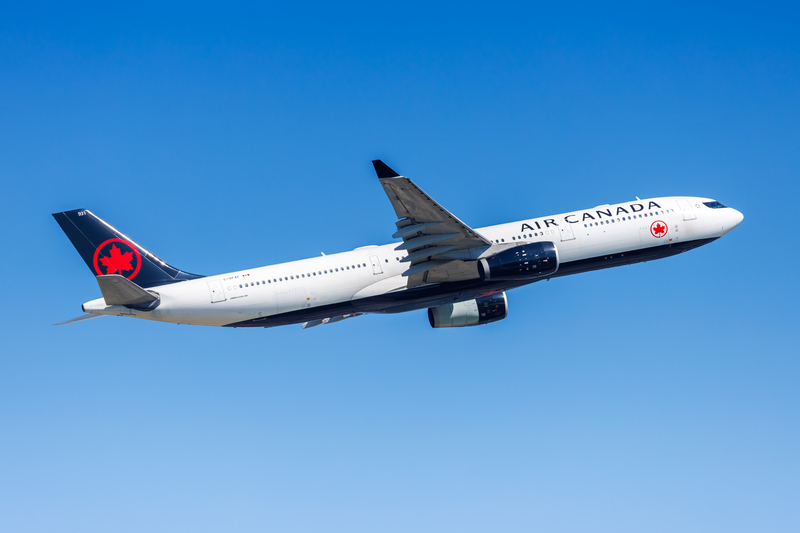
Air Canada is heading into a major leadership transition after President and CEO Michael Rousseau announced that he will retire by the end of the third quarter of 2026. On paper, the airline has presented the move as part of a broader succession process already underway. In practice, the timing ensures it will be viewed through the lens of the crisis that has dominated Canadian aviation in recent days.

That is because the retirement comes just one week after the fatal Air Canada Express accident at New York LaGuardia Airport (LGA), when Jazz Aviation-operated Flight AC8646 from Montréal–Trudeau International Airport (YUL) collided with an airport fire truck after landing. The aircraft involved was a Mitsubishi CRJ900, a type that forms an important part of Air Canada Express regional flying. Both pilots were killed, and the accident immediately placed Air Canada’s crisis communication under intense scrutiny.
The Controversy Was About Language as Much as Tone
The supplied headline overstates one point slightly. This was not primarily a backlash over technical “crash comments.” The sharper controversy centered on Rousseau’s English-only condolence message after the LGA accident, which drew heavy criticism in Quebec and across French-speaking Canada.
Read our stories in your inbox
Two aviation newsletters. Zero fluff.
That distinction matters. Air Canada is headquartered in Montréal, operates under Canada’s official bilingual framework, and has faced criticism before over Rousseau’s limited French. In the aftermath of a fatal accident involving a crew that included a francophone Quebec pilot, language became more than a communications detail. It became a governance issue.
For that reason, the retirement announcement is being read not just as a succession story, but as a credibility story. Air Canada’s board did not explicitly tie Rousseau’s departure to the backlash. Even so, the sequence of events is too close, and the political reaction too sharp, for the two issues to be separated cleanly.
The Board’s Wording Was Telling
Air Canada’s board thanked Rousseau for his leadership through the global financial crisis era, the pandemic, pension restructuring, and the Aeroplan acquisition. That part of the statement was entirely conventional. What stood out more was the board’s emphasis that the next CEO will be assessed on several criteria, including the ability to communicate in French.
That line is important because it shows exactly where the pressure landed. Airlines rarely flag language ability so prominently in a chief executive succession announcement unless the issue has become strategically material. In this case, it clearly has.
The board also said its CEO succession process has been in development for more than two years, and that an external search began in January 2026. That provides Air Canada with some institutional cover against the argument that the retirement was a sudden forced exit. But it does not erase the reality that the public meaning of the announcement has now been shaped by the LaGuardia response.
Rousseau Leaves Behind a Mixed but Serious Legacy
That makes the moment more complicated than a simple controversy-driven departure. Rousseau did oversee a meaningful period of recovery and stabilization at Air Canada. The carrier reported record 2025 operating revenue of C$22.4 billion, C$918 million in operating income, and adjusted EBITDA of C$3.1 billion, giving the airline a stronger financial platform than many observers expected during the post-pandemic rebuild.
Operationally, Air Canada also remained a genuinely global network carrier, with a broad transborder, transatlantic, and long-haul international footprint anchored by its hubs in Montréal, Toronto, and Vancouver. That larger legacy should not be ignored.
But airline leadership is judged on more than fleet, network, and balance sheet. In aviation, safety-related communication is part of executive performance. When a fatal accident occurs, tone, timing, and cultural awareness matter almost as much as the underlying operational response. That is where Rousseau’s position became much harder to defend.
Why This Matters for Air Canada Beyond One Executive
The bigger question now is what kind of leadership Air Canada wants next.
This is not a small regional airline choosing a caretaker CEO. Air Canada is Canada’s flag carrier, a founding member of Star Alliance, and one of North America’s most visible network airlines. The next leader will have to manage premium long-haul competition, fleet modernization, labor relations, and a politically sensitive domestic environment in which language, national identity, and customer trust can all shape the carrier’s public standing.
The LGA accident has intensified that challenge. Air Canada now has to navigate an executive transition while the investigation into Flight AC8646 continues, while families and employees are still processing the aftermath, and while the airline’s own response remains under public review. That puts unusual weight on the board’s next move.
It also means the successor choice will be read symbolically. A bilingual leader with strong operational credibility would signal one set of priorities. A more finance-led or network-led appointment would signal another. Either way, the appointment will say a great deal about how the board believes Air Canada needs to reposition itself.
The Aircraft and Route Context Matter Too
The accident at the center of this story involved one of the most familiar workhorses in North American regional flying. The Mitsubishi CRJ900, still commonly referred to across the industry as the Bombardier CRJ900, remains widely used on short- to medium-haul sectors where airlines need regional-jet economics but enough scale to serve high-frequency business routes.
That makes the YUL-LGA route especially relevant. It is not an obscure market. It is a core transborder business corridor linking one of Air Canada’s major hubs with one of the most important New York airports for short-haul premium traffic. In other words, this was not simply a tragic accident. It occurred on exactly the kind of route that sits close to the center of Air Canada’s commercial identity.
That is one reason the communication fallout became so intense. A fatal event on a visible business-market route, involving a bilingual Canadian carrier and a Montréal-origin flight, was always likely to trigger an unusually strong reaction if the response felt culturally or emotionally off-key.
Bottom Line
Michael Rousseau’s retirement marks a genuine turning point for Air Canada, but it should be framed carefully. Officially, the airline has presented the move as part of a succession process already in motion. Unofficially, it comes immediately after a bruising backlash over his English-only condolence video following the fatal Air Canada Express CRJ900 accident at LaGuardia Airport (LGA).
That makes this more than a routine executive handoff. It is a test of how Air Canada wants to define leadership in the next phase of its development.
Rousseau leaves behind a carrier that recovered financially and remained strategically important in North American aviation. But he also leaves at a moment when communication, bilingual credibility, and public trust have become inseparable from airline leadership itself. For industry observers, that is the real story. The succession process may have been underway already, but the urgency and meaning of this transition were shaped by what happened after Flight AC8646.
Keep reading FlyMag
Get the Daily Brief in the morning or the Route Watch weekly recap on Fridays. Or both.