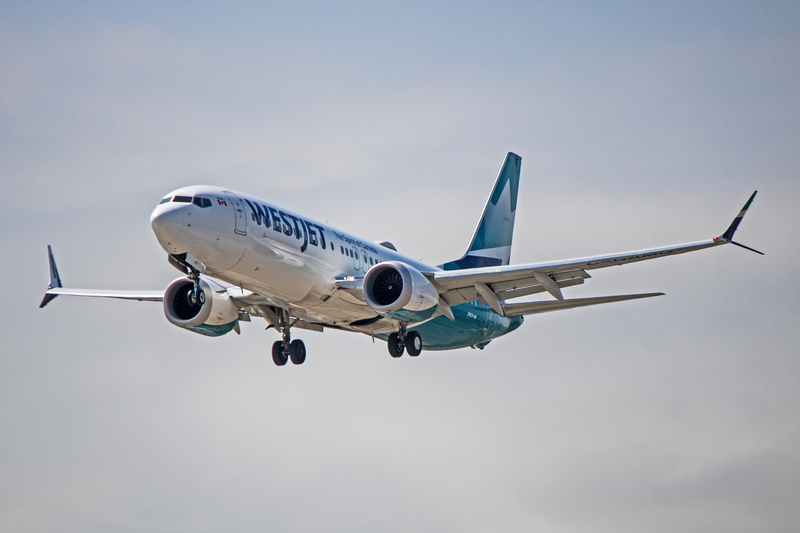
WestJet has launched a new seasonal nonstop route between Halifax Stanfield International Airport (YHZ) and Copenhagen Airport (CPH), adding Denmark to the airline’s expanding transatlantic map from Atlantic Canada.

The new service began on May 28, 2026, and is scheduled to operate four times weekly through September 27. WestJet is flying the route with its Boeing 737-8 MAX, the single-aisle aircraft that has become central to the carrier’s long-haul narrowbody strategy from eastern Canada.
For Halifax (YHZ), Copenhagen (CPH) is more than another summer leisure route. It reinforces the airport’s growing role as a transatlantic bridge between North America and Europe. For WestJet, it shows how the Boeing 737 MAX 8 can be used to open thinner long-haul markets that may not justify widebody aircraft but can work with the right geography, seasonality, and partner connectivity.
Read our stories in your inbox
Two aviation newsletters. Zero fluff.
The route is also notable because it gives Atlantic Canada a nonstop link to Denmark and places Halifax (YHZ) into Copenhagen’s broader Scandinavian and Northern European network through WestJet’s partnership with SAS.
Four Weekly Flights Between Halifax And Copenhagen
WestJet is operating Halifax (YHZ) to Copenhagen (CPH) four times weekly during the summer season.
The eastbound flight, WS044, departs Halifax (YHZ) late in the evening and arrives in Copenhagen (CPH) the following morning. The published timing is roughly a 10:30 p.m. departure from Halifax and a 10:10 a.m. arrival in Denmark the next day, with a scheduled flight time of about 6 hours and 40 minutes.
The return flight, WS045, departs Copenhagen (CPH) late in the morning and arrives back in Halifax (YHZ) in the early afternoon. The westbound sector is scheduled at around 7 hours and 30 minutes, reflecting the usual impact of prevailing winds on transatlantic flights from Europe to North America.
The operating pattern is simple and passenger-friendly. Flights from Halifax (YHZ) operate on Tuesday, Thursday, Saturday, and Sunday, while the return from Copenhagen (CPH) gives travelers a same-day arrival back in Nova Scotia.
For passengers in Atlantic Canada, the route removes the need to backtrack through larger Canadian hubs such as Toronto Pearson (YYZ), Montréal–Trudeau (YUL), or even U.S. gateways. For travelers in Denmark and Scandinavia, it creates a direct path into Halifax (YHZ), Nova Scotia, and the broader Atlantic Canada tourism market.
Why Halifax Works For Long-Haul Narrowbody Flying
Halifax (YHZ) has become one of the most useful airports in Canada for long-haul narrowbody flying.
Its geography is the advantage. Halifax sits far enough east that many European cities fall within the practical operating envelope of modern single-aisle aircraft, especially the Boeing 737-8 MAX. That allows WestJet to fly routes from Halifax (YHZ) to Europe with aircraft that have lower trip costs than a widebody and fewer seats to fill.
That is particularly important for seasonal leisure markets. Cities such as Copenhagen (CPH), Lisbon (LIS), Madrid (MAD), Dublin (DUB), Edinburgh (EDI), Barcelona (BCN), Amsterdam (AMS), Paris Charles de Gaulle (CDG), and London Gatwick (LGW) all make sense from Halifax because the stage lengths are manageable and the summer demand profile is strong.
WestJet is leaning heavily into that advantage. During summer 2026, the airline is offering nonstop service from Halifax (YHZ) to nine European destinations. That is the largest European schedule WestJet has built from the airport and one of the most diverse transatlantic offerings available from any secondary Canadian gateway.

The strategy is not about turning Halifax into a full global hub. It is about using Halifax’s location, lower airport complexity, and strong Atlantic Canada catchment area to support routes that can work seasonally with narrowbody aircraft.
The Boeing 737 MAX 8 Is The Enabler
The aircraft is central to the story.
WestJet’s Boeing 737-8 MAX has the range to connect Halifax (YHZ) with many points in Western and Northern Europe. WestJet lists the aircraft with a range of about 6,480 kilometers, or 4,028 miles, which puts Copenhagen (CPH) comfortably within the aircraft’s advertised capability from Halifax.
The Halifax (YHZ) to Copenhagen (CPH) route covers roughly 3,287 miles, or about 5,291 kilometers. That leaves less margin than a short-haul flight, of course, and westbound winter winds would be a very different operational challenge. But as a summer seasonal route, flown from Canada’s Atlantic coast, it fits the 737 MAX 8’s intended role well.
WestJet’s 737-8 MAX fleet includes multiple cabin layouts. The most relevant long-haul passenger configuration includes 174 seats, with 12 Premium seats in a 2-2 layout and 162 Economy seats in a standard 3-3 narrowbody cabin. The aircraft also supports WestJet Connect entertainment, onboard power depending on configuration, and the type of cabin product passengers now expect on longer single-aisle flights.
For a route such as Halifax (YHZ) to Copenhagen (CPH), that matters. A seven-hour-plus westbound flight on a narrowbody is very different from a two-hour domestic sector. Seat pitch, power, entertainment, catering, lavatory ratio, and crew service flow all become more important. The 737 MAX 8 does not offer the space of a Boeing 787-9 or Airbus A330, but it gives WestJet the economics to serve markets that might otherwise have no nonstop link at all.
Copenhagen Gives WestJet A Strong Northern European Gateway
Copenhagen Airport (CPH) is not only Denmark’s primary international airport. It is also one of the most important gateways in Northern Europe.
The airport handled a record 32.4 million passengers in 2025 and has strengthened its role as a connecting hub, particularly as SAS has concentrated more of its network around Copenhagen. For WestJet, that makes Copenhagen (CPH) a more useful destination than local Denmark demand alone might suggest.
The WestJet–SAS codeshare is a major part of the route’s value. Through Copenhagen (CPH), passengers from Halifax (YHZ) can connect onward to points such as Stockholm (ARN), Gothenburg (GOT), Oslo (OSL), Bergen (BGO), Stavanger (SVG), Trondheim (TRD), Aalborg (AAL), and Helsinki (HEL). That gives Atlantic Canada a one-stop path to Scandinavia and the Nordic region without routing through Toronto (YYZ), Montréal (YUL), London Heathrow (LHR), Frankfurt (FRA), Amsterdam (AMS), or Paris (CDG).
The reverse flow is equally important. With SAS placing its code on WestJet’s Halifax–Copenhagen service, travelers from Denmark, Sweden, Norway, Finland, and beyond can connect through Copenhagen (CPH) to Halifax (YHZ) and Atlantic Canada on a single itinerary.
That is where the route becomes more than a point-to-point summer flight. It becomes a network play.
WestJet’s Largest European Summer From Halifax
WestJet’s Halifax (YHZ) operation in summer 2026 is unusually broad for a Canadian airport outside Toronto (YYZ), Montréal (YUL), Vancouver (YVR), and Calgary (YYC).
The airline is flying nonstop from Halifax (YHZ) to Amsterdam (AMS), Barcelona (BCN), Copenhagen (CPH), Dublin (DUB), Edinburgh (EDI), Lisbon (LIS), London Gatwick (LGW), Madrid (MAD), and Paris Charles de Gaulle (CDG). Most of those routes are operated by the Boeing 737-8 MAX, reinforcing WestJet’s strategy of using long-range narrowbodies to build a seasonal European network from Atlantic Canada.
Amsterdam (AMS) remains one of the stronger routes, helped by KLM connectivity. Paris (CDG) benefits from Air France connectivity. Copenhagen (CPH) now adds SAS connectivity. That partner structure gives WestJet more than local market demand in several cities. It gives the airline access to onward traffic across Europe.
This matters because Halifax (YHZ) cannot support a large European schedule on local demand alone. The region has strong outbound leisure demand and meaningful inbound tourism potential, but the depth of the network depends on connecting opportunities. WestJet’s partnerships help solve that problem.
The airline has also increased domestic connectivity at Halifax (YHZ), which is important for feeding the transatlantic operation. More domestic flights into Halifax help bring passengers from other Canadian points into the Europe bank and make the seasonal schedule more viable.
Other European Operators At Halifax
WestJet is not the only airline using Halifax (YHZ) as a transatlantic platform.
Air Canada serves London Heathrow (LHR) from Halifax and is adding seasonal Brussels (BRU) service with the Boeing 737 MAX 8. Icelandair links Halifax (YHZ) with Reykjavik/Keflavik (KEF), also using narrowbody aircraft, and provides onward connectivity through its Iceland hub. Discover Airlines operates Halifax (YHZ) to Frankfurt (FRA), with Airbus A330 widebody aircraft, giving the airport a higher-capacity link into Lufthansa Group’s German network.
That mix is important. Halifax is not simply a WestJet experiment. The airport has become a genuine seasonal transatlantic gateway, with narrowbody and widebody service from multiple airlines.
WestJet’s advantage is scale. The carrier has built the largest European footprint from Halifax (YHZ), and Copenhagen (CPH) adds a new northern European dimension to that network.
Why Copenhagen Is Different From WestJet’s Other Europe Routes
Copenhagen (CPH) gives WestJet something different from its other Halifax routes.
Dublin (DUB), London Gatwick (LGW), Edinburgh (EDI), Lisbon (LIS), Madrid (MAD), Barcelona (BCN), Paris (CDG), and Amsterdam (AMS) all have strong leisure or diaspora components from Canada. Copenhagen has leisure appeal too, but the more strategic value is its position as a Nordic gateway.
Denmark itself is a strong inbound and outbound tourism market, but Copenhagen (CPH) also reaches southern Sweden, including the Malmö region, via the Øresund link. It is a major Scandinavian business and leisure gateway, and with SAS connectivity, it opens a broader network across Northern Europe.
For WestJet, that makes Copenhagen more useful than a standalone city pair. The carrier can sell Halifax (YHZ) to Copenhagen (CPH), but it can also sell Halifax to Stockholm, Oslo, Gothenburg, Bergen, Helsinki, Aalborg, and other points with a single connection.
That network depth improves the route’s odds of success.
A Long Narrowbody Flight, But Not An Unusual One Anymore
An eight-hour Boeing 737 MAX flight would have seemed unusual a generation ago. Today, it is increasingly common.
Airlines in North America and Europe are using long-range single-aisle aircraft to serve thinner transatlantic markets that would be difficult to sustain with widebodies. The Airbus A321LR and A321XLR are the most obvious examples, but the Boeing 737 MAX 8 has also become a practical tool for carriers with the right geography.
WestJet’s Halifax network is a good example. From western Canada, many European routes require widebody aircraft or are beyond the practical reach of a fully loaded 737 MAX 8. From Halifax (YHZ), the equation changes. The aircraft can reach deep enough into Europe to make routes such as Copenhagen (CPH) viable, while the lower seat count reduces commercial risk.
That is especially useful in summer, when transatlantic leisure demand is strongest and when weather and wind conditions are more favorable than in winter.
The passenger experience still requires careful management. A 737 MAX 8 is a single-aisle aircraft. Boarding, lavatory access, galley space, and crew workflow are all more constrained than on a widebody. But if the fare, schedule, and nonstop convenience are compelling, many passengers will accept a narrowbody for the benefit of avoiding a connection.
A Boost For Atlantic Canada Tourism
The Copenhagen (CPH) route also has an inbound tourism angle.
Nova Scotia, Atlantic Canada, and the broader Maritime region have strong appeal for European travelers, particularly during the summer season. Halifax (YHZ) is a natural entry point for trips involving Nova Scotia, Cape Breton, Prince Edward Island, New Brunswick, Newfoundland connections, coastal touring, cruise itineraries, and outdoor travel.
Direct service from Copenhagen (CPH) gives Scandinavian travelers a simpler way to reach Atlantic Canada. With SAS codeshare support, the catchment area extends well beyond Denmark.
That inbound flow is important because seasonal transatlantic routes need traffic in both directions. Canadian outbound demand may fill many seats early in the season, but inbound European tourism helps balance the route, especially in peak summer months.
For Halifax Stanfield, that is part of the broader value proposition. More European nonstop service supports local tourism, hospitality, business travel, education, and trade links, while also giving Atlantic Canadians more direct access to Europe.
Bottom Line
WestJet’s new Halifax (YHZ) to Copenhagen (CPH) service is a smart use of geography, aircraft capability, and partnership connectivity.
The route operates four times weekly through September 27, using the Boeing 737-8 MAX on a sector of roughly 3,287 miles. From Halifax (YHZ), the 737 MAX 8 can reach Copenhagen (CPH) with a flight time of under eight hours, making the aircraft a practical tool for opening a market that likely would not justify widebody capacity.
Copenhagen (CPH) also gives WestJet more than a new European destination. Through its partnership with SAS, the airline can offer onward access across Scandinavia and Northern Europe, strengthening the route’s relevance for both Canadian and European travelers.
For Halifax (YHZ), the new service reinforces its role as Canada’s Atlantic gateway to Europe. For WestJet, it shows how the 737 MAX can continue reshaping the economics of thinner transatlantic routes.