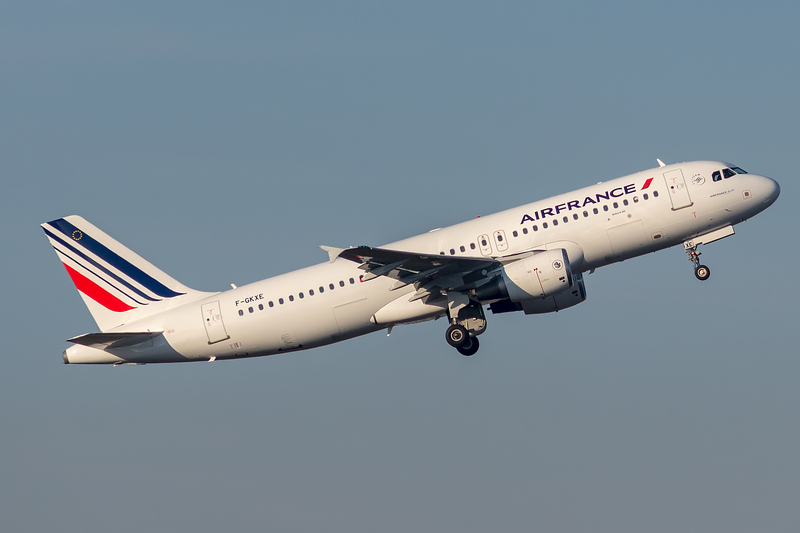
An Air France flight from Paris Charles de Gaulle Airport (CDG) to Stockholm Arlanda Airport (ARN) diverted to Amsterdam Schiphol Airport (AMS) after smoke was reportedly detected in the cabin, prompting the crew to declare an emergency and land as a precaution.
The flight, AF1640, was operated by an Airbus A320 on May 25, 2026. The aircraft landed safely in Amsterdam, emergency services were waiting on arrival, and passengers later disembarked without incident.
For aviation readers, the most important point is straightforward: any smell of smoke in the cabin is treated as a potentially serious systems event until proven otherwise. That is why the diversion happened.
Read our stories in your inbox
Two aviation newsletters. Zero fluff.
Smoke Smell In Flight Is Never Treated Casually
Even when passengers only report an odor or visible haze rather than an obvious fire, crews are trained to treat the event seriously.
That matters because smoke in the cabin can point to several different problems, including:
- electrical faults
- overheating equipment
- air-conditioning or bleed-air malfunctions
- other onboard systems issues
The difficulty is that the exact cause is not always immediately obvious from the flight deck or cabin. When the source is unclear, the safest response is usually to get the aircraft on the ground at the nearest suitable airport.
That appears to be what happened here.
Amsterdam Was The Logical Diversion Point
Once the issue developed over the Netherlands, Amsterdam Schiphol was the obvious place to end the flight.
It is a major international airport, close to the aircraft’s position, and fully equipped to handle an A320 emergency arrival with fire and medical support standing by. For crews dealing with smoke or a suspected systems problem, proximity and emergency readiness matter more than trying to continue to destination if uncertainty remains.

That is why a diversion like this is best understood as a safety success, not an operational failure.
Air France Framed The Problem As A Technical Issue
Air France later described the event as a technical issue involving a smell of smoke detected during the flight.
That is an important phrasing choice. It suggests the airline is not publicly characterizing the incident as an onboard fire, but it also confirms that the crew had enough concern to interrupt the flight and land early. In these cases, airlines often avoid over-describing the cause until maintenance teams can inspect the aircraft properly.
So while the passenger experience may have centered on “smoke,” the official outcome remains a technical diversion pending inspection.

Emergency Services Were Waiting, But The Landing Was Normal
Emergency vehicles were positioned at Schiphol for the arrival, which is entirely standard in a smoke-related diversion.
That does not automatically mean the event worsened before landing. It means airports prepare for the possibility that an odor, smoke source, or hidden system problem could escalate during arrival or after touchdown. In this case, the aircraft reportedly landed normally and airport operations were not significantly affected.
That is exactly the outcome crews are aiming for in a precautionary diversion: treat it like it could become serious, then land safely before it does.
The Aircraft Needed Inspection Before Passengers Continued
After landing, the Airbus A320 was inspected in Amsterdam while passengers were rebooked onto another aircraft for the onward journey to Stockholm.
That matters because even if the smell disappears or no obvious damage is visible, the airplane cannot simply be returned to service until maintenance teams identify the cause or rule out critical systems concerns. Smoke and odor events are among the incidents airlines take most seriously from a troubleshooting standpoint because the consequences of misdiagnosis can be severe.
In other words, the diversion solved the immediate safety problem, but the technical investigation was only beginning.
Bottom Line
Air France flight AF1640 from Paris to Stockholm diverted safely to Amsterdam Schiphol after a smoke smell in the cabin triggered emergency procedures. The Airbus A320 landed normally, passengers got off safely, and the flight later continued on a replacement aircraft.
The incident is a reminder that cabin smoke or unexplained burning odors remain among the clearest triggers for precautionary diversion in commercial aviation. Crews do not wait to be certain it is serious. They assume it might be and land accordingly.
Keep reading FlyMag
Get the Daily Brief in the morning or the Route Watch weekly recap on Fridays. Or both.