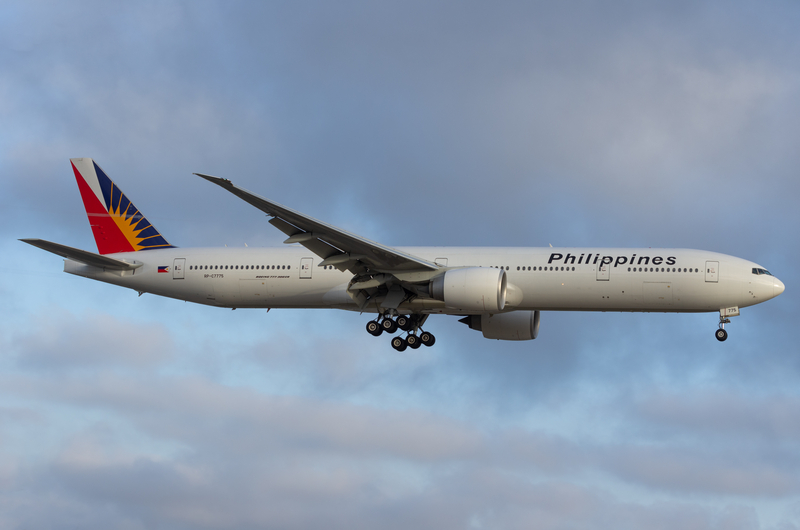
Philippine Airlines has moved a step closer to adding Chicago O’Hare International Airport (ORD) to its long-haul map after the U.S. Department of Transportation approved the carrier’s request to operate scheduled service from Manila Ninoy Aquino International Airport (MNL). The April 9 decision gives PAL a renewable one-year authority for the route and removes the last immediate regulatory obstacle to what would be a landmark addition to the airline’s U.S. network.

For PAL, this is more than a routine route filing. Chicago O’Hare (ORD) would become the airline’s sixth U.S. destination and a significant new inland gateway in a network that has long leaned on coastal points such as Los Angeles International Airport (LAX), San Francisco International Airport (SFO), Seattle-Tacoma International Airport (SEA), New York John F. Kennedy International Airport (JFK), and Honolulu Daniel K. Inouye International Airport (HNL). If launched, the route would also create the first scheduled nonstop link between Manila (MNL) and Chicago (ORD), giving PAL a stronger position in one of the largest unserved U.S.-Philippines markets.
Delta’s objection was really about Manila
The most important detail in this case is that Delta Air Lines was never arguing that PAL should be barred outright from serving Chicago O’Hare (ORD). Its real concern was access at Manila Ninoy Aquino International Airport (MNL).
Read our stories in your inbox
Two aviation newsletters. Zero fluff.
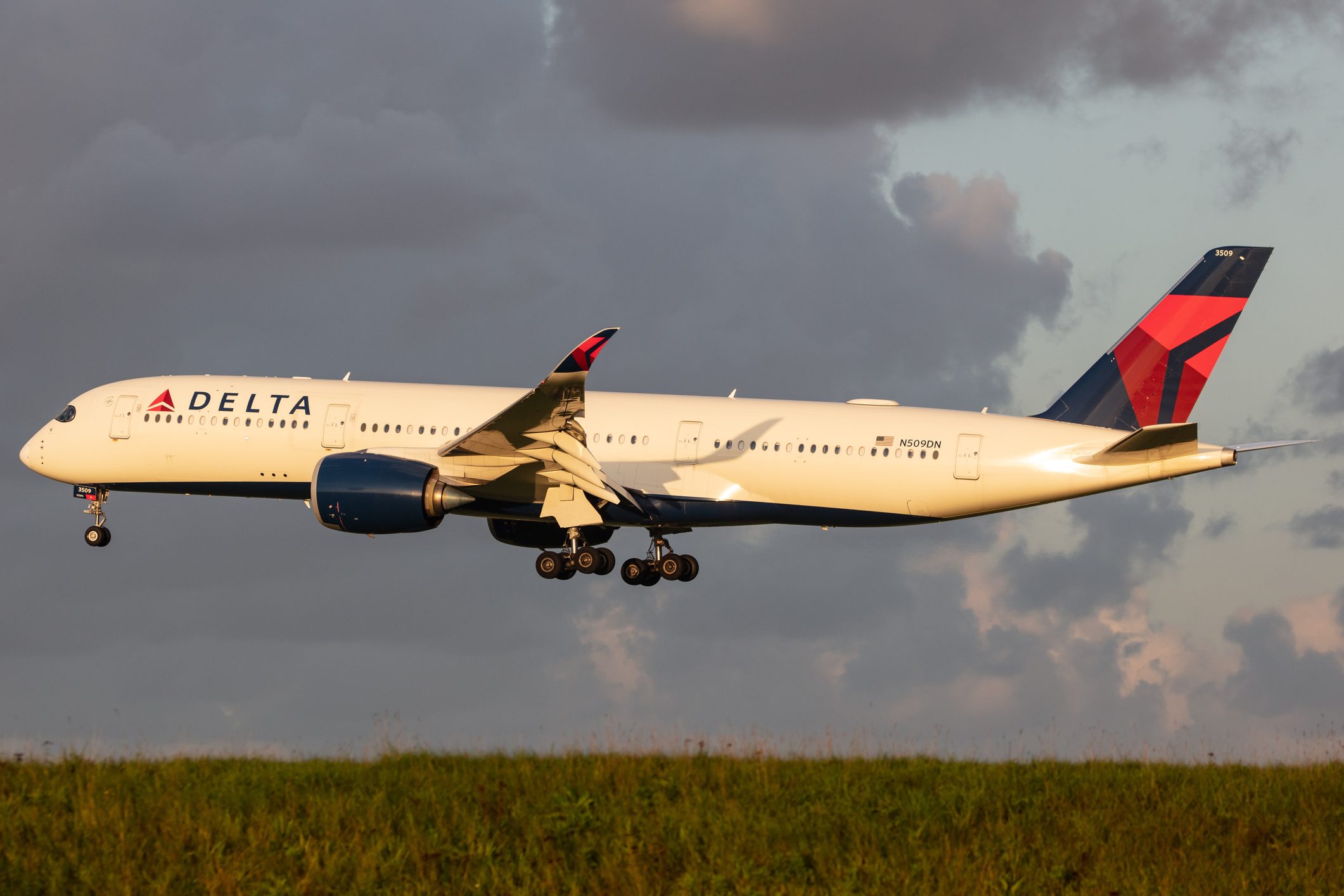
In its earlier filing, Delta said it did not oppose PAL’s proposed MNL-ORD service in principle, but asked U.S. regulators to defer any approval until U.S. airlines were assured commercially viable access to Manila. That included slots, gates, and related airport infrastructure. Delta even disclosed that it is pursuing its own daily Los Angeles (LAX) to Manila (MNL) service for summer 2027 using the Airbus A350-900, which made its position easier to understand. This was a reciprocity argument, not simply an anti-PAL argument.
That is why Delta’s April 3 withdrawal mattered. It did not amount to a warm endorsement of PAL’s Chicago plan. It meant Delta had made its point and then stepped aside, while still asking the DOT to keep any approval to a one-year term. The DOT accepted that narrower path and moved ahead, saying there was no reason to delay action further.
Why ORD matters to PAL’s network strategy
From a network-planning standpoint, Chicago O’Hare (ORD) is a smarter add than it may first appear. It is one of the largest hubs in the United States, one of the country’s deepest local markets, and a major gateway for business, visiting-friends-and-relatives traffic, and domestic connections. For PAL, it offers access to a large Midwest catchment without forcing passengers to backtrack through West Coast gateways.
That point matters for a carrier like Philippine Airlines, which is steadily rebuilding its North American relevance. The airline already has a meaningful presence across the Pacific, with U.S. service at LAX, SFO, SEA, JFK, and HNL, plus Canadian service at Vancouver International Airport (YVR) and Toronto Pearson International Airport (YYZ). Adding ORD gives PAL a more balanced footprint and pushes the network further into the U.S. interior, rather than simply thickening capacity on routes it already knows well.
There is also a competitive point here. A nonstop MNL-ORD service would allow PAL to own a market that has historically depended on one-stop itineraries over East Asian gateways or coastal North American hubs. In long-haul aviation, that kind of first-mover advantage can matter well beyond the initial launch period.
The aircraft story points strongly toward the A350-1000
PAL has not formally locked in an aircraft type in the DOT approval itself, but the operational logic points very clearly toward the Airbus A350-1000.
That aircraft was brought into PAL specifically to support long-haul growth across the Pacific. The airline’s first A350-1000 arrived in December 2025, and the type is configured with 382 seats in a three-class layout, including 42 in Business Class, 24 in Premium Economy, and 316 in Economy. For a route as long as Manila (MNL) to Chicago O’Hare (ORD), that matters. This is not just about having enough range. It is about carrying that range with a commercially useful payload, a competitive premium product, and better fuel economics than older widebody alternatives.
That is why the A350-1000 looks like the natural fit, even if PAL has not yet publicly finalized the assignment. It gives the airline the right combination of reach, capacity, and efficiency for a long westbound transpacific sector that needs to work not just on paper, but every day in the schedule.
A regulatory win, but not the end of the story
The approval is important, but it is still only one part of the commercial picture. PAL now has the authority. The next question is execution.

That means schedule timing, frequency, aircraft allocation, crew planning, and how the airline chooses to position ORD in the broader North American network. It also means watching how the Manila access issue evolves for U.S. carriers. Delta’s LAX-MNL ambition is now on the record, and that means the regulatory and competitive discussion around Manila (MNL) is not finished simply because PAL won this round.
In that sense, the ORD approval says two things at once. First, PAL has gained a valuable new opening in the U.S. market. Second, the wider contest over U.S.-Philippines access, timing, and competitive balance is still very much alive.
Bottom Line
Philippine Airlines now has a real opening to bring Manila Ninoy Aquino International Airport (MNL) and Chicago O’Hare International Airport (ORD) together on a scheduled nonstop map. That is the headline. The deeper story is that PAL has won a strategically important U.S. gateway while Delta’s underlying concern about reciprocal access at Manila remains unresolved.
For airline professionals, the significance is clear. Chicago O’Hare (ORD) would give PAL its first true Midwest foothold, strengthen its North American network beyond the coasts, and create a route that appears well suited to the Airbus A350-1000. The permission is now in place. What matters next is how quickly PAL turns that authority into a live long-haul operation.
Keep reading FlyMag
Get the Daily Brief in the morning or the Route Watch weekly recap on Fridays. Or both.