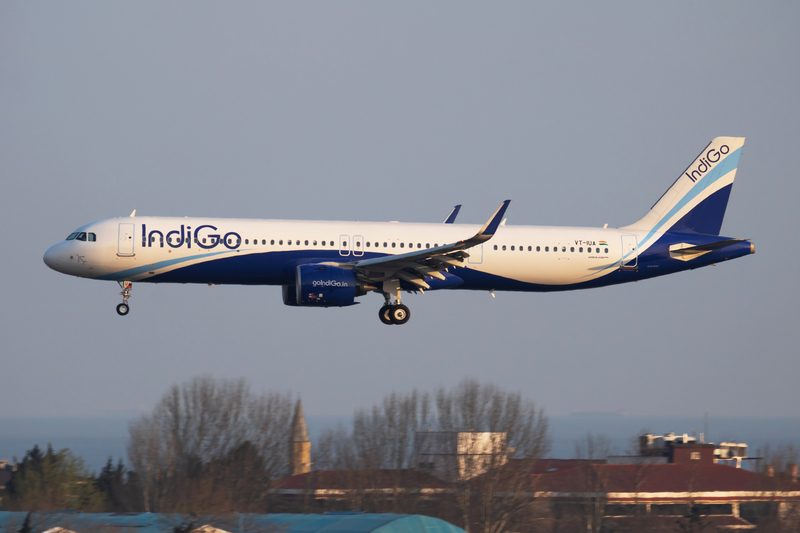
IndiGo has entered the narrow-body long-haul arena with the launch of nonstop India–Greece services to Athens (ATH), becoming the first Indian airline to operate scheduled direct flights between the two countries.
The rollout starts with Mumbai (BOM)–Athens (ATH), followed immediately by Delhi (DEL)–Athens (ATH) beginning January 24, 2026. Each route operates three times weekly, giving the market six weekly nonstop frequencies into Athens—an unusually bold opening cadence for a brand-new long-haul city pair.
For travelers, the significance isn’t just convenience. It’s the removal of the traditional connection dependency (often via Gulf or European hubs) that adds risk and time. For network planners, it’s an inflection point: IndiGo is using a single-aisle platform to push beyond its historic “regional international” footprint into true long-range flying.
Read our stories in your inbox
Two aviation newsletters. Zero fluff.
The aircraft that makes it possible: Airbus A321XLR
These flights are operated by India’s first Airbus A321XLR, a milestone not only for IndiGo but for the country’s airline market. The XLR (“Extra Long Range”) is designed specifically to open thinner long-haul routes that don’t justify a widebody year-round, while still delivering a credible long-sector passenger experience.
A few technical notes airline professionals will appreciate:

-
Range and mission profile: Airbus rates the A321XLR at up to 4,700 nautical miles (8,700 km)—squarely in the zone needed to make India–Southern Europe nonstop operations practical, with sensible fuel reserves and routing flexibility.
-
Fuel system changes vs. LR/neo: The XLR’s capability isn’t marketing fluff; it’s enabled by structural and systems changes, including a permanent Rear Centre Tank and higher allowable takeoff weight. Airbus lists the XLR at 101 tonnes MTOW, with the rear tank carrying 12,900 liters of fuel, plus an optional forward additional center tank.
-
Why this matters commercially: On city pairs like DEL–ATH and BOM–ATH, the XLR lets IndiGo right-size capacity for a market that’s strongly seasonal and leisure-heavy, without the “too much airplane” risk that can crush yields when demand softens.
How the operation is structured: frequencies and timings that suit leisure demand
IndiGo’s Athens service is designed like a classic long-weekend leisure play—morning departures from India, afternoon arrivals into Athens, and late-afternoon returns that land back in India the following morning. As published schedules (local times) indicate:
-
Mumbai (BOM) → Athens (ATH): dep 09:50, arr 14:15
Athens (ATH) → Mumbai (BOM): dep 15:25, arr 02:00 (+1) -
Delhi (DEL) → Athens (ATH): dep 09:10, arr 14:25
Athens (ATH) → Delhi (DEL): dep 16:00, arr 03:10 (+1)
Those timings aren’t accidental. They preserve useful daylight arrival windows into ATH for hotel check-ins and onward ground transport, while the returns are timed to deliver passengers into BOM and DEL early enough to connect onto IndiGo’s domestic bank structure.
Cabin and product: narrow-body long-haul, but built for the sector length
IndiGo is positioning Athens as more than just another “international add.” This is the airline’s first high-profile demonstration of a longer-haul single-aisle product, and the cabin choices reflect that.

The A321XLR deployment includes IndiGo’s Economy cabin plus IndiGoStretch up front—important on 7–9 hour sectors where comfort and perceived value start to influence booking decisions more than they do on typical 3–4 hour regional hops. From a competitive standpoint, that premium cabin is also a tool to capture higher-yield leisure demand: weddings, premium vacation travel, and corporate travelers who would otherwise route via a Gulf hub with lie-flat options.
IndiGo has also signaled that Athens is a strategic step, not a one-off, and that the A321XLR is the platform that will let it build a broader long-haul footprint without abandoning its single-aisle efficiency model.
Why Athens (ATH) is the right first European “XLR” bet
Athens works because it sits at the intersection of multiple demand streams:
-
Outbound India leisure: Greece is a high-intent destination—strong for honeymoon travel, destination weddings, and premium leisure.
-
Inbound Greek and European demand: Athens is a gateway city, and it’s also a natural connecting point for travelers moving onward to the islands or regional Europe.
-
Seasonality that fits the aircraft: Greece has pronounced peaks, and the A321XLR is designed to scale profitably through those peaks without forcing widebody economics into shoulder periods.
IndiGo has also talked about Athens as the start of a broader Greece strategy, with additional Greek destinations under consideration as the long-range fleet grows.
The network logic: why BOM and DEL matter
Launching Athens from Mumbai (BOM) and Delhi (DEL) is an intentional two-pronged play.
-
Delhi (DEL) is IndiGo’s biggest “spoke distributor” for North India, with strong domestic feed and an expanding international portfolio.
-
Mumbai (BOM) brings premium O&D strength and high outbound leisure volume, while also feeding western and southern India flows efficiently.
Together, they ensure Athens isn’t reliant on a single city’s seasonality. If one market softens, the combined six-weekly structure across both metros preserves network relevance and aircraft utilization.
Bottom Line
IndiGo’s nonstop Mumbai (BOM)–Athens (ATH) and Delhi (DEL)–Athens (ATH) launches are more than a new route announcement—they’re a statement about where the airline is heading. By deploying India’s first Airbus A321XLR, IndiGo is opening long-haul narrow-body flying with a platform built for exactly this mission: 4,700 nm reach, higher MTOW, and an extended-fuel architecture that makes Southern Europe viable without widebody risk.
If the operation performs the way the network logic suggests—premium leisure demand, strong seasonality, and scalable frequencies—Athens (ATH) is likely to be remembered as the moment IndiGo’s international strategy moved into a new range band.
Keep reading FlyMag
Get the Daily Brief in the morning or the Route Watch weekly recap on Fridays. Or both.