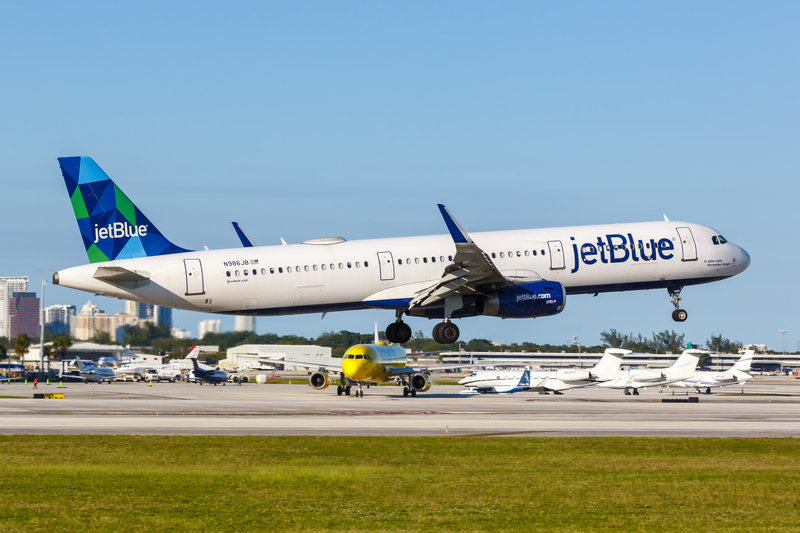
JetBlue has secured a new $500 million aircraft-backed debt facility by pledging a pool of owned Airbus A320 and A220-family aircraft, giving the carrier another liquidity lever as it pushes through its multi-year JetForward turnaround.

On its face, the transaction looks straightforward: a U.S. airline raising cash against aircraft it already owns. In practice, it is more tactical than that. This is not growth financing tied to aggressive fleet expansion or a new strategic push from New York John F. Kennedy International Airport (JFK), Boston Logan International Airport (BOS), or Fort Lauderdale-Hollywood International Airport (FLL). It is a balance-sheet maneuver designed to unlock value from unencumbered aircraft while avoiding an equity raise at a difficult point in the carrier’s recovery.
For aviation finance readers, that is what makes the deal noteworthy. JetBlue is monetizing hard assets it already controls, stretching maturities well into the next decade, and trying to preserve breathing room while its operating recovery still has more to prove.
Read our stories in your inbox
Two aviation newsletters. Zero fluff.
The Structure Is More Flexible Than A Typical Single-Tranche Borrowing
JetBlue disclosed that the financing is being arranged under a framework agreement with affiliates of SKY Leasing and UMB Bank, under which the airline can draw separate aircraft-specific loans rather than one single monolithic borrowing.
That is an important distinction. The facility is backed by up to 22 owned Airbus A320 and A220-family aircraft, with each loan tied to a specific airframe and secured by a first-priority interest in that aircraft. In other words, JetBlue is not simply mortgaging a broad pool in one step. It is creating a structure that allows drawdowns against individual jets under an agreed framework.
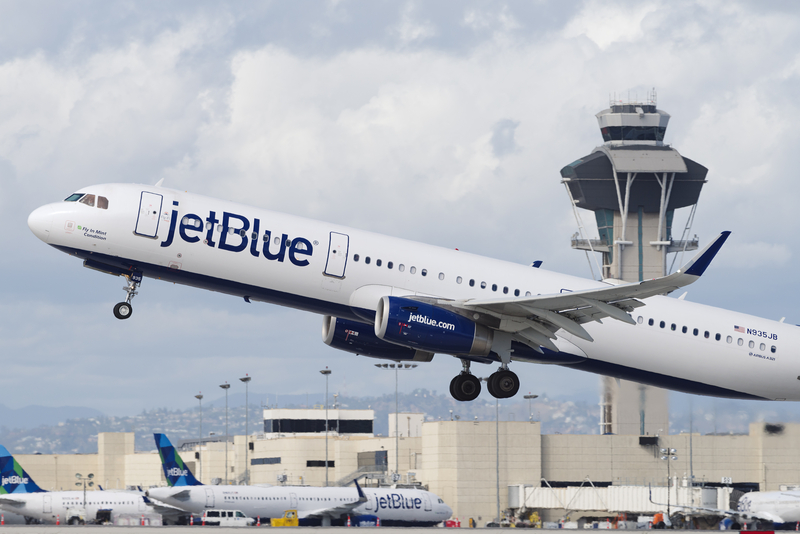
From a treasury and capital-structure perspective, that gives the airline more flexibility. JetBlue can access funding against selected aircraft as needed, rather than immediately maxing out one larger debt instrument. That modular structure can be useful when an airline is trying to manage liquidity carefully while retaining optionality around its fleet and future borrowing needs.
The agreement also includes an accordion feature that could lift total capacity by another $250 million. That means the current $500 million commitment may not be the end of the story if JetBlue decides it needs additional aircraft-backed liquidity later.
The Aircraft Matter Because They Are Core Narrowbody Assets
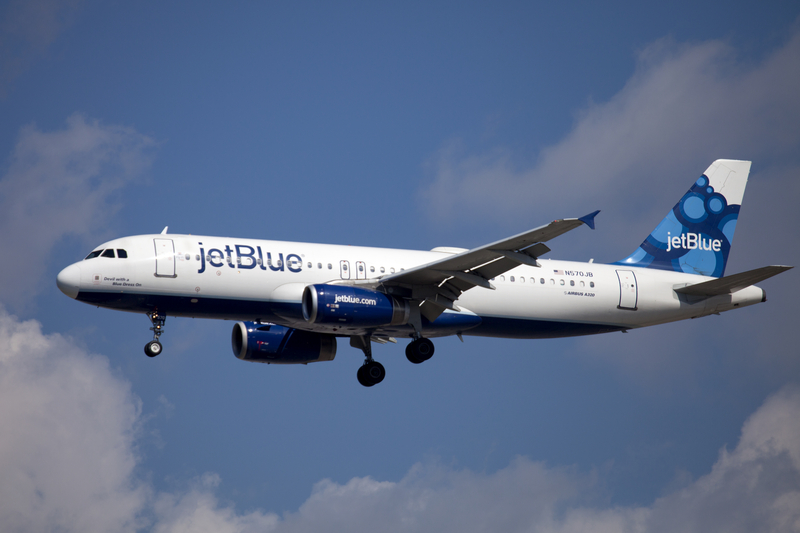
The collateral pool consists of Airbus A320 and A220-family aircraft, two of the most important types in JetBlue’s fleet.
The Airbus A320 remains a foundational aircraft for JetBlue’s domestic and near-international network. It has long been central to the carrier’s high-frequency East Coast operation, connecting major stations such as JFK, BOS, Orlando International Airport (MCO), and Fort Lauderdale (FLL). While the A320 is no longer the newest narrowbody in JetBlue’s fleet, it is still an asset class with established market value, broad investor familiarity, and predictable financing appeal.
The Airbus A220, meanwhile, represents a newer-generation asset with better fuel efficiency, strong passenger appeal, and increasing strategic relevance for JetBlue. The A220 has become an important part of the airline’s fleet modernization effort, particularly as it looks for more efficient economics in thinner or strategically important markets. For lenders, the mix of A320 and A220 collateral creates a diversified narrowbody asset pool anchored in aircraft types that remain highly financeable.
That helps explain why JetBlue chose this route. Aircraft remain among the most practical hard assets an airline can leverage when it wants to raise cash without issuing stock.
The Pricing Shows JetBlue Is Still Paying A Recovery Premium
The loans are set to mature between 2033 and 2037 and will carry fixed interest rates expected to range from 6.00% to 6.75%. That gives JetBlue long-dated funding and shields it from future rate volatility on this piece of its debt stack.
There is real value in that. Long maturities reduce refinancing pressure in the near term and create more predictability for cash planning. For a carrier that is still rebuilding earnings consistency, locking in fixed-rate funding can be more valuable than chasing cheaper but shorter or more variable debt.

At the same time, the pricing is a reminder that this is not cheap capital in the way a financially stronger airline might obtain. JetBlue is borrowing against high-quality owned aircraft, but lenders are still charging a rate that reflects airline risk, company-specific leverage, and the fact that this is a carrier still in the middle of a restructuring phase rather than at the end of one.
So while the financing is useful, it also underscores a broader truth: JetBlue is not raising money from a position of abundance. It is raising money from a position of managed pressure.
This Is Arriving Against A Still-Strained Financial Backdrop
JetBlue reported a 2025 net loss of $602 million and a negative 4.1% operating margin, both clear signs that the carrier’s recovery remains incomplete. Even though those figures represented improvement from the previous year, the airline is still not where it needs to be structurally.
The company ended 2025 with $2.5 billion of liquidity, excluding its revolving credit facility, which is meaningful for a carrier of its size. But liquidity alone does not eliminate the need for financing moves like this. Airlines can hold substantial cash and still choose to raise additional funds if management believes future cash demands, capital spending, or operating uncertainty justify it.
That appears to be the context here. JetBlue is not out of cash. It is trying to stay ahead of pressure by expanding its liquidity toolkit before conditions force a more reactive move.
For investors and creditors, that reads less like distress financing and more like defensive capital management. But it is still a sign that the balance sheet remains under strain.
Pratt & Whitney Disruption Is Still Part Of The Picture
Any serious read of JetBlue’s finances also has to include the fleet disruption caused by Pratt & Whitney geared turbofan engine issues.
JetBlue has said that aircraft-on-ground levels related to Pratt & Whitney engine inspections peaked in 2025 and are expected to improve into 2026, with the broader situation fully resolving by the end of 2027. That is better than a worsening outlook, but it still means the airline is operating through a period in which part of its fleet has been impaired or constrained.
For a narrowbody airline with a strong Airbus fleet concentration, that matters directly. Grounded or disrupted A220 and A321neo-family aircraft affect utilization, scheduling flexibility, unit costs, and ultimately revenue generation. Even if the long-term outlook is improving, the short-term impact remains real.
That is one reason this financing should be read as a bridge. It helps JetBlue maintain flexibility while waiting for its operating platform to become less disrupted and more productive.
JetForward Is Working, But Not Fast Enough To Remove All Pressure
JetBlue management has been clear that JetForward is the airline’s main recovery blueprint. The program delivered $305 million of incremental EBIT in 2025, and the company says it is targeting another $310 million in 2026, keeping it on track toward an $850 million to $950 million cumulative target by 2027.
Those are meaningful figures. They suggest the turnaround plan is creating measurable benefit rather than just aspirational slide-deck language. Reliability has improved, cost programs are moving, and the airline continues to reshape its network, products, and commercial mix.
But JetForward’s progress should not be overstated. A turnaround program generating hundreds of millions in incremental EBIT can still coexist with a carrier that remains loss-making, highly leveraged, and dependent on additional financing. That is exactly the position JetBlue is in now.
So the right way to read this financing is not that JetBlue has solved its problems. It is that the company has bought itself more time for JetForward to solve more of them.
Why This Deal Is More About Liquidity Preservation Than Expansion
There is a temptation to frame any large financing as a vote of confidence or a launchpad for the next phase of growth. That would oversimplify this transaction.
JetBlue is not using this facility to suddenly accelerate its fleet plan or flood new markets from JFK, BOS, or Los Angeles International Airport (LAX). Instead, it is converting owned aircraft into cash while retaining operational use of those assets. That is a classic airline liquidity tactic, especially when management wants to avoid shareholder dilution and preserve strategic control over the fleet.
In that sense, this is conservative finance rather than offensive finance.
It lengthens the debt maturity profile. It extracts value from unencumbered aircraft. It gives the company another cushion if the operating environment softens or the turnaround takes longer than hoped. But it also adds more debt and more fixed obligations, which means the carrier still has to produce better underlying earnings if this move is going to look smart in hindsight.
The Success Of The Deal Depends On What Happens Next
The financing itself is not especially hard to understand. The harder question is what comes after.
If JetBlue continues improving margins, stabilizes demand, benefits from lower disruption across its Airbus fleet, and executes JetForward with discipline, then this facility will look like a well-timed and rational use of owned aircraft value. It will have done exactly what such financing is supposed to do: create runway for management to finish the job.
If, however, the airline continues to struggle with margins, pricing power, leverage, or fleet inefficiencies, then the same transaction will be seen less as prudent asset monetization and more as another layer of debt added during an already fragile chapter.
That is the tension embedded in the deal. It is helpful, but it is not self-solving.
Bottom Line
JetBlue’s new $500 million aircraft-backed debt facility is a smart tactical financing move, not a declaration that the turnaround is complete. By borrowing against up to 22 owned Airbus A320 and A220-family aircraft, the airline is unlocking cash from core fleet assets without issuing equity, while also pushing maturities out to 2033 through 2037.
That gives JetBlue more breathing room as it works through losses, leverage, and lingering Pratt & Whitney-related fleet disruption. But it also adds more debt to a balance sheet that is already carrying significant obligations. The deal improves flexibility for 2026. It does not remove the need for JetBlue to prove that JetForward can translate operational progress into durable profitability.
Keep reading FlyMag
Get the Daily Brief in the morning or the Route Watch weekly recap on Fridays. Or both.