Qatar Airways is preparing to launch three notable long-haul developments this summer: a brand-new linked service to Bogotá and Caracas, plus the return of flights to Tokyo Haneda and Helsinki.
Of the three, the South America move is by far the most strategically interesting. It gives Qatar Airways two new capitals in northern South America and expands the carrier’s Americas footprint at a time when Gulf airlines continue looking for higher-value, under-served long-haul opportunities beyond the obvious trunk routes.
For aviation readers, this is more than just a route announcement. It is a statement about where Qatar Airways thinks future long-haul relevance still exists.
Read our stories in your inbox
Two aviation newsletters. Zero fluff.
Bogotá And Caracas Are The Real Headline
The biggest move is the new Doha–Bogotá–Caracas operation.
From July 22, 2026, Qatar Airways will begin serving Bogotá (BOG) and Caracas (CCS) on a twice-weekly basis, operating on Wednesdays and Sundays. This gives the airline two new South American destinations and makes it the first Gulf carrier to enter Venezuela.
That matters because neither market is a routine long-haul addition for a Middle Eastern airline. Bogotá is a major Latin American capital with strong commercial relevance, while Caracas remains a politically and operationally more complex market. Launching both together shows that Qatar Airways is willing to be more ambitious than many rivals in how it builds its South American network.
The Route Structure Is Unusual — And Smart
The service will use a triangular routing:
Doha – Bogotá – Caracas – Doha
That is a very deliberate structure. Instead of launching two separate nonstop routes, Qatar Airways is using one aircraft pattern to enter both markets at once. For long-haul network planning, that is a useful way to test demand, build brand presence, and limit the risk of overcommitting too much capacity too early.

It also allows the airline to establish a footprint in two cities without needing daily standalone flights to each one.
The Bogotá–Caracas Segment Is Not The Main Commercial Play
One important detail is that Qatar Airways does not appear to be selling tickets solely on the Bogotá–Caracas sector.
That strongly suggests the airline does not currently have fifth-freedom rights to carry local traffic between Colombia and Venezuela. In practical terms, this means the route is being built around long-haul connectivity to and from Doha, not around trying to compete in the short regional market between Bogotá and Caracas.
That distinction matters because it makes clear what the airline is actually trying to do: connect northern South America to the Gulf, Asia, and beyond through Doha.
The Aircraft Choice Fits The Mission
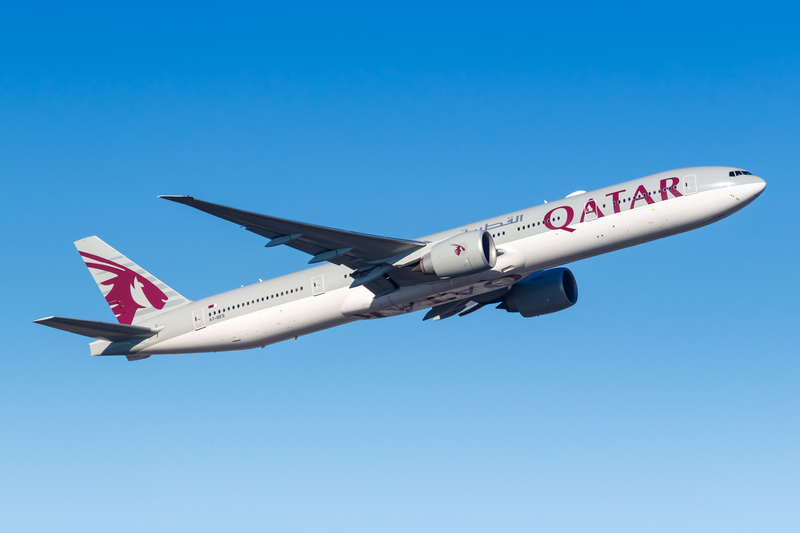
Qatar Airways plans to operate the South America service with the Boeing 777-200LR.
That is a logical choice. The 777-200LR offers the range and payload needed for an ultra-long rotation like this, while also supporting a premium-heavy cabin product. It is also one of the aircraft types where Qatar can still deliver a strong long-haul experience in markets that may not yet justify the newest flagship widebody.
For a route of this length and complexity, the aircraft fit matters just as much as the destination list.
Tokyo Haneda Returns To The Network
The second major development is the return of Tokyo Haneda (HND).
Qatar Airways will resume Haneda flights from July 15, 2026, initially operating four times weekly before increasing to daily service from August 1. That gives the airline a stronger presence in Tokyo, complementing its existing Narita operation and improving access to one of Asia’s most important premium and alliance markets.
Haneda is significant not just because Tokyo is a major destination, but because it strengthens connectivity with Japan Airlines and the wider oneworld network in Japan.
Helsinki Returns As Well
The third route development is the return to Helsinki (HEL), also from July 15, 2026.
Like Haneda, Helsinki will start at four weekly flights and then move to daily service from August 1. That brings Qatar Airways back into an important northern European market and reopens another city where alliance connectivity through oneworld partner Finnair adds additional strategic value.
This is less dramatic than the South America launch, but it still matters. Helsinki remains a useful network point for both local and connecting traffic, especially across Northern Europe.
This Is A Broader Network Flexibility Story
What ties all three moves together is flexibility.
Qatar Airways is not growing through a single model. It is doing three different things at once:
- opening entirely new long-haul linked markets in South America
- restoring a major premium city in Tokyo
- rebuilding alliance connectivity in Helsinki
That is what makes the announcement more interesting than a simple route count suggests. The airline is showing that it can still expand through a mix of new markets, strategic returns, and alliance-strengthening routes, all at the same time.
Bottom Line
Qatar Airways’ three upcoming long-haul developments tell three different stories, but the clearest one is in South America. The new Doha–Bogotá–Caracas service is a bold and unusual expansion that gives the airline two new capitals in a region where Gulf carrier presence remains limited.
At the same time, the return of Tokyo Haneda and Helsinki strengthens the airline’s network quality and oneworld connectivity. Taken together, these moves show an airline still growing with purpose, not just scale.
Keep reading FlyMag
Get the Daily Brief in the morning or the Route Watch weekly recap on Fridays. Or both.