Southwind Airlines’ return to Western Europe on March 2, 2026 is the kind of operational milestone that looks simple on a flight tracker—one charter from Antalya (AYT) to Berlin Brandenburg (BER)—but carries a lot of regulatory and commercial weight behind it.

For nearly two years, Southwind’s footprint in the European Union had been effectively shut down following a sanctions-related airspace ban triggered by concerns over the airline’s ownership and control structure. Its resumption of EU flying signals that the airline can once again operate into the bloc’s airspace and airports, reopening a market that is strategically important for any leisure carrier based in Türkiye’s Mediterranean tourism belt.
The comeback flight: AYT–BER, dry-leased 737-8, 189 seats
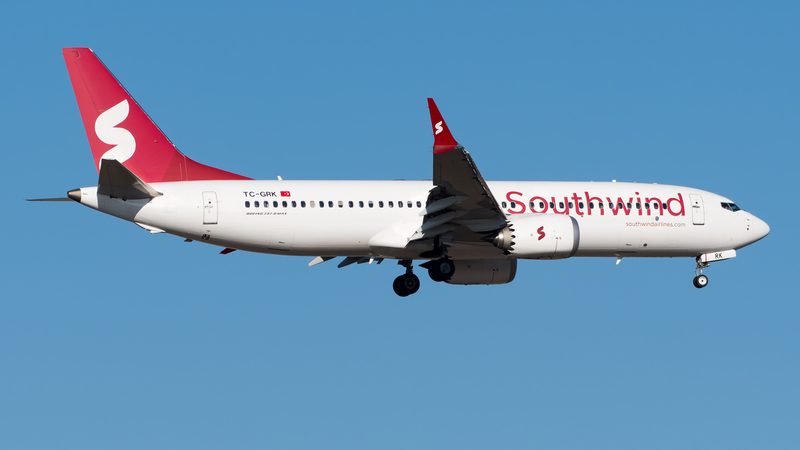
Southwind’s EU re-entry was executed with a Boeing 737-8 (737 MAX 8)—a narrowbody ideally suited to high-density holiday flying between Türkiye and Europe. The aircraft used for the March 2 operation was a 189-seat configuration, aligning with the MAX 8’s common single-class, leisure-optimized layout.
Read our stories in your inbox
Two aviation newsletters. Zero fluff.
A key operational detail: the aircraft was dry-leased. That means Southwind obtained the airplane without crew, maintenance, or insurance bundled from the lessor, and operated it under its own crew and operational control—an important distinction when an airline is working to demonstrate clear oversight, compliance, and accountability in the wake of any regulatory scrutiny.
The AYT–BER timing also made sense for market demand and operational planning. Antalya (AYT) is one of Türkiye’s highest-volume leisure gateways, and Berlin (BER) is a major outbound market for Mediterranean travel, while also serving as a strong anchor for inbound tourism flows into Germany.
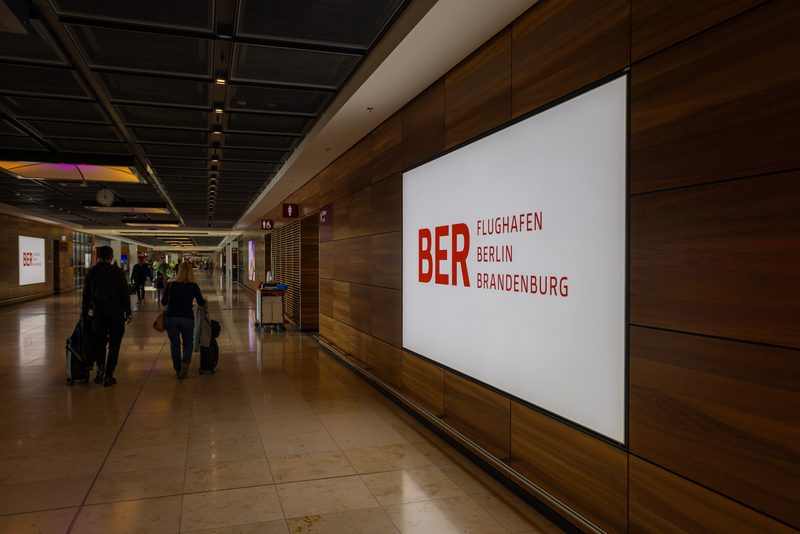
Why Berlin (BER) matters: the “strategic restart” play
Southwind didn’t pick BER at random. Berlin is a high-visibility airport and a strong proving ground for a European restart because it offers:
-
Heavy leisure demand during shoulder and peak seasons
-
An airport environment used to handling dense charter-style operations
-
Strong connectivity for passengers even when routes are not daily
For a carrier rebuilding confidence and reactivating European flying, an AYT–BER charter is a clean, lower-risk way to restart: straightforward station handling, predictable passenger profile, and a route length that fits comfortably within narrowbody economics.
The ban, in brief: how Southwind lost EU access
Southwind’s EU airspace troubles began in March 2024, when Finland’s transport authority denied the airline operating permissions, citing concerns that it was effectively controlled by Russian interests and could be used to circumvent EU sanctions. Shortly after, the restrictions expanded into a broader EU-level airspace ban.
The core issue wasn’t about a single flight or one country. It was about whether the airline’s structure met the EU’s sanctions-related requirements around control, ownership, and the ability to operate within EU airspace under the prevailing restrictions on Russia-linked aviation.
The legal twist: why the court challenge didn’t unlock EU access
Southwind attempted to challenge the ban in court in 2024, but the case ran into a procedural wall that often surprises non-lawyers: the court found there was no directly challengeable EU “decision” in the form presented, because the operational ban was implemented through member-state actions under a sanctions framework rather than a single, appealable EU administrative act.
In other words: the airline couldn’t overturn the ban through the legal route it pursued, even if it disagreed with the underlying assessment—because of how the ban was structured and communicated.
What changed: how Southwind got back into the EU system
By late 2024, Southwind’s status changed: the airline was removed from the sanctions-related list that had constrained its EU operations. That administrative shift did not immediately translate into a rapid re-entry—airlines still have to rebuild permissions, handling, insurance, and station readiness—but it reopened the door.
The March 2, 2026 BER flight is the visible “proof” that the door is now open in practical terms, not just on paper.
Southwind’s fleet and why the MAX 8 is central to Europe growth
Southwind markets itself as a leisure carrier with a fleet built to serve both high-density holiday flying and long-haul charter missions. The airline’s fleet mix spans:
-
Airbus A321 family for dense regional leisure routes
-
Boeing 737-8 (MAX 8) for efficient, medium-haul narrowbody flying into Europe and nearby markets
-
Widebodies (A330-200 and 777 variants) that provide high-capacity lift where tour demand supports it
For European growth specifically, the 737-8 is the workhorse. Compared with older 737NG aircraft, the MAX 8’s economics are built around improved fuel efficiency and range flexibility—exactly what you want when you’re rebuilding a network and need to control unit costs across a wide seasonal demand curve.
What comes next: Europe is the prize, but credibility is the constraint
Southwind has indicated it wants to add more European destinations. If it does, the growth path will likely depend on three practical realities that every airline professional will recognize:
-
Station reactivation takes time — handling contracts, local approvals, and operational readiness aren’t instant.
-
Schedule credibility matters — reliability and operational consistency are crucial when rebuilding a market presence after an interruption.
-
Fleet availability drives network speed — the pace of expansion will depend on how many narrowbodies Southwind can allocate to Western Europe while maintaining its existing network priorities.
Bottom Line
Southwind Airlines’ return to EU airspace on March 2, 2026, via Antalya (AYT)–Berlin (BER) on a 189-seat Boeing 737-8, is more than a single charter flight. It’s a signal that the airline has regained practical access to Western Europe after a sanctions-driven ban and a long period of uncertainty.
If Southwind follows through with additional European routes, the key story to watch won’t just be where it flies—it will be how quickly it can scale while maintaining compliance, operational reliability, and the kind of schedule confidence that European leisure markets demand.
Keep reading FlyMag
Get the Daily Brief in the morning or the Route Watch weekly recap on Fridays. Or both.