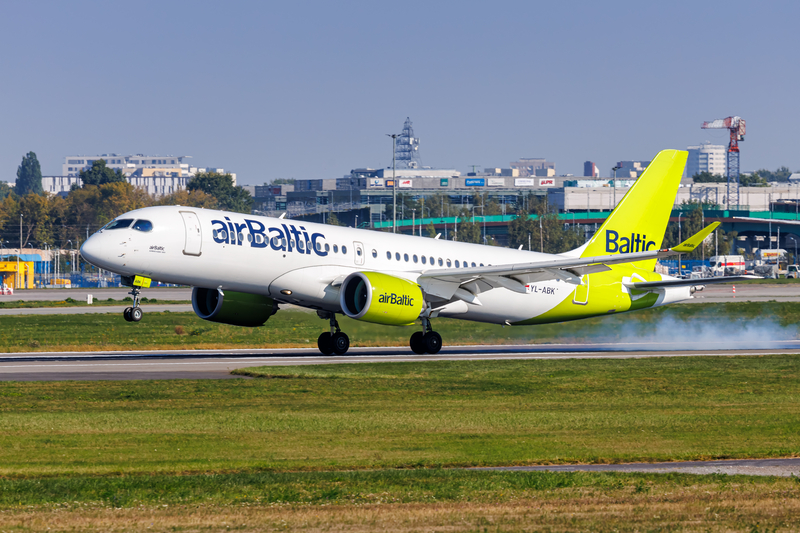
airBaltic is significantly expanding its winter 2026/27 network, and the logic behind it is easy to spot. The airline is building around two strong seasonal pillars: Canary Islands sun traffic and northern winter tourism.
That matters because this is not random growth. It is a focused winter strategy. On one side, airBaltic is strengthening its position in the Canary Islands by reinforcing its seasonal base at Gran Canaria Airport (LPA) and opening a new seasonal base at Tenerife South Airport (TFS). On the other, it is pushing harder into winter sports and Arctic leisure demand through Kuusamo Airport (KAO) in Finland.
For airline readers, that is the real story. airBaltic is not just adding 12 routes. It is using its fleet and network model to serve two very different winter markets in a highly deliberate way.
Read our stories in your inbox
Two aviation newsletters. Zero fluff.
The Canary Islands Are Becoming A Bigger Part Of The Network
The southern half of the expansion is centered on the Canaries, where airBaltic clearly sees dependable winter leisure demand.
From Gran Canaria (LPA), the airline is adding routes to Katowice Airport (KTW), Poznań Airport (POZ), and Liège Airport (LGG). From Tenerife South (TFS), new routes will include Ljubljana Jože Pučnik Airport (LJU), Palanga International Airport (PLQ), and Liège (LGG).
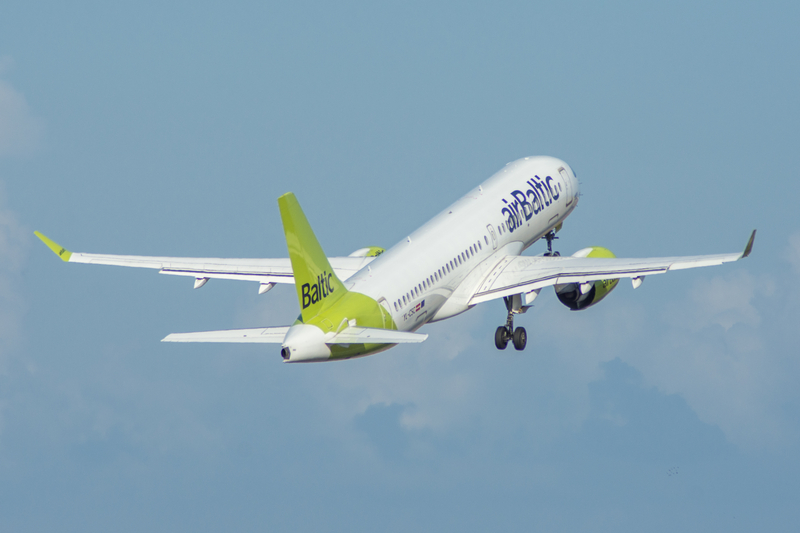
AirBaltic Expands Winter Network with New Destinations Across Europe and North Africa
That route mix is revealing. These are not just the obvious giant-capital leisure flows. They are thinner, more targeted city pairs that a right-sized airline can serve effectively in winter. It is exactly the kind of space where airBaltic tends to be strongest.
Liège is especially notable because both Gran Canaria and Tenerife will be linked to LGG. That is the sort of detail that shows this network is being built with precision rather than headline value in mind.
Tenerife’s New Seasonal Base Matters
The new seasonal base at Tenerife South (TFS) may be one of the most important parts of the whole announcement.
Opening a base is different from simply adding a route. It gives the airline more flexibility, more local presence, and a stronger platform for building a meaningful winter operation rather than just a few isolated services. It also shows confidence in the Canary Islands as a recurring part of airBaltic’s seasonal model.
For a carrier that has built much of its reputation on disciplined network planning, that is a meaningful signal.
Kuusamo Is The More Interesting Long-Term Play
If the Canary Islands side is the most commercially obvious, Kuusamo (KAO) may be the most strategically interesting.
airBaltic is adding Riga Airport (RIX)–Kuusamo and using KAO as a weekend mini-hub with flights to Berlin Brandenburg Airport (BER), Hamburg Airport (HAM), Manchester Airport (MAN), and London Gatwick Airport (LGW).

That is a clever move.
Kuusamo is not a mainstream European city-break market. It is a winter destination, tied to Lapland, skiing, snow tourism, and Arctic travel. By building a small weekend structure around KAO, airBaltic is not just adding one Finnish destination. It is trying to create a seasonal traffic pattern around northern Finland as a winter tourism product.
That kind of network design is much more interesting than a simple point-to-point launch.
The Weekend Hub Concept Is A Good Fit For Winter Traffic
The Kuusamo mini-hub structure also says something useful about how airBaltic sees the market.
This is not daily, year-round utility flying. It is carefully timed winter demand flying. Weekend structures work especially well for ski and leisure traffic, where travelers often move in defined blocks and where package and short-break patterns are highly predictable.
By linking KAO with BER, HAM, MAN, and LGW, airBaltic is tapping directly into some of the strongest source markets for northern European winter leisure demand.
That makes Kuusamo a small but smart network experiment.
The Airbus A220-300 Makes This Possible
airBaltic’s all-Airbus A220-300 fleet remains central to why this strategy works.
The aircraft is efficient, modern, and well suited to thinner seasonal sectors that might be too large for regional aircraft but too small for bigger narrowbodies. That is exactly why routes such as Tenerife South (TFS)–Palanga (PLQ) or Kuusamo (KAO)–Hamburg (HAM) can fit naturally into the network.
This is one of the clearest examples of an airline building routes around what its fleet does best rather than forcing the fleet into markets that do not match.
This Is Expansion, But It Is Also Discipline
Perhaps the most impressive part of the announcement is that it still looks disciplined.
Most of the new services will operate one to two times weekly, which is exactly what you would want to see for strongly seasonal winter routes. airBaltic is not pretending these are giant trunk markets. It is matching frequency to demand and using the flexibility of its fleet to keep risk under control.
That is often the difference between smart growth and noisy growth.
Bottom Line
airBaltic’s 12 new winter routes for 2026/27 reveal a carrier leaning hard into what works seasonally.
The airline is strengthening its Canary Islands presence through Gran Canaria (LPA) and a new seasonal base at Tenerife South (TFS), while also building a northern winter cluster around Kuusamo (KAO). Routes to cities such as Katowice (KTW), Poznań (POZ), Liège (LGG), Ljubljana (LJU), Palanga (PLQ), Berlin (BER), Hamburg (HAM), Manchester (MAN), and London Gatwick (LGW) all fit that pattern.
For aviation readers, the key takeaway is simple: this is not just a larger winter schedule. It is a more focused one.
Keep reading FlyMag
Get the Daily Brief in the morning or the Route Watch weekly recap on Fridays. Or both.