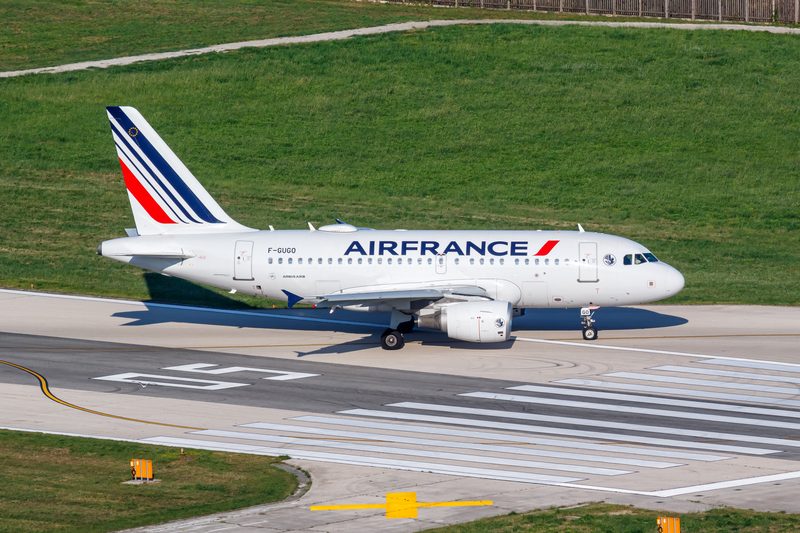
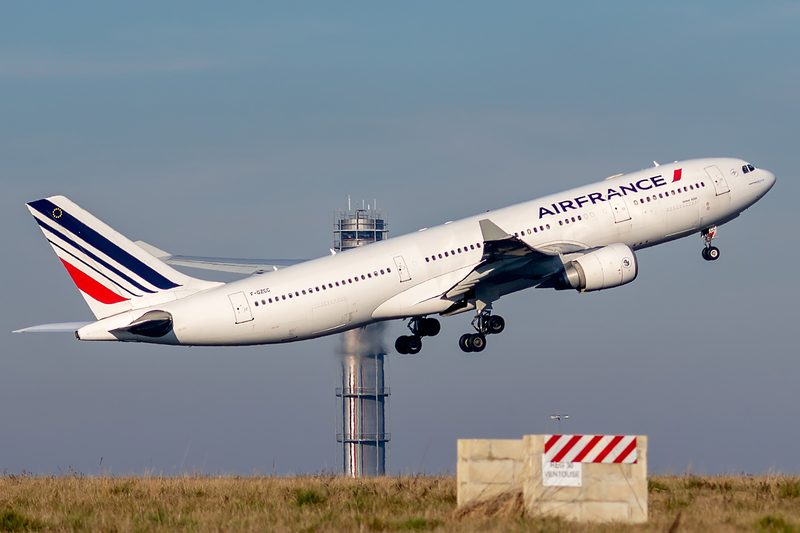
Air France has now completed the long-signaled reshaping of its Paris operation, centralizing its mainline flying at Paris Charles de Gaulle Airport (CDG) from the start of the Summer 2026 schedule and effectively ending its historic presence at Paris Orly Airport (ORY).


That is a significant moment for French aviation. Orly was not just another station in the Air France network. It was one of the airline’s defining postwar platforms. In July 1946, Air France launched its own Paris–New York service from ORY using the Douglas DC-4, helping establish the airport as a major long-haul gateway in the early jet-age era. Eight decades later, the strategic center of gravity has moved decisively to CDG.
For airline professionals, the logic is straightforward. Paris no longer needs two overlapping Air France operating centers in the way it once did. CDG is the global hub, the long-haul connector, and the airport that best supports alliance feed, premium traffic, and onward connectivity. ORY, by contrast, has become a different kind of asset: closer to the city, strong in leisure demand, and better suited to a lower-cost operating model.
Read our stories in your inbox
Two aviation newsletters. Zero fluff.
This Is Consolidation, Not Retreat
It would be easy to frame the move as Air France abandoning ORY, but that misses the more important point. This is not a retrenchment from Paris. It is a concentration of resources.
Air France had already made clear in 2023 that domestic point-to-point demand from ORY had structurally weakened. Business travel patterns changed after the pandemic, videoconferencing replaced some same-day corporate travel, and France’s shift toward rail on short sectors further eroded the economics of domestic flying from ORY. Between 2019 and 2023, Air France said traffic on domestic routes from ORY fell by 40%, while day-return demand dropped by 60%.
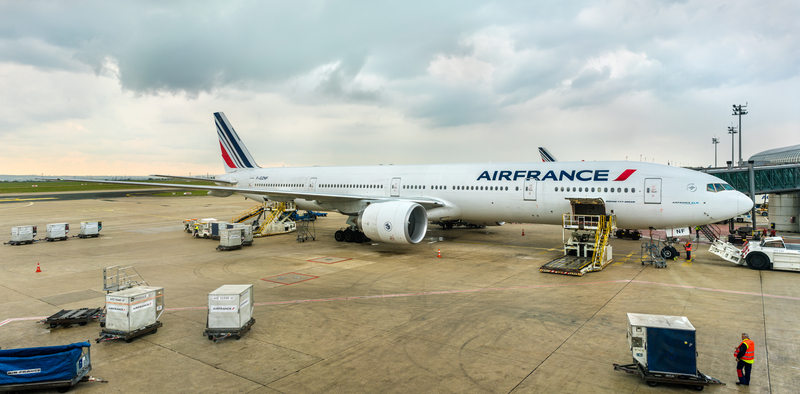
Once those trends became embedded, the airline’s dual-airport Paris structure looked increasingly inefficient. Consolidating at CDG simplifies fleet planning, crew deployment, ground handling, and most importantly, passenger connectivity. Air France can now channel more domestic and regional traffic directly into its long-haul hub instead of splitting it between two airports with very different roles.
CDG Becomes the Sole Mainline Focus
From Summer 2026, Air France’s Paris strategy is centered squarely on CDG. Domestic trunk routes such as Toulouse-Blagnac Airport (TLS), Nice Côte d’Azur Airport (NCE), and Marseille Provence Airport (MRS) are being reinforced from CDG rather than divided with ORY. The same is true for the French overseas network, with Pointe-à-Pitre Le Raizet Airport (PTP), Fort-de-France Martinique Aimé Césaire Airport (FDF), Saint-Denis Roland Garros Airport (RUN), and Cayenne Félix Éboué Airport (CAY) all now routed through CDG.
That hub logic is especially important because Air France’s short- and medium-haul network is increasingly built around the Airbus A220-300. The aircraft is a strong fit for the airline’s European and domestic structure, seating 148 passengers in a five-abreast cabin while delivering lower fuel burn and noise than the Airbus A318 and A319 family jets it is replacing. In practical terms, the A220-300 is part of what makes this consolidation work: it gives Air France a more efficient tool for feeding CDG without sacrificing product quality.
Orly Is Not Being Emptied, It Is Being Reassigned
The more interesting group-level story is what happens to ORY next. Air France may be stepping back, but the Air France-KLM Group is not surrendering the airport. Instead, ORY is being repositioned around Transavia France.
That is a highly deliberate choice. Transavia is now the group’s reference carrier at ORY, and from March 29 it launched major domestic service from the airport to TLS, NCE, and MRS. The underlying strategy is obvious: keep a strong group presence at ORY, but do so with a lower-cost platform that is structurally better suited to the airport’s traffic profile.
Aircraft choice reinforces that model. Transavia France is in the middle of a fleet transition to the Airbus A320neo family. Its Airbus A320neo seats 186 passengers, while its Airbus A321neo carries 232, giving the carrier significantly denser economics than Air France mainline on high-volume domestic and leisure sectors. The neo family also reduces fuel burn, emissions, and noise versus older-generation narrowbodies, which matters at an airport like ORY where cost and community constraints both shape airline strategy.
In other words, ORY is not disappearing from the group’s map. It is being handed to the operator that fits it better.

The Lounge and Loyalty Changes Underscore the Shift
What makes this transition especially telling is that it goes beyond schedules. Transavia is also taking over the former Air France lounge footprint at ORY, while Flying Blue elite benefits are being expanded on Transavia from March 29, including full airport priority for eligible passengers and lounge access arrangements beginning immediately at several French airports, with ORY to follow through the spring.
That may sound secondary, but it matters. One of the biggest challenges when a legacy group shifts traffic from a full-service airline to a low-cost subsidiary is customer perception. Lounge access, priority flows, and loyalty recognition help soften that transition. They signal that while the operating brand at ORY is changing, the wider group still wants to keep higher-value customers inside its ecosystem.
This is one reason the move feels more strategic than abrupt. Air France-KLM is not simply moving capacity. It is redesigning the customer proposition around each airport.
The Final Exit Is Slightly More Nuanced Than the Headline
There is one important nuance. Air France has described the move as centralizing all Paris operations at CDG, but with an exception tied to Corsica under the current Public Service Obligation framework. So while the commercial headline is that Air France has left ORY, the regulatory picture is a little more complicated.
For practical purposes, however, the Orly chapter for Air France mainline has ended. The airport is no longer being used as a broad domestic and overseas base. That role is gone, and the group’s structure now reflects a clearer division of labor: CDG for hub and connectivity, ORY for lower-cost point-to-point flying.
Bottom Line
Air France’s withdrawal from mainstream flying at Paris Orly Airport (ORY) closes an approximately 80-year chapter in French aviation, but it is also a rational response to how the market has changed.
CDG is now the undisputed center of Air France’s Paris network, fed increasingly by efficient Airbus A220-300 flying and optimized for long-haul connectivity. ORY remains important, but as a Transavia airport rather than an Air France mainline one, with Airbus A320neo-family economics better suited to today’s domestic and leisure market.
For aviation professionals, that is the real takeaway. This is not simply the end of an era at ORY. It is the completion of a much larger strategic reset in how the Air France-KLM Group wants to use Paris.
Keep reading FlyMag
Get the Daily Brief in the morning or the Route Watch weekly recap on Fridays. Or both.