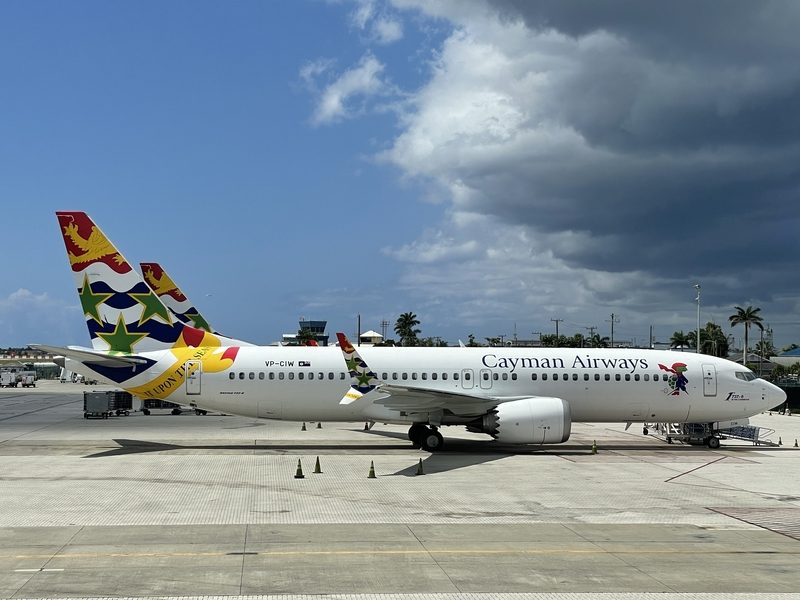
Cayman Airways (KX) is adding a new U.S. city to its map with seasonal nonstop service between Austin–Bergstrom International Airport (AUS) and Owen Roberts International Airport (GCM) in Grand Cayman. The route is scheduled to operate weekly on Sundays, beginning May 24, 2026 and running through August 16, 2026, pending final regulatory approvals.

For network planners, the headline isn’t just “new route.” It’s what the route represents: a targeted bet on a fast-growing U.S. metro area that has historically funneled Cayman demand through connecting hubs. A nonstop AUS–GCM option compresses the journey into a straightforward point-to-point hop—roughly 1,100 nautical miles—squarely in narrowbody performance territory, while also simplifying the passenger experience during peak summer weeks.
Why Austin, and why now?
Austin (AUS) has quietly become one of the more strategically interesting origin markets in the U.S.—a mix of corporate travel, high household income, and strong leisure propensity. That blend matters for an island destination like Grand Cayman (GCM), where demand often skews toward premium leisure, second-home owners, dive travelers, and higher-yield discretionary trips.
Read our stories in your inbox
Two aviation newsletters. Zero fluff.
Cayman Airways says it identified Austin as one of the largest unserved U.S. markets for Cayman travel, with summer demand standing out. That timing is important. Summer is traditionally a period when airlines can either chase volume (often at lower yields) or selectively add capacity that holds up commercially. A once-weekly Sunday pattern suggests Cayman is aiming for disciplined growth—enough schedule presence to stimulate the market and support inbound tourism, but without overcommitting aircraft time during a competitive season.
The route also plays well in both directions. For Cayman residents, AUS becomes a more convenient entry point to Central Texas and onward domestic connections. For Texans, it’s a cleaner gateway to Grand Cayman without the friction of a hub connection and the risk that comes with tight misconnect windows.

The aircraft choice: Boeing 737-8 on a runway-constrained island market
Cayman Airways plans to operate AUS–GCM with the Boeing 737-8 (737 MAX 8)—a sensible tool for this mission. The 737-8’s combination of range and economics makes it well suited to medium-haul leisure markets where airlines want mainline comfort but still need unit costs under control. With modern LEAP-1B engines and improved fuel burn versus older-generation narrowbodies, it’s a natural fit for building thin long(er)-haul routes without needing widebody scale.
Airport infrastructure also matters here. AUS is built to handle virtually anything in the narrowbody and widebody categories, anchored by its long 12,250-foot runway (18R/36L)—useful when hot Texas afternoons and payload planning collide. GCM, by contrast, operates with a single 7,008-foot runway (08/26), which makes performance planning more consequential, especially when factoring in temperature, winds, runway conditions, and required reserves for overwater operations.
For professionals watching the Cayman market, this is exactly where fleet and airport realities meet network ambition: the 737-8 provides enough capability to make the nonstop work efficiently, while the weekly schedule keeps operational risk and exposure manageable as demand matures.
How AUS–GCM fits Cayman Airways’ U.S. footprint
Austin (AUS) becomes the latest addition to Cayman Airways’ U.S. lineup, which already includes service to major gateways such as New York (JFK), Miami (MIA), Tampa (TPA), Denver (DEN), and Los Angeles (LAX). Adding AUS broadens the airline’s reach into the Central U.S. and gives Cayman another non-hub origin market with strong potential for destination traffic.

From a competitive standpoint, the nonstop also changes the conversation for travelers who previously defaulted to connecting itineraries via Florida or other large hubs. A nonstop can win share quickly in leisure markets because it sells simplicity—and it often captures higher intent travelers who value time and reliability over a marginal fare difference.
Operationally, it’s also worth noting that U.S.-bound passengers departing Grand Cayman (GCM) will still clear U.S. entry formalities at their first U.S. port of entry (in this case, AUS), since GCM does not offer U.S. preclearance. That’s not a deal-breaker, but it’s a key customer-experience detail that affects connection timing and arrival planning.
Bottom Line
Cayman Airways’ new AUS–GCM seasonal nonstop is a smart, tightly scoped route development move: a high-potential origin market, a peak-demand summer window, and an aircraft type—the Boeing 737-8—that matches the stage length and island-airport operating environment. If loads and yields perform the way Cayman’s market analysis suggests, Austin could evolve from a summer experiment into a repeatable seasonal play—and potentially a broader push into underserved U.S. metros that can sustain nonstop Cayman demand.

Keep reading FlyMag
Get the Daily Brief in the morning or the Route Watch weekly recap on Fridays. Or both.