American Airlines (AA) has quietly made one of its most consequential transatlantic trims in years: it will not bring back its seasonal Miami (MIA)–Paris Charles de Gaulle (CDG) service, removing all future flights from its schedule.


For a route with decades of history and a built-in leisure base, the decision is a clear signal that American is tightening its long-haul focus out of South Florida—prioritizing a smaller set of Europe routes it believes can perform more consistently, especially in the winter demand trough.
What changed: the MIA–CDG restart that won’t happen
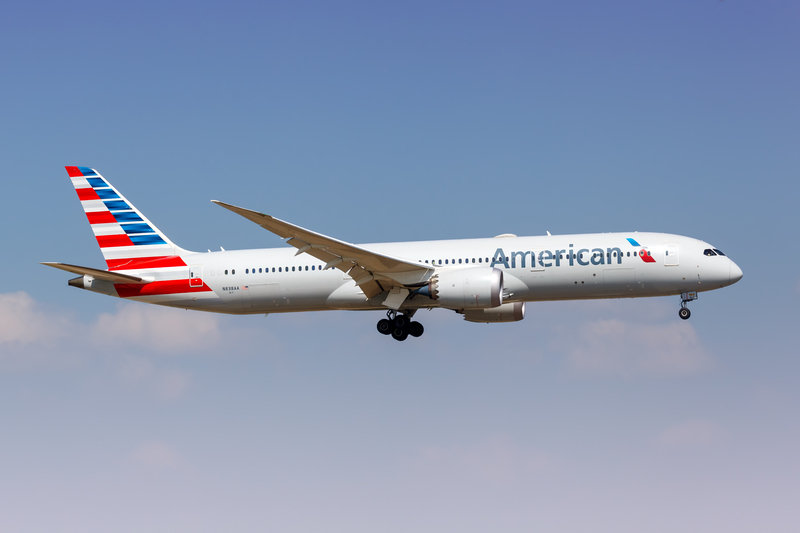
American’s last operating wave on the city pair ended with the final Miami (MIA) departure on March 27, 2026. Until recently, AA planned to resume the route December 17, 2026—a logical timing for peak holiday traffic—operating daily with its smallest widebody, the Boeing 787-8 Dreamliner (B788).
Read our stories in your inbox
Two aviation newsletters. Zero fluff.
That aircraft choice was telling. AA’s 787-8 carries 234 seats in a three-cabin long-haul layout (Flagship Business, Premium Economy, Main Cabin), making it the airline’s lowest-capacity widebody and the typical “right-size” tool when a market can’t justify larger 777/A350-style economics.
But the latest schedule update wipes the route completely: no winter restart, no spring continuation, no placeholder frequencies.

A three-decade route that never quite recovered its old rhythm
American has operated between Miami (MIA) and Paris (CDG) since at least the early 1990s. For years, it was a reliable daily transatlantic staple—particularly before 2020, when the global network reset permanently altered how airlines allocate long-haul capacity.
Since late 2022, AA’s Paris (CDG) flying from Miami has been more constrained and seasonal, a strong indicator that the route was failing the airline’s profitability bar outside peak periods. The fact that the airline leaned on the 787-8—rather than a larger Boeing 777-200ER (772) or 777-300ER (77W)—reinforced that point: AA was already operating the market with its lightest widebody gauge.
Why American likely walked away: capacity math, not market size
Miami–Paris is a big market. But route decisions are rarely about “is there demand?” They’re about whether AA can win the yield-and-cost equation against entrenched competition—and whether the same aircraft can earn more elsewhere.

Several factors likely pushed MIA–CDG onto the cut list:
Competition is relentless—and product-heavy
Even without AA, travelers will still have nonstop options to Paris:
-
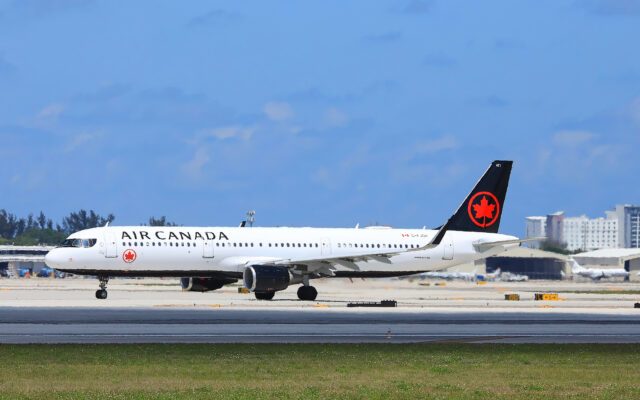
Air France (AF) continues to operate Miami (MIA)–Paris (CDG) (often scheduled at high frequency depending on season).
-
French bee (BF) offers low-cost widebody service between Miami (MIA) and Paris Orly (ORY), typically three times weekly, pulling down fare ceilings in the broader Miami–Paris market.

For AA, that creates a squeeze. Competing against a flagship network carrier at CDG (CDG) and a price-disruptive low-cost alternative at ORY (ORY) forces AA to either out-product, out-schedule, or out-price—and winter is the worst time of year to do that profitably.
Miami is valuable, but Europe is not its core profit engine
American’s Miami (MIA) hub is a powerhouse for Latin America and the Caribbean, where frequency, network breadth, and connecting flows often drive stronger returns than winter Europe leisure-heavy flying. When aircraft are scarce—or when you’re balancing seasonal demand—widebody hours tend to get pulled toward:
-
high-yield Latin America trunk flying,
-
premium-heavy corporate corridors,
-
or longer-haul markets where cargo economics add margin.
Winter transatlantic is a different game
The route was increasingly a winter-only offering, and winter is where transatlantic routes get punished:
-
fewer high-fare business travelers,
-
more price-sensitive leisure travelers,
-
and higher sensitivity to competitive fare matching.
AA can fill seats in winter. The harder question is whether it can fill them at the yields needed to justify a daily widebody rotation when that aircraft could be earning elsewhere.
The broader shift: Miami–Europe flying is shrinking
With Paris (CDG) removed, American’s Miami (MIA)–Europe operation is materially smaller going into winter planning.
Looking ahead to January 2027, AA is currently filed for 24 weekly departures from Miami (MIA) to Europe—down from 31 weekly in January 2026 (a reduction of about 23%). In practical hub terms, that’s a significant contraction: fewer daily departure “waves,” fewer same-day alternatives for missed connections, and less overall market presence.
Here’s what American’s Miami (MIA)–Europe map is shaping up to look like in that winter snapshot:
Paris (CDG) is no longer in the mix.
What this means for travelers: fewer options on AA, more reliance on partners and competitors
For Miami-based travelers loyal to AA, the change is straightforward:
-
No more nonstop AA metal between Miami (MIA) and Paris (CDG).
-
More itineraries will route via AA hubs like Philadelphia (PHL) or New York (JFK) for Europe connections—if seats are available and timings work.
-
Travelers who want nonstop to Paris still have strong alternatives via Air France to CDG (CDG) or French bee to ORY (ORY).
For corporate travel programs, the impact is subtle but real. Paris is one of the most contract-driven markets in Europe. When an airline exits a nonstop, it often loses not just point-to-point premium traffic, but also “halo” demand for onward connections.
The aircraft story: why the 787-8 clue matters
AA’s recent reliance on the 234-seat 787-8 on MIA–CDG was already a signal that the route needed careful right-sizing. The 787-8 is a strong aircraft for exactly this kind of problem: it reduces trip cost and makes marginal long-haul routes more viable.
If even the 787-8 couldn’t keep the route on stable footing—especially in a competitive Miami market—it’s a strong indicator that the issue wasn’t simply “aircraft too big,” but “revenue not strong enough,” at least in the periods AA was trying to operate.
Bottom Line
American Airlines has effectively exited the Miami (MIA)–Paris Charles de Gaulle (CDG) nonstop market by removing its planned winter 2026/27 restart. For a route with decades of history, the cut reflects a broader reality: AA is shrinking its Miami–Europe footprint and concentrating widebody hours on the strongest, most repeatable markets—especially London Heathrow (LHR), Barcelona (BCN), and Madrid (MAD).
Paris still has nonstop service from Miami via Air France to CDG (CDG) and French bee to Orly (ORY). But for AA flyers, the message is clear: the airline’s Europe strategy out of Miami is getting narrower—by design.
Keep reading FlyMag
Get the Daily Brief in the morning or the Route Watch weekly recap on Fridays. Or both.